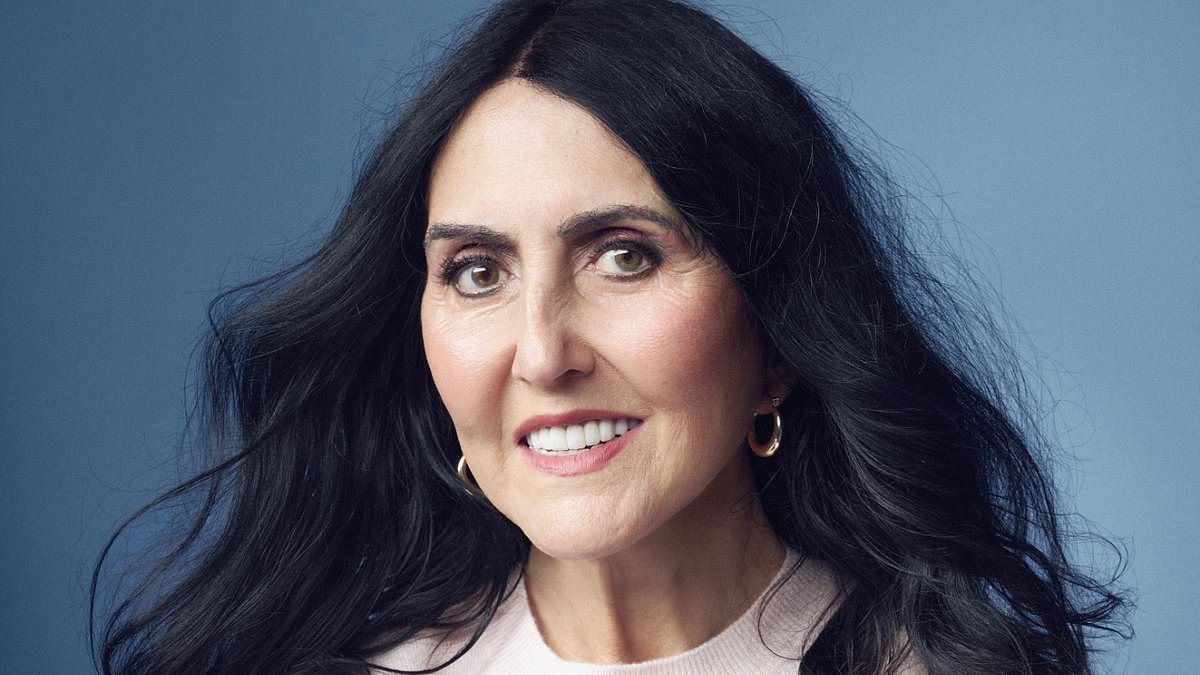
I’m a completely different person. Who knew that inside the shy, nervous introvert was someone chatty and outgoing? I’ve gone from being as grumpy and unsmiling as Kristen Stewart, to morphing into the outrageously outgoing Jennifer Lawrence, all smiles, jokes and confidence. At a recent wedding, I would have normally recoiled when faced with a table of ten, hardwood floors and an actual band playing in the background, all of which would mean the best man’s speech being missed entirely. But, for the very first time, the new me could join in, laugh, initiate contact and chatter nonstop. What on earth happened?It has been a year since I took the plunge and invested in a brand new, ultra-whizzy pair of hearing aids. They are discreet, the colour of my hair (not grey, thank you very much, though it’s always assumed if you’re deaf, you’re as old as the hills; half the over-55 population experience hearing loss). A year ago, after exhaustive tests at Harley Street Hearing in London, it was finally discovered that I have been deaf since birth (I was never tested as a child and, sadly, no one noticed), due to my DNA carrying a variant of the GJB2 gene – the most common cause of congenital, non-syndromic hearing loss – meaning a near-silent world was written into my story before I was born. Childhood measles destroyed whatever remained.My diagnosis is ‘profound, sensorineural hearing loss’, meaning that it is the cochlea (the organ of hearing) in the inner ear that is affected. There are other causes and types of hearing loss, such as ear wax in the outer ear or infections in the middle ear.The most common causes of hearing loss are age and exposure to loud noise, which are also types of sensorineural hearing loss. Tests at Harley Street Hearing found that Liz Jones had been deaf since birth due to her DNA carrying a variant of the GJB2 gene 'At a recent wedding the new me could join in, laugh and chatter nonstop,' writes Liz JonesI grew up baffled by life: I could never follow what anyone (a teacher, possible boyfriend, boss) was saying, which of course made me incredibly anxious. It was a vicious circle: the more fearful I became, the deafer I was, as my brain concentrated on my fight/flight response. Being deaf is also exhausting and embarrassing. I would often spend time after an interaction trying to make sense of what had been said. After a new man stayed for the weekend, I spent ages puzzling, ‘Did he really say I need to buy a bigger bed, or am I imagining it?’I realise now that I resisted getting help for far too long. Instead, at work, I employed an assistant to sit next to me in meetings and scribble notes or hiss key points in my ear. On my leaving card from one editorship, the headline read: ‘What did he say?’ Another read, ‘Ay? That’s what ’orses eat!’What prompted the considerable investment in my wellbeing (a year ago my Phonak aids cost £5,250; today they’d cost me £5,440, but that includes aftercare and an annual check-up) was not just the fatigue (you have to concentrate, pay attention to people’s faces; no wonder I found the pandemic, with everyone wearing masks, so exhausting), or the rudeness and eye-rolling people exhibit when faced with someone with an invisible disability. No, a much bigger fear was wondering if being deaf could be a factor in developing dementia.I speak to Franki Oliver, audiology manager of the Royal National Institute For Deaf People. ‘There has been some research suggesting a connection between hearing loss and dementia, but we don’t yet have enough evidence to say what’s going on.’Oliver is keen to stress that hearing loss does not mean you will necessarily develop dementia. She is loath to frighten anyone hard of hearing, and adds that improving your wellbeing, happiness and sociability can only be a good thing. But, and here’s the worrying bit, ‘It has long been established that dementia and hearing loss often co-occur.’Can hearing aids and cochlear implants reverse dementia? Research by JAMA Neurology states: ‘The use of hearing restorative devices by participants with hearing loss was associated with a 19 per cent decrease in hazards of long-term cognitive decline.’My hearing will never be perfect. At a car wash last week, the young man challenged me crossly, ‘Is my accent that bad? You think I can’t speak English?’ I then showed him I was wearing hearing aids, that I wasn’t being rude or racist.My advice when meeting anyone new is to announce your deafness proudly, not try to muddle through. And when you first get hearing aids, persevere: play with the volume and settings to separate speech from background noise using the app on your phone. When I emerged from Harley Street, I was almost bowled over by the noise of traffic and people talking, so for the first few days, reduce the volume before turning it up in tiny increments. There is a particularly loud blackbird in my garden who at first I asked to pipe down but whose music I now appreciate in all its glory.Happily, my year of living less dangerously (I was always mindful of being run over by a car) means I feel like Dorothy emerging into a world of colour when before it was dreary black and white. Investing in an AI-assisted (rechargeable!) hearing aid has widened my horizons. I now say yes to so many more invitations. I went to an open-air screening of a film and could understand the dialogue! I’ve started to learn to play my baby grand piano! I initiate conversation rather than recoil in horror! Before, with a passenger in my car, I could never hear what they were saying, so they would give up: not just because of the noise of the engine, but as we were side by side, I couldn’t look at their face, meaning every journey was awkward. Now, we can chat away easily. The AI technology in the new aids also means the satnav lady in my iPhone goes straight to my ears, making driving somewhere new infinitely easier; the aids automatically quieten the radio when telling me to turn left, etc.Weirdly, my horses are calmer when I turn them out in wind: the aids blot out bad weather, meaning I am calmer, which in turn reassures them, as horses can read your breathing and heart rate. I haven’t left the bath tap or shower running by mistake, as the aids are designed to detect running water. My parcel delivery anxiety has abated, and I have removed the sign on my front door saying, ‘I’m deaf! Please knock loudly as I need those coffee beans!’I’m less aggressive towards shopkeepers (‘How much?’), LNER staff (‘Why has the train stopped? I can’t hear the announcements!’), and waiters (‘There’s no point reading out the specials, so please stop), which can only be a good thing. My hairdresser, though, is the one person who still has to put up with my nonsensical replies: the aids must be removed as, although they’re slightly waterproof, black dye is a no-no.Anyone who is shying away from hearing aids due to vanity, let me give you this important message: they make you younger. Take it from me, it’s so much less painful than a face-lift.harleysthearing.co.uk
It's been a year since I got new hi-tech hearing aids. This is exactly what they do, how they've completely changed my life... and my message to anyone too embarrassed or vain to get them: LIZ JONES
Full Article
Original Source
Read the full article at Dailymail →KhanList aggregates and links to publicly available news content. We do not host full articles from third-party sources. Always verify important information with original sources.