
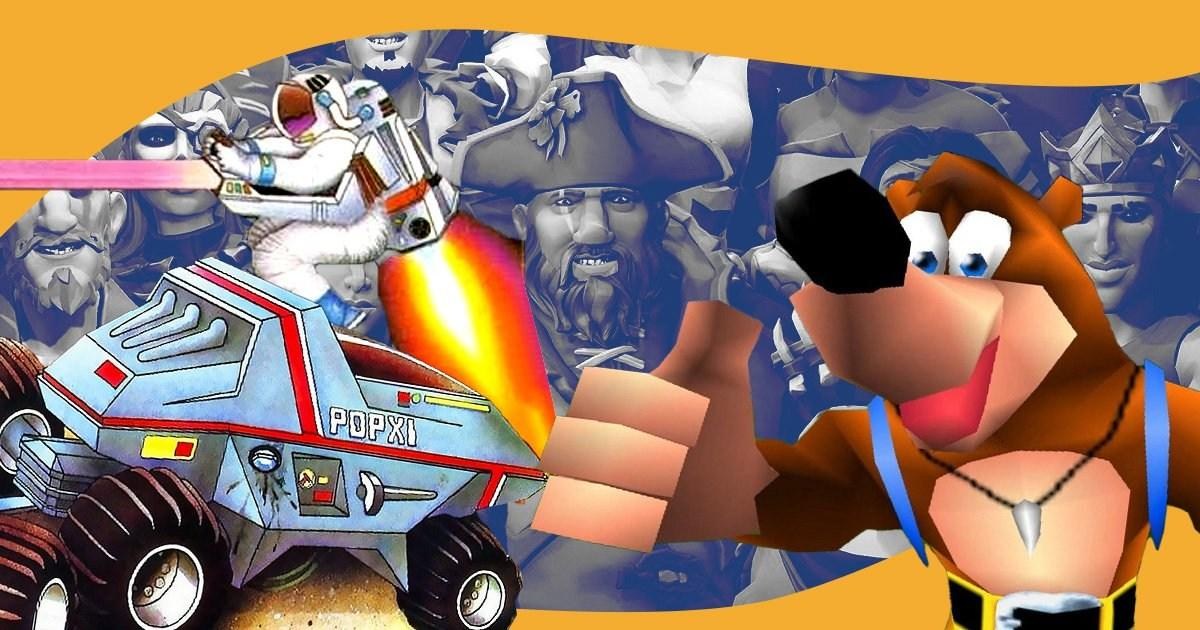
Rare was the original Xbox acquisition and perhaps a warning of things to come (Rare/Microsoft/Metro) To mark the anniversary of Microsoft’s acquisition of Rare, GameCentral looks back at the studio’s history and how that buyout was an ominous portent for Xbox’s current status. Exactly 24 years ago today, Rare was bought by Microsoft, ending a long-standing working relationship with Nintendo and securing all future Rare games as Xbox console exclusives. The timing is rather morbid as just a couple of days ago, Microsoft announced a major restructuring of its studios, that now sees Rare under the control of Call Of Duty studio Activision. It’s far too soon to know how this will impact Rare, assuming it’s even possible to tell, given the studio hasn’t released a new game since 2018’s Sea Of Thieves, but it’s a bleak outcome for one of the oldest and most fondly remembered British game studios. Aside from maybe Codemasters, who are owned by EA and only make racing games now, Rare is the only major British developer from gaming’s infancy still left standing. Rare was making games as early as 1983, back when it was known as Ultimate Play The Game. The likes of Jetpac and Knight Lore for the ZX Spectrum were among the most popular games of their time, although Rare is better known among 90s kids for its partnership with Nintendo. Expert, exclusive gaming analysis Sign up to the GameCentral newsletter for a unique take on the week in gaming, alongside the latest reviews and more. Delivered to your inbox every Saturday morning. Nintendo never fully owned Rare but had bought enough stock in the studio for it be viewed as a second party developer (i.e. it was independent but only made games for Nintendo). That resulted not only in Rare revitalising Donkey Kong, with the Donkey Kong Country platformers, but making many fan favourite Nintendo exclusives like Banjo-Kazooie and Diddy Kong Racing. That’s why it was such a shock to see Microsoft acquire the company outright. To this day, some fans have never forgiven Nintendo for not blocking the move, but given Rare’s output in the early 2000s had already taken a dip in quality Nintendo apparently didn’t consider buying the company outright to be a sensible option. In retrospect, most, if not all of Microsoft’s current Xbox woes can be traced back to the Rare buyout. Many will see the company’s spree of acquisitions in 2018 (where it bought no less than six game developers) as the start of it, but Rare was the first and should’ve been a red flag to studios who found Microsoft knocking on their doors. Granted, Microsoft had only just entered the gaming market, and was in need of first-party studios to make games. Given Rare’s reputation, it’s no surprise it got picked up, but the timing was unfortunate, as all of Rare’s projects, which would’ve been made with Nintendo’s hardware and audience in mind, suddenly had to shift to a new console with a different demographic It’s no wonder Rare’s Xbox debut, Grabbed By The Ghoulies, a cartoony horror-themed beat ‘em-up, failed to make much of an impact with an audience that had already been defined by games like Halo: Combat Evolved and Project Gotham Racing. There’s plenty of nostalgia for Rare’s output during the Xbox 360 days, such as the Viva Piñata games, but by the time of the Xbox One, it was abundantly clear that nothing the studio made was selling well enough to appease Microsoft. So, established franchises and new ideas were shelved in favour of trying to hawk the Xbox Kinect via family friendly sports games, with 2015’s Rare Replay being the only acknowledgement of Rare’s history – although the collection was stymied by the fact it couldn’t include any Nintendo-published games. Looking back, it’s strange Microsoft didn’t track down other prominent developers besides Rare to bolster its first-party library, but the success of the Xbox 360 coloured Microsoft’s view of first-party developers and it began to see them as less important – since it usually played host to the best versions of third-party games. Don Mattrick’s handling of the Xbox One will live on in infamy (Xbox) The company wholeheartedly believed it was top dog and the Xbox One would be the new default for customers’ choice of entertainment hardware, which is why it spent the early days of the Xbox One promoting its TV capabilities over actual games. And we all know how that worked out. That, in turn, is what led to Phil Spencer taking over and recognising that Microsoft needed its own cabal of developers to make enticing games for Xbox hardware. Thus, the subsequent purchases of the likes of Obsidian Entertainment, Bethesda, and Activision Blizzard… amongst others. It was a decision that seemed to make sense at the time and yet has proved depressingly detrimental to Xbox, the acquired studios, and the industry at large, as Microsoft has ended up dismantling its Xbox division, shutting down several of the studios it acquired, and putting thousands out of work. They might all have been world class developers, but few of their games sold enough to justify the purchases and, as plans for Game Pass fell apart, Microsoft’s poor management of its studios became more and more obvious. As for how Rare has managed to survive, that can be chalked up to Sea Of Thieves, which is a rare example of a live service game managing to maintain enough popularity to warrant ongoing support. Very few games can brag about having 21 seasons’ worth of content. But this success has proved to be a double-edged cutlass. Because Microsoft got a certified live service hit, that means it’s all Rare has been allowed to do for the past eight years. There was an attempted Battletoads reboot, but it was barely involved with that, and its one attempt at a wholly original game, Everwild, was ultimately cancelled, as Rare itself admitted that it didn’t really know what sort of game it would be when it was announced. Rare has become a shadow of its former self; doomed to work on one single game until its popularity inevitably wanes. As it stands, Sea Of Thieves still attracts several thousand players on Steam (there’s no reliable data for Xbox and PlayStation 5 player counts) but how long will that be good enough for Microsoft? It’s not even clear what Rare’s new position under Activision means for the studio. Will it continue to operate as normal, or will Activision execs be constantly peering over it, like the Eye of Sauron, and interfere in attempts to drive up Sea Of Thieves’ engagement and revenue? Will it be gradually chipped away until it’s just another Call Of Duty support studio? Or will it be allowed to branch out into other projects? Some may see the move as another chance for a new Banjo-Kazooie or other revival, but the reality is that the people responsible for those childhood favourites, and the ones most likely to push for a Banjo revival, have long since departed from the studio, probably because they knew which way the wind was blowing. There’s no guarantee things would have been better, and we’d be on Banjo-Kazooie 8 by now, had Rare been acquired by Nintendo all those years ago, but they certainly couldn’t have been worse. Super Smash Bros. Ultimate really feels like the last we’ll ever see of Rare’s bear and bird duo (Nintendo/YouTube) Email gamecentral@metro.co.uk, leave a comment below, follow us on Twitter. To submit Inbox letters and Reader’s Features more easily, without the need to send an email, just use our Submit Stuff page here. For more stories like this, check our Gaming page. Arrow MORE: Nintendo Switch 2 is at its lowest price ever but you better act fast Arrow MORE: Gamer granny breaks record as world’s oldest female Fortnite streamer Arrow MORE: GTA 6 will have ‘league wide’ impact on all sports warns athlete GameCentral Sign up for exclusive analysis, latest releases, and bonus community content.
It’s 24 years since Xbox bought Rare and things have only got worse for everyone
Full Article
Original Source
Read the full article at Metro →KhanList aggregates and links to publicly available news content. We do not host full articles from third-party sources. Always verify important information with original sources.