
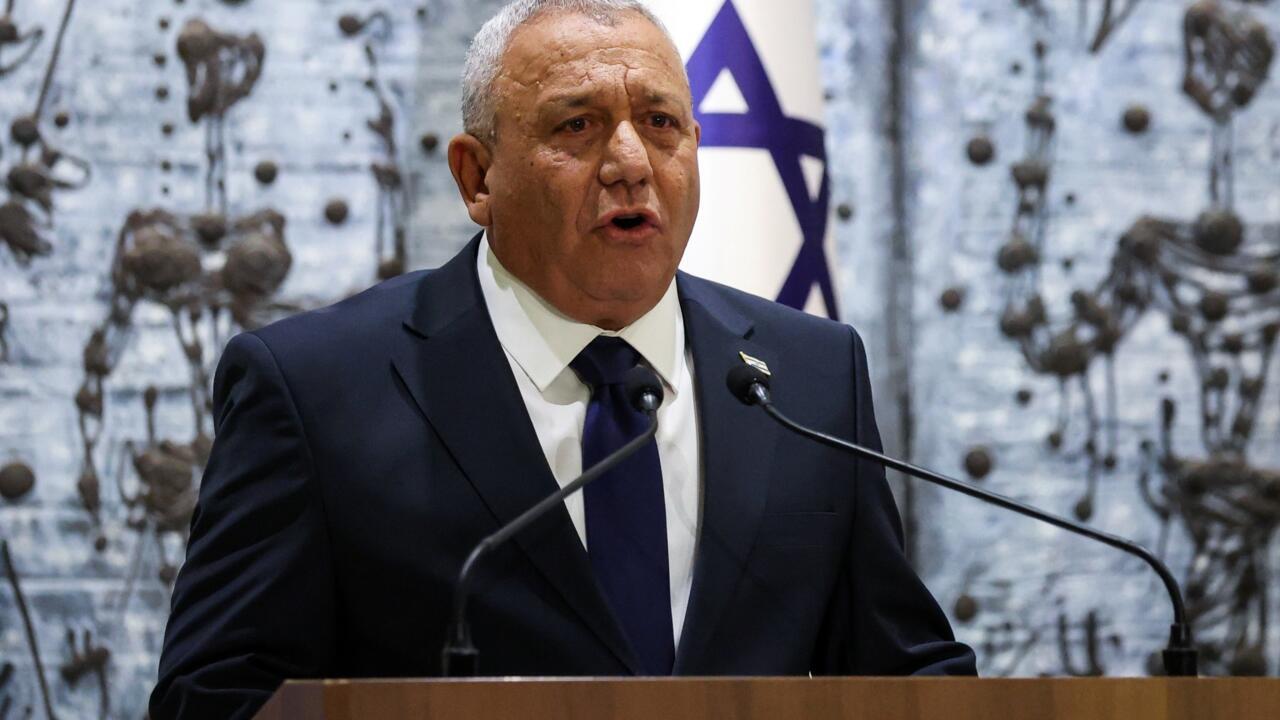
Israel's new parliament will be sworn in Tuesday, with Prime Minister Benjamin Netanyahu set to lose his majority even as rival Gadi Eisenkot still works to form a new government. President Isaac Herzog will deliver a speech at 4pm (14:00 GMT) for the swearing-in of the 120-seat parliament, in which neither Netanyahu's right-wing bloc nor Eisenkot's opposition will hold a majority. Read moreIsraeli president officially tasks Eisenkot with forming government The opposition hopes to use its newfound legislative power to move quickly on key priorities, including a commission to investigate security failures under Netanyahu that allowed the October 7, 2023 attack by Hamas, the deadliest day in Israel's history. Herzog on Sunday gave Eisenkot the initial mandate to form a government, starting the clock for him to cobble together a coalition within 28 days, with a possible 14-day extension. Ahead of the parliament opening, Eisenkot's party announced progress in naming people to seek key positions. The opposition will put forward Matan Kahana – like Eisenkot a former senior military figure – as speaker of the parliament, Eisenkot's Yashar party said. Avigdor Lieberman, a right-wing opposition leader who has played a key role in deciding who can enter the government, will be nominated as chair of the foreign affairs and defence committee. The opposition's choice for speaker would need to secure a larger number of votes than anyone backed by Netanyahu's bloc, which has been trying to push back a vote on the speaker. The newly formed government would need 61 votes to be approved to take office. Eisenkot could secure the threshold with support from Arab-Israeli lawmakers, who secured a record number of seats on the back of anger in the minority community over Netanyahu's hard-right government. But Lieberman had been clear he would not allow Eisenkot to rely on Arab-Israelis to come to power. He has instead proposed an alliance with ultra-Orthodox Jews, despite his years of bitter denunciations of the community for its singular priority on maintaining an exemption from mandatory military service. Eisenkot's core opposition bloc has fewer seats than Netanyahu at 48, but would achieve a majority if the 19 Arab-Israeli lawmakers either enter the government or, more likely, vote for it without joining. The two ultra-Orthodox parties, with 13 seats, could also crown Eisenkot if they ditch their long alliance with Netanyahu, who backed the exemption from military service without enshrining it fully into law. An alliance with either group would likely be fragile. Arab-Israelis are likely to object if Eisenkot carries out another major offensive in Gaza. Eisenkot has largely backed Netanyahu's war decisions, although he has vowed to crack down on extremist settlers in the West Bank who have been attacking and stealing from Palestinians with virtual impunity. (FRANCE 24 with AFP)
Israel's new parliament to be sworn in as Eisenkot prepares government
Full Article
Original Source
Read the full article at France24 →KhanList aggregates and links to publicly available news content. We do not host full articles from third-party sources. Always verify important information with original sources.