
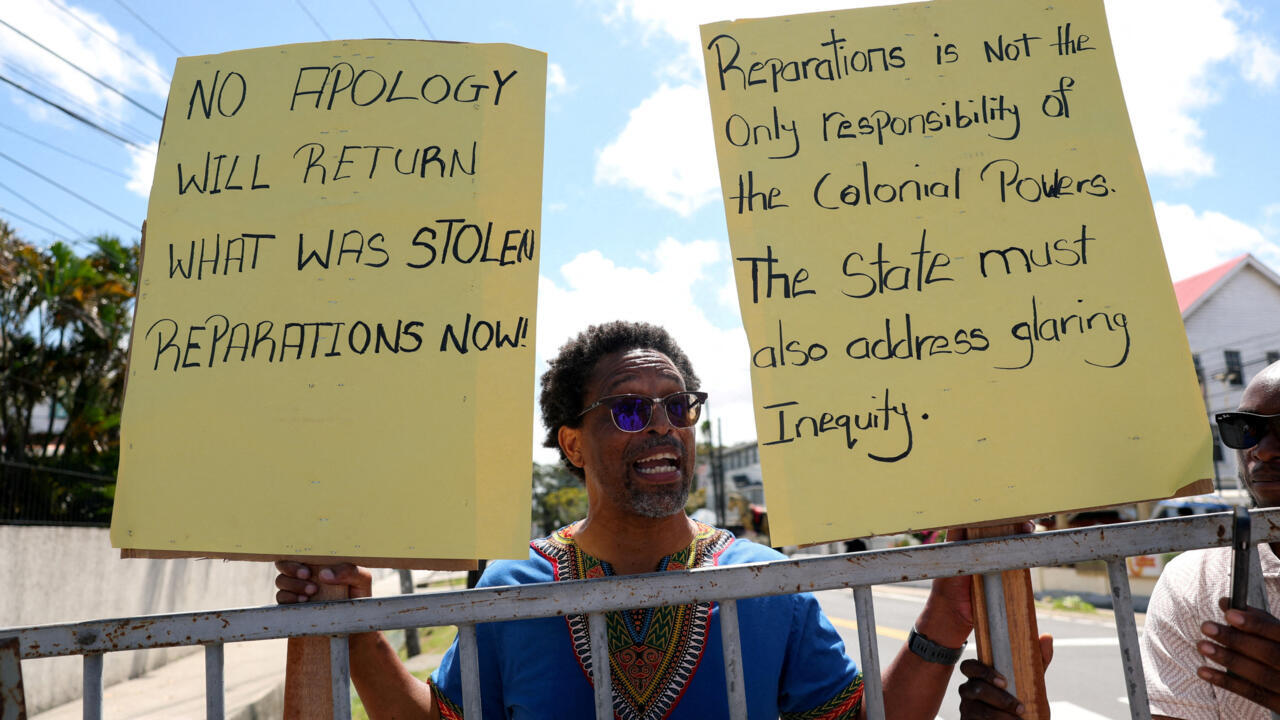
In this episode of Spotlight on Africa, we talked to scholars from the continent and the Caribbean about slavery reparations – a key topic discussed at this year’s Commonwealth Heads of Government meeting in Antigua and Barbuda. The Commonwealth is a 56-nation group of mostly former British colonies, 21 of them in Africa. King Charles III remains head of state in 15 of them, including the UK. Its biennial Heads of Government Meeting took place from 1 to 4 November 2026 in Antigua and Barbuda. In a final communiqué issued on Wednesday, the group said the time had come for “meaningful, truthful and respectful conversation towards forging a common future based on equity”. Timetable of talks While no timetable for talks was announced, the group welcomed the United Kingdom’s willingness to engage “in a structured, time-bound, inclusive and good-faith dialogue with affected parties addressing the transatlantic trafficking of enslaved Africans and its historical harms”. In his opening speech, King Charles III, who is politically neutral, called the slave trade “a monstrous injustice” that filled him with “profound personal sorrow”, but stopped short of a formal apology. UN backs resolution calling slave trade ‘gravest crime against humanity’ For his part, British Prime Minister Andy Burnham said he was open to saying sorry but ruled out paying the financial reparations demanded by some Caribbean countries. Britain’s Foreign Secretary Ed Miliband also said it was “not feasible” for the country to pay reparations for slavery, but that “there are things we can work on co-operatively”. According to reports, Britain could issue a formal apology next year, during its G20 presidency. Britain played a pivotal role in the slave trade, which saw between 10 and 15 million enslaved Africans taken to the Americas over four centuries. The country abolished the slave trade in 1807 and slavery throughout the British Empire in 1833. It paid financial compensation, but to plantation owners rather than to the enslaved people themselves. UN resolution In March this year, the United Nations adopted a resolution recognising the transatlantic slave trade and the enslavement of Africans as the “gravest crime against humanity”, in a motion spearheaded by Ghana. Ghana backs Jamaica’s petition to push UK for slavery reparations For many countries, the time has come for formal apologies and concrete plans for slavery reparations. To find out how these issues are being tackled on the African continent and in the Caribbean, RFI spoke to a panel of four guests: Edem Adotey: professor at the Institute of African Studies in Accra, Ghana, Joel Kibazo: Commonwealth spokesperson, Matiangai Sirleaf: professor at the University of Maryland Francis King Carey School of Law in the United States, Verene A. Shepherd: Jamaican historian and one of three vice-chairs of the Caricom Reparations Commission. This episode was mixed by Nicolas Doreau.
‘Monstrous injustice’: King Charles condemns slavery as UK agrees to talks
Full Article
Original Source
Read the full article at Rfi →KhanList aggregates and links to publicly available news content. We do not host full articles from third-party sources. Always verify important information with original sources.