
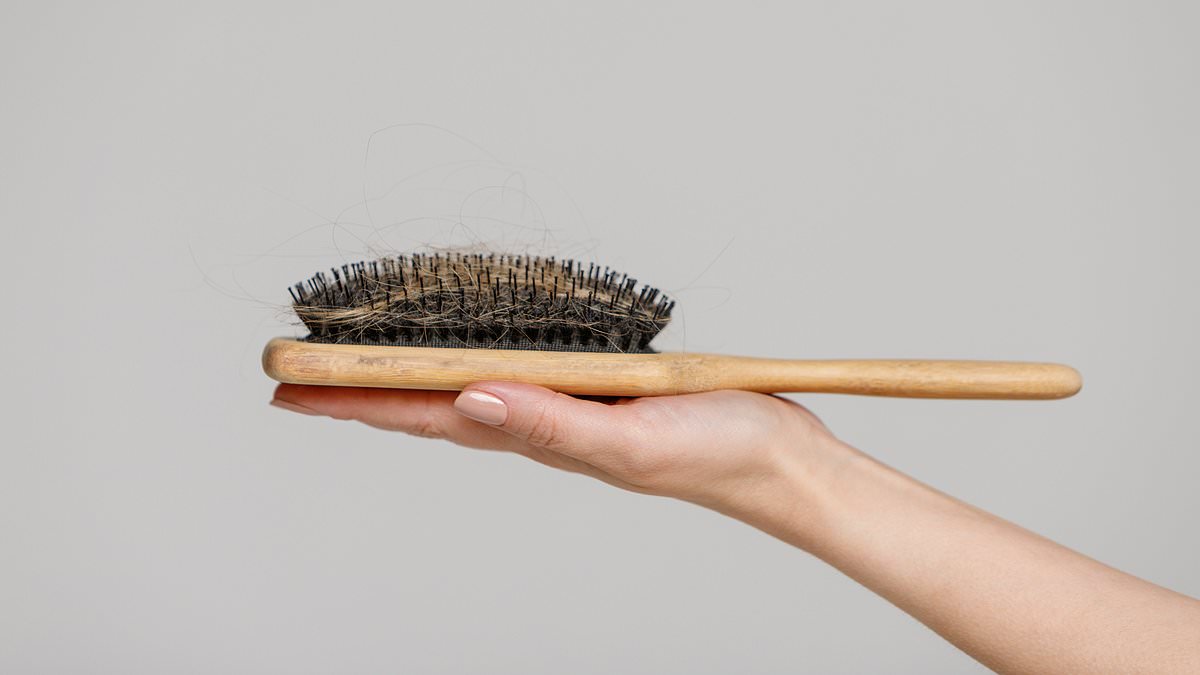
Daily Mail journalists select and curate the products that feature on our site. If you make a purchase via links on this page we will earn commission - learn moreYou probably wash your hair regularly, clean your make-up brushes and change your pillowcase – but when was the last time you actually washed your hairbrush? It’s easy to forget that the tool we run through our freshly cleaned hair every day can collect a surprising amount of build-up, from sebum and dead skin cells to styling products, sweat, dust and microorganisms.‘A hairbrush is basically a hoover for your scalp,’ says Mark Blake, brand ambassador for KILLABRUSH, the world’s first active antimicrobial hairbrush, and a globally recognised trichologist. And while that doesn’t mean your brush is necessarily a health hazard, repeatedly using one without cleaning it could affect both your hair and scalp. KILLABRUSH is the world’s first active antimicrobial hairbrushSo, what exactly could be lurking on your brush – and what could happen if you’re not cleaning it often enough? Here are seven things you need to know…1. It can put old oil and product back onto freshly washed hairYour scalp naturally produces sebum, but some of that oil can end up on your hairbrush, alongside sweat, dead skin cells and styling residue, ready to be redistributed the next time you use it.‘You can spend ages washing your hair and scalp, then run a dirty brush back through your hair,’ says Blake. ‘It’s a bit like having a shower and putting your dirty clothes back on.’The same goes for your styling routine. Dry shampoo, hairspray, oils and serums can all leave residue behind on your brush. ‘If you've spent the week spraying dry shampoo onto your roots and brushing it through, some of it will end up on your brush,’ says Blake. ‘Your hairbrush can become an archive of your styling routine.’So, if your freshly washed hair is becoming greasy suspiciously quickly, your brush could be part of the problem.2. It can leave hair looking lank and less freshAll that accumulated oil and product residue can affect the way your hair looks and feels, particularly if you have fine hair.‘Fine hair is probably the hair most affected by dirty hairbrushes,’ says Blake. ‘Spreading the last six months’ products back into your hair and scalp is never going to be an ideal recipe for getting and keeping the hair you deserve – and you wonder why your hair looks lank.’And it’s not just about volume. If your brush is coated in sebum and styling residue, some of that build-up can be transferred back onto freshly washed strands. According to Blake, this can leave hair feeling heavier and, in some cases, smelling less fresh.3. It can harbour bacteria, yeasts and fungiThis is the part you can’t see – and arguably the most interesting reason to think about hairbrush hygiene.Our skin and scalp naturally carry microorganisms, including bacteria and yeasts, which can transfer onto a brush during use. Blake says studies examining hairbrushes have also detected fungi including Trichophyton species, which are dermatophytes associated with fungal skin and scalp infections.That doesn’t mean every unwashed hairbrush is dangerous, though. ‘That doesn't make your hairbrush dangerous, but it does give you a very good reason to keep it clean,’ says Blake.Where you keep your brush can also play a role. Bathrooms tend to be warm and moist, conditions in which bacteria and yeasts can thrive.4. It could contribute to scalp irritationYour scalp is skin, so it makes sense that what you repeatedly put against it deserves some consideration.‘We wouldn't dream of repeatedly rubbing a dirty make-up brush over our face, yet some people use the same unwashed hairbrush on their scalp for months,’ says Blake. ‘Your scalp is skin too, and the things that repeatedly touch it deserve basic hygiene.’A build-up of sebum, product residue, dead skin cells and microorganisms doesn’t automatically mean you’ll develop a scalp problem. However, Blake says repeatedly wiping accumulated yeast and bacteria from a dirty brush back onto the scalp can contribute to sensitivity, irritation and inflammation in some cases. Your dirty hairbrush could be contributing to dandruff, sensitivity and irritation 5. Sweat can add to the build-upIf you regularly brush your hair after exercising, your brush may be picking up more than you realise. Sweat, oil and microorganisms from the scalp can all end up on the bristles alongside styling products and other residue.Blake points to Malassezia globosa, a yeast naturally found on the scalp and associated with dandruff, sensitivity and irritation.The important thing is not to panic about the presence of microorganisms – they’re a normal part of the scalp microbiome. But if your brush is repeatedly collecting sweat, oil and other scalp debris, keeping it clean becomes all the more sensible.6. It could mean more pulling and tension on your hairPulling the hair out of your brush is a good start, but it doesn’t remove everything that’s coating the bristles.‘You need to remove the oils, dead skin, sweat and product residue coating the bristles, causing unnecessary tension on the hair,’ says Blake.That’s particularly worth considering when brushing wet hair. Blake explains that wet hair can stretch by around 30–50 per cent and, if subjected to too much tension, can break.A clean brush won’t make your hair breakage-proof, but removing the build-up from the bristles should help it glide through your hair as intended.7. You might simply not be cleaning it often enoughHere’s the easiest fix: remove trapped hair after every use and properly clean your brush around once a week, according to Blake.And don’t wait if you can already see a greyish coating, fluff, product residue or debris collecting around the base of the bristles. ‘Removing the hair is important, but it's only removing the most obvious part,’ says Blake.For a conventional brush, Blake recommends removing the trapped hair before washing it with warm water and a small amount of shampoo, paying particular attention to the base of the bristles where debris tends to collect. He also suggests a shampoo containing salicylic acid to help loosen oils and styling-product residue.And there’s one final rule: don’t share your brush.‘People are becoming incredibly sophisticated about scalp care,’ says Blake. ‘We're using scalp serums, specialist shampoos and treatments and talking about the scalp microbiome – yet the humble hairbrush has somehow escaped the conversation.’Considering how often your hairbrush comes into contact with your hair and scalp, perhaps it’s time to give it the same attention as the rest of your haircare routine.
Is your hair suddenly looking greasy, lank or dull? Your hairbrush could be the problem - 7 things to know
Full Article
Original Source
Read the full article at Dailymail →KhanList aggregates and links to publicly available news content. We do not host full articles from third-party sources. Always verify important information with original sources.