
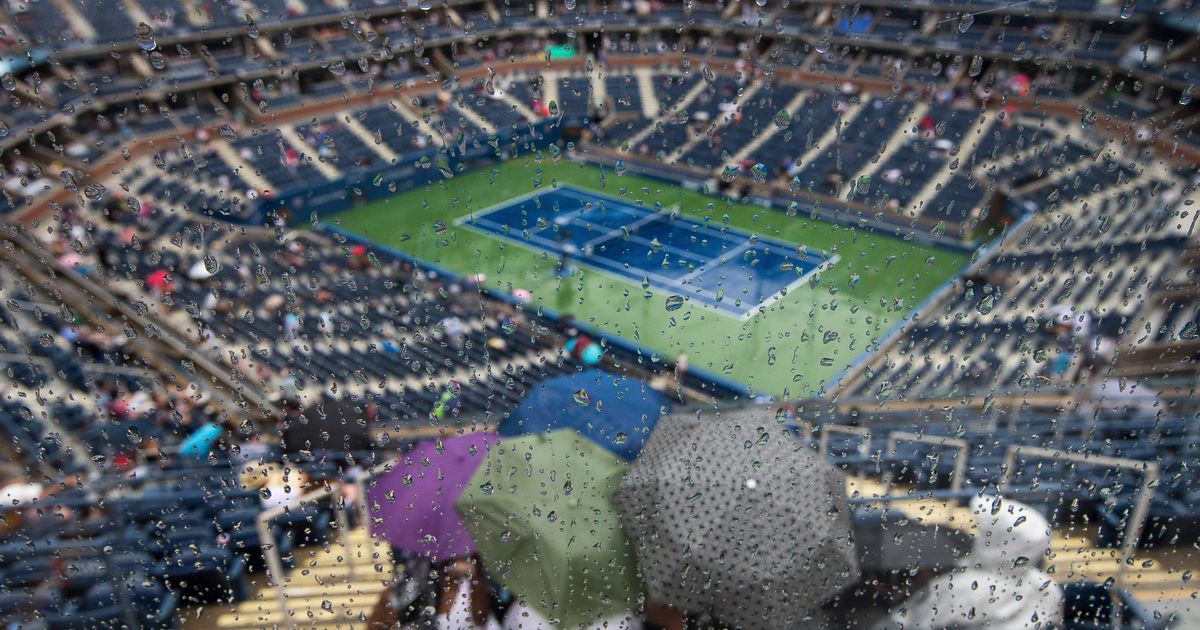
Photo: Uli Seit/The New York Times/Redux On a muggy Saturday afternoon in mid-August, tennis player Novak Djokovic appeared to vomit into a towel and called for a doctor to check his blood pressure before unexpectedly losing a second-round match in Cincinnati. The former top-ranked player told reporters he suffers from a health issue that gets worse in high-humidity conditions. This week, during the first round of the U.S. Open in Queens, Djokovic again struggled during the four hour and 36 minutes of his opening match. The 24-time Grand Slam champion appeared to suffer a cramp in his left foot, threw up, and took a medical time-out to have his back massaged between the fourth and fifth sets before losing to Argentine player Mariano Navone. Did the weather do him in again? The temperature on Monday reached 81 degrees Fahrenheit in the evening with an average humidity level of 72 percent — warm but not unbearable. But even on mild days, the tournament subjects players and spectators to long days in direct sunlight and damp and clammy conditions when it rains. For more than 1 million fans and approximately 300 players, the nation’s premier tennis tournament is a three-week marathon of 619 matches. At Billie Jean King National Tennis Center in Flushing Meadows Corona Park, there are also concerts, exhibitions, and practices open to visitors. Tennis has always been highly dependent on the weather; unlike in soccer or football, rain cancels or delays a match until the court is dry enough to be playable. But it’s not just the occasional shower that we’re dealing with now. Summer conditions in New York City have, frankly, become alarming with stifling levels of humidity, too many flash floods to count, and furnacelike heat waves, including one stretch over the Fourth of July weekend in which temperatures reached 100 degrees, tying a 60-year-old record. Then there was the tornado that recently touched down in the Rockaways and Atlantic Beach. New York is essentially a subtropical city now. With intermittent rain in the forecast over the next week, some sessions could be rescheduled or delayed for hours, corralling fans and shortening the time players have to recover for their next round. A tropical storm this time of year isn’t out of the question either. Five years ago, the remnants of Hurricane Ida soaked spectators inside Louis Armstrong Stadium and buried the surrounding grounds and parking lots in ankle-high floodwaters. While the weather forecast does not project any kind of heat wave this week, temperatures on the surface of the Open’s acrylic-on-asphalt hard courts can approach 120 degrees after hours of direct sunlight. When combined with a hot blanket of the humidity the city has endured throughout the summer, players could be forced to withdraw from their matches or push through, risking injury. Amid 2023’s heat wave, Serbia’s Novak Djokovic uses an ice pack between games during the U.S. Open men’s singles round. Photo: Corey Sipkin/AFP via Getty Images Tour organizers have tried to adapt to the increasingly extreme weather for several years. The U.S. Open has been offering male players a ten-minute pause between the third and fourth sets since 2018 (women players have been allowed the respite since 1992). Players can also request a three-minute medical time-out for each injury that occurs — which could include overheating symptoms such as dizziness or cramps. In 2019, officials introduced a state-of-the-art recovery room under Arthur Ashe Stadium where players can go during their breaks for treatments and rest. There have been some attempts to add more shade as well. When players and Hall of Famer John McEnroe complained about 90-degree temperatures in 2023, the U.S. Tennis Association and tournament referees decided to partially close the retractable roofs at Arthur Ashe and Louis Armstrong stadiums (they were originally installed to protect against rain). The following year, the USTA decided it would close the roofs based on the wet-bulb temperature, a metric measuring how well humans can cool themselves down by sweating. When that temperature surpassed 86 degrees, the roofs would be activated and players would be granted a ten-minute stoppage. In December 2025, the Association of Tennis Professionals, which manages most tennis tournaments around the world, also set its own policies around the same wet-bulb threshold after a particularly brutal Shanghai Masters in October, when players complained of dizziness and cramps and retired early from their matches. The new rules mandated that referees stop play for a ten-minute hydration break that allows players to drink fluids, change clothes, or shower in their locker room. When it climbs over 90 degrees, play is suspended until the temperature falls back down. This year, USTA officials expanded the conditions for closing the roof at Arthur Ashe, stating they would do so more often on sunny days to make it easier for players to track the ball. But some fans worry the move ruins the feel of an outdoor tournament like the U.S. Open and offers an unfair advantage to a select few players. Even with these measures in place, advocates for players say the tournament’s policies do not go far enough. Dr. Robby Sikka, medical director of the Professional Tennis Players Association, a group founded by Djokovic and fellow pro Vasek Pospisil that represents hundreds of top-ranked players, wants to see a players council that can respond to real-time conditions and suggest longer breaks if the weather is punishing. He also would like to lower the wet-bulb threshold to prevent the risk of heat stroke and other injuries and lengthen the time between game changeovers and sets so players have lengthy rest periods to hydrate better and minimize cramping. (The U.S. Open did not respond to multiple calls and emails requesting comment about its heat policies.) “We know other injuries arise in these conditions as a result of players working as hard as they are, and matches go later and take longer at the U.S. Open than at other tournaments. Players are playing five-set matches into the wee hours in the morning and coming back not fully recovered,” he said. Fans who have paid hundreds, sometimes thousands of dollars, for access have more options. This year, Oura, one of the tournament’s sponsors, set up a recovery station near Court 5 with thermal imaging to test body temperature and cooling stations to relax between points. Visitors can also duck into air-conditioned shops, restaurants, and the U.S. Open American Express Fan Experience near the main entrance; walk through high-pressure misting fans; or simply rest in tree-shaded plazas south of Ashe Stadium. There are water stations scattered throughout the grounds too. That leaves the lower-ranked athletes who have no choice but to play on the Open’s sweltering side courts exposed to all the elements. “The unseeded players are the ones you worry about,” Sikka said. With fewer places to get relief, they have to be the squeaky wheel: “My job is to educate players and say, ‘Advocate for yourself, take the ten minutes, make sure you’re hydrating, ask for extra resources.’” It’s not the kind of thing that comes easy to top athletes, but it probably beats fainting on the job. Is the U.S. Open Prepared for Extreme Weather? Your product is saved! You’ll receive emails when your saved products go on sale. Manage preferences.
Is the U.S. Open Prepared for Extreme Weather?
Full Article
Original Source
Read the full article at Curbed →KhanList aggregates and links to publicly available news content. We do not host full articles from third-party sources. Always verify important information with original sources.