
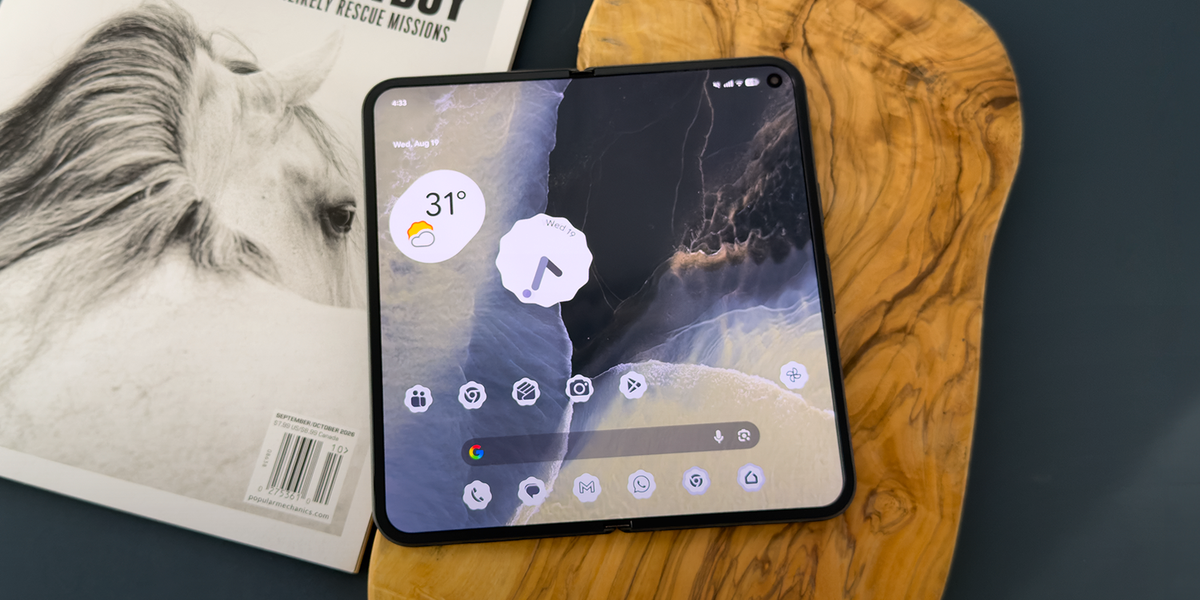
6 min readGoogle’s Pixel 11 Pro Fold isn’t as groundbreaking as its predecessor, the Pixel 10 Pro Fold. Instead, the fourth-generation foldable Pixel follows the same upgrade formula as its conventional Pixel 11 and Pixel 11 Pro. Google essentially added minor upgrades to an already high-quality product and called it a day.ProsDurable constructionExternal screen feels like a non-foldableSharp camera with optical zoom capabilitiesGuaranteed platform updates for seven yearsSolid all-around performanceConsUltra-wide and telephoto sensors need more pixelsThe foldable screen has a more pronounced crease than Samsung rivalsKey SpecsChipGoogle Tensor G6Display6.5-in. Actua exterior OLED display with a 120-Hz maximum refresh rate; 8-in. Super Actua foldable OLED display (2,076 x 2,152 pixels)CameraTriple camera with 48-MP main, 10.8-MP telephoto with 5-times optical zoom, 10.8-MP ultra-wide, Laser autofocus, 10-MP exterior selfie camera, 10-MP interior selfie cameraMemory16 GB of RAM, up to 1 TB of storageConnectivity5G, WiFi 7, Bluetooth 6DurabilityIP68 water- and dustproofAfter testing the Pixel 11 and Pixel 11 Pro phones and finding them to be iterative updates to high-quality products, I spent a week with the Pixel 11 Pro Fold as my Android sidekick. Samsung and Motorola released big-screen foldables this year, giving the Pixel serious competition. My goal was to see how the shape-shifting Google Pixel stacks up against the Samsung Galaxy Z Fold8 and Galaxy Z Fold8 Ultra, as well as the Motorola razr Fold.It didn’t take me long to determine that upgrading from the outgoing Pixel 10 Pro Fold to the Pixel 11 Pro Fold isn’t worth it, because the differences between the two phones are too few and inconsequential. However, the newcomer deserves attention from first-time foldable buyers and from upgraders switching from older handsets for the same reasons as the product it replaces.Notable Upgrades From the Pixel 10 ProHardware-wise, the upgrades in the Pixel 11 Pro Fold over the Pixel 10 Pro Fold are headlined by a slightly more powerful Google Tensor G6 chip and a bigger 6.5-inch external display (up from 6.4 inches in the Pixel 10 Pro Fold). Both screens peak at 3,600 nits of brightness, higher than the Pixel 10 Pro Fold’s 3,000 nits.Stefan VazharovThe Pixel 11 Pro Fold got HiLight like its lower-priced siblings.The phones have identical physical dimensions, but the Pixel 11 Pro Fold is almost an ounce lighter, almost certainly due to its smaller 4,806-milliampere-hour (mAh) battery (versus 5,015 mAh in the Pixel 10 Pro Fold). Thankfully, the Pixel 11 Pro Fold supports faster 25-watt wireless charging via the Qi 2.2 protocol. That’s more than double the older version's 15-watt wireless input. Regrettably, the 30-watt wired charging input remains unchanged, leaving the new Pixel Fold behind Samsung and Motorola.Better Durability Than the CompetitionAn IP68 rating for water and dust resistance was one of the top reasons I recommended the Pixel 10 Pro Fold, and that hasn’t changed for its successor. The 6 in the rating means the Pixel 11 Pro Fold is dust-tight and can withstand exposure to fine debris and particles without damage, as with any conventional flagship phone.Stefan VazharovThe foldable Pixel has the same durability rating as conventional phones.For comparison, the IP48 and IP49 ratings of the device’s big-name rivals mean they shouldn’t be in contact with bits smaller than a millimeter. Smaller particles like dust, lint, and fine sand, to name a few, can damage their foldable display mechanisms, resulting in costly repairs or full replacements.This durability advantage is a big deal, and again, a reason to consider buying it, especially if you’ve previously been concerned about the longevity of a foldable.An External Display That Feels FamiliarWhen I say the Pixel 11 Pro Fold’s external display feels familiar, I mean it feels like a conventional smartphone, and that’s a good thing. The smaller screen’s 19.5:9 aspect ratio follows the industry standard, so using the gadget when folded is the same as using any regular Android phone, including a Google Pixel or a Samsung Galaxy S.Stefan VazharovWhen closed, the Pixel 11 Pro Fold looks and feels like a regular smartphone.To put the above in perspective, the Samsung Galaxy Z Fold8 Ultra and the Motorola razr Fold have external screens with a 21:9 aspect ratio, making them taller and narrower than the Pixel’s foldable screens. Typing on these phones feels more cumbersome because their narrower displays literally shrink the on-screen keyboard.The 16:10 external screen of the Samsung Galaxy Z Fold8, on the other hand, is shorter and wider than that of the Google phone. Typing on it is comfortable with two hands, but a bit of a chore on the move with one hand. Scrolling through web pages and social media also requires adjustment because of the novel shape.I’ve been testing book-style foldable phones since 2019, and I can confirm there were days when I didn’t spend much time using their big screens for a variety of reasons. In these moments, I frequently wish their external screens were a bit more mainstream in shape, rather than requiring me to get used to them. Google solved this problem a couple of Pixel Fold generations ago, and the clever approach is once again a major selling point of the latest release.The CameraThe triple-rear camera on the Google Pixel 11 Pro Fold is fantastic all around. The phone took beautiful photos when I put it through its paces, especially in nighttime scenes, thanks to its 48-megapixel primary camera. The video footage I recorded was also excellent.Stefan VazharovAside from new software tricks, the camera hasn’t changed from the previous generation.There are a couple of added software tricks to play with. One is pretty cool—the camera takes a series of stills while you record video. The other is essentially a new collection of filters—that’s it.In terms of performance, the telephoto snapper produced excellent photos of Central Park wildlife, thanks to a lens with 5x optical magnification. For a consecutive year, the camera’s optical zoom capabilities are ahead of those of its competitors, though its sensor is still low-resolution by today’s premium smartphone standards.Photos I Took With the Google Pixel 11 Pro FoldOther Things I LikeThe uncluttered, plain-vanilla Android experience has always been among my favorite things about Google Pixel phones, and the Pixel 11 Pro Fold is no exception. The phone is the first to receive the latest Android releases and feature updates, along with the inevitable leaps forward in Google Gemini artificial intelligence These enhancements are a must-have for Android enthusiasts.Stefan VazharovThe foldable screen is stunning, but its crease is more visible than that of its Samsung rival.HiLight is another new feature on the Pixel 11 Pro Fold designed to help you cut down on screen time, but it’s more or less underbaked. When the phone is facedown, the screen glows blue if you get a call from close contacts or white if you activate Google Assistant. It’ll be interesting to see if Google further develops this feature.And a Couple of Things I Don’tAs sleek and durable as it is, the Pixel 11 Pro Fold looks and feels dated compared with its direct 2026 competitors from Samsung, particularly when its primary screen is fully open. The crease in the middle of the panel is far easier to spot and feel than the almost invisible line on the Samsung Galaxy Z Fold8 and Z Fold8 Ultra displays.This isn’t going to be a deal breaker for many, but I feel phones in this stratospheric price category must improve with every iteration, not stay the same year over year. Samsung has been steadily refining its Z Fold phones every year, and Google should be too.The Pixel 11 Pro Fold’s ultrawide and telephoto cameras are good, but they desperately need higher-resolution sensors. The 10.5-megapixel ultrawide and 10.8-megapixel telephoto shooters are significantly behind the 48-megapixel snappers of the Pixel 11 Pro and Pixel 11 Pro XL in both image quality and versatility.Because the foldable Google Pixel has a Pro label, I feel its entire camera setup should be worthy of it, not a compromise. Google did the same with the Pixel 10 Pro Fold last year, and I was genuinely hoping things would be different in the following generation.Should You Upgrade to the Google Pixel 11 Pro Fold?The Pixel 11 Pro Fold may be worth buying if it’s your first foldable and durability tops your list of musts. The camera’s generous optical zoom is also worth considering, so long as you are not obsessed with high-resolution photography. But if you already have the Pixel 10 Pro, there’s no need to consider switching.Google offers the Pixel 11 Pro Fold in obsidian and olive colorways, with up to 1 terabyte of storage. Every version of the phone comes with 16 gigabytes of RAM, which is a nice change from the regular Pixel 11 Pro phones, which come with 12 GB of RAM at the entry level. It’s also higher than Samsung’s latest foldable phones, which have 16 GB of RAM only in the top spec with 1 TB of storage.Shop the Google Pixel 11 Pro FoldOther Foldable Phones We RecommendMore Power for More MoneySamsung Galaxy Z Fold8 UltraSleeker But Fewer CamerasSamsung Galaxy Z Fold8Motorola razr FoldStefan is an award-winning consumer technology editor with over a decade of experience in reviewing gadgets, particularly smartphones, tablets, smartwatches, desktop and laptop computers across multiple form factors and platforms, as well as accessories for them. He also covers televisions and audio equipment, including headphones, earbuds, wireless speakers, and soundbars. Since joining Hearst in 2015, Stefan has contributed to BestProducts, Popular Mechanics, and numerous other publications. Prior to his current role, he served as the US Editor for GSMArena.com.Rachel is the Deputy Editor of Reviews for Hearst's Enthusiast and Wellness Group where she supports Popular Mechanics, Runner's World, and Best Products. Her background is in service journalism and earlier in her career she worked as a daily newspaper reporter and book editor. She spent more than a decade as a staff editor and writer at TripAdvisor and Penguin Random House and her byline has appeared in Time Out New York, the New York Daily News, and New York Magazine. Outside of work, Rachel can be found planning her next trip, visiting museums and galleries, and walking her wirehaired dachshund in Central Park.
Is the Google Pixel 11 Pro Fold Worth Using Your Upgrade On? Not If You Own the 10.
Full Article
Original Source
Read the full article at Popularmechanics →KhanList aggregates and links to publicly available news content. We do not host full articles from third-party sources. Always verify important information with original sources.