
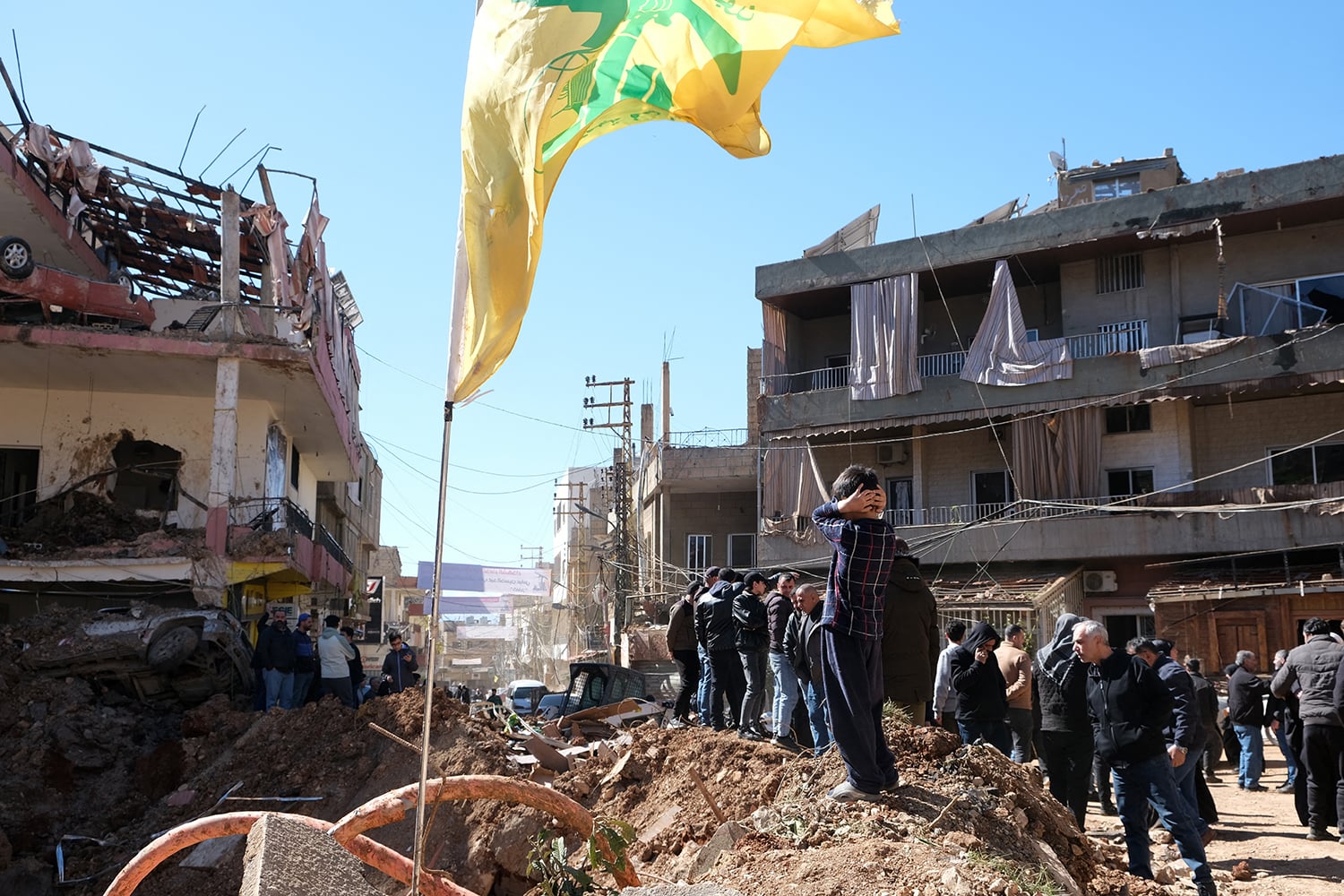
As Israelis head to the polls on Oct. 27, Americans are increasingly asking: Is Israel a good ally for the United States? The long-standing bipartisan consensus holds that Israel is the United States’ closest regional ally and among its most important partners globally. However, more and more young Americans on both sides of the political aisle seem to be holding a different view. They see Israel as a genocidal and militaristic state, dragging the United States into unnecessary foreign wars. So, which is it? A new book helps shed light on this question by telling the remarkable story of how the Jewish state redrew the map of the Middle East and enabled Washington to address one of its gravest national security challenges. Absent the bravery and ingenuity of Israel’s armed forces, the United States could very well be living under the threat of a nuclear-armed Iran today. Written by Yonah Jeremy Bob and Elliot Kaufman, In the War Room chronicles Israel’s national security policy and decision-making starting from Hamas’s attacks on Oct. 7, 2023, to the Gaza peace plan going into effect on Oct. 10, 2025. As leading journalists (Bob works at the Jerusalem Post and Kaufman works at The Wall Street Journal), the pair gained enviable high-level access to senior decision-makers in both Washington and Jerusalem and have provided a gripping first draft of this remarkable period in world history. According to a quote apocryphally attributed to Vladimir Lenin, “There are decades when nothing happens, and there are weeks when decades happen.” This quote applies to the decades of history that transpired in the 104 weeks covered in Bob’s and Kaufman’s 300-page book. So much has changed in this time that it is almost hard to remember what the Middle East looked like back in September 2023. Iran was enjoying its greatest level of global power and influence since the time of the ancient Persian empire. It was a near-nuclear power with a proxy network projecting malign influence throughout the region. Experts at the time estimated that Iran’s breakout time to the bomb was essentially zero. The Islamic Republic was a terrorist puppeteer pulling the strings on Hezbollah in Lebanon and Hamas in Gaza. Hezbollah alone possessed more than 100,000 rockets, essentially holding Israel hostage. The Assad regime in Syria was an Iranian ally serving as a transshipment hub for weapons and training from Tehran to Beirut. What a difference two years makes. In their detailed yet highly readable book, Bob and Kaufman provide a blow-by-blow account of how Israel almost single-handedly disarmed Iran and its “ring of fire” and literally cleared the way for U.S. bombers to degrade Iran’s nuclear threat by the summer of 2025. According to Bob and Kaufman, Israel was caught unprepared on Oct. 7 because the national security establishment was so fixated on the greater threats posed by Iran and Hezbollah. Jerusalem underestimated Hamas, and it paid the price. After briefly considering a preemptive blow against Hezbollah, Israeli Prime Minister Benjamin Netanyahu and his war cabinet decided that a full-scale invasion of Gaza would be necessary to eliminate the threat from Hamas. Bob and Kaufman are mostly critical of Israel’s strategy in Gaza, which they describe as achieving “mixed results at a great cost in human life and global opinion.” There was no off-the-shelf plan for a full-scale invasion of the enclave. Instead of clearing and holding territory, as the United States eventually learned to do in its counterinsurgency campaigns in Iraq and Afghanistan, Israel cleared areas of Hamas fighters only to depart and allow Hamas to return and regroup. Instead of invading all of Gaza simultaneously, Israel segmented its operations regionally and temporally, starting with Gaza City in the north and continuing south to Khan Younis and, eventually, Rafah. The segmented strategy meant the war dragged on, casualties mounted, and public opinion in the United States and the world turned against Israel. Still, in the end, Bob and Kaufman credit Israel with decimating Hamas as an effective fighting force. The most captivating part of their account, however, covers Israel activating secret war plans to eviscerate Hezbollah and Iran. Here, Bob and Kaufman describe the effort as “spectacular and decisive” with “shockingly little diplomatic cost.” Hezbollah struck first, raining down daily rocket fire on Israel shortly after Oct. 7 and causing Netanyahu to clear inhabitants from their homes in Israel’s north. By summer 2024, Israel was ready to strike back with a trap that had started to be laid in the mid-2000s. Hezbollah’s longtime leader, Hassan Nasrallah, feared that cell phone communications were not secure and ordered his fighters to communicate through beepers and walkie-talkies instead. Through years of careful work, the Mossad set up front companies and secretly became the key supplier of Hezbollah’s communication devices. Placing explosives in beepers made them bulky, so the Mossad’s front companies took out advertisements touting the beepers’ enhanced security and durability. The ruse was so successful that orders came pouring in from other eager customers from around the world. On Sept. 17, 2024, the beepers beeped their last. Hezbollah commanders removed the devices from their pockets only to have them explode in their faces, “wounding some 3,500 Hezbollah fighters in a matter of seconds.” The next day, Hezbollah walkie-talkies self-destructed, injuring another 500 fighters. What is less known is that Iranian officials used the same communication devices and more than 100 fighters in the Islamic Revolutionary Guard Corps were also injured in the blasts. The effect on Hezbollah as an organization, however, was much broader as Hezbollah fighters, not knowing what might blow up next, trashed electronic devices and avoided communications. Next, Israel targeted Hezbollah’s massive weapons caches. On Sept. 23, Israel hit an astounding 1,300 targets in a single day. The authors quote Netanyahu boasting, “In six hours, we wiped out most of the ballistic missile stockpiles Hezbollah has amassed.” Four days later, Hezbollah’s leader was removed from the battlefield. Israel dropped 85 bombs on Nasrallah’s underground compound in Beirut, eliminating the person that Netanyahu called “the axis of the axis.” The strike was aided by targeting systems that Mossad operatives had planted inside the building a month earlier and by the distraction of Netanyahu’s speech at the United Nations General Assembly, timed to finish just before the strikes began. Next came Israel’s invasion of Lebanon, in which the Israel Defense Forces (IDF) seized 85,000 military items and killed or wounded more than 10,000 Hezbollah fighters. By late November, Hezbollah was decimated and signed a one-sided cease-fire on Israel’s terms. Netanyahu did not plan to overthrow President Bashar al-Assad in Syria, but Hezbollah’s demise left the Syrian dictator naked. Hezbollah propped up Assad in his long-running civil war, but with Hezbollah decimated, Ahmed al-Sharaa and his Turkish backers saw an opportunity. In an 11-day blitz, rebels stormed Damascus and toppled Assad on Dec. 8, 2024. Amid the confusion in Damascus, Netanyahu saw an opportunity to neuter a longtime rival and the IDF sprang to action. Israel’s 480 strikes destroyed 70 percent of Syria’s most important military capabilities. Almost overnight, Syria was transformed from a potent pro-Iranian proxy to a weakened and staunchly anti-Iranian regime. Of course, the font of all these other dangers was the biggest target of them all, the Islamic Republic of Iran. Israel got in some early shots to disable Iran’s air and missile defenses following large-scale Iranian attacks in April and October 2024. The major action, however, occurred during the 12-day war in June 2025. The new Trump administration pursued negotiations over Iran’s nuclear program, and when talks deadlocked on June 12, Israel enforced U.S. President Donald Trump’s redline. Starting on June 13 and continuing for nearly two weeks, Israel unleased 4,600 bombs on approximately 900 targets, decimating nuclear facilities and killing at least 30 top Iranian officials and nine nuclear scientists. Israel’s air force was supported by hundreds of Mossad agents and special forces soldiers on the ground inside Iran, launching swarms of drones on critical targets. As Bob and Kaufman explain, “with tens of millions of Iranians who detest the regime—Persian, Azeri, Kurdish, or otherwise—there is a nearly endless supply of Iranians for the Mossad to recruit.” The big outstanding question was, would the United States help finish the job? It was not a foregone conclusion. Trump was sympathetic. Where U.S. President Joe Biden warned Netanyahu not to strike Iran’s nuclear program back in October 2024, then-candidate Trump asked, “Isn’t that what you’re supposed to hit?” Others in the Trump administration, including U.S. Vice President J.D. Vance, were more skeptical. But Bob and Kaufman tell the captivating story of how Eyal Zamir, Israel’s chief of the general staff, briefed Vance on the generational opportunity for U.S. security. He told Vance, “We are already flying over Fordow freely. There is a straight-line aerial lane open.” The United States could waltz in, destroy Iran’s nuclear program, and depart with very little risk to U.S. forces. Vance was persuaded. On June 21, Operation Midnight Hammer began—more than 125 planes, seven B-2 bombers,12 30,000-pound bunker-busting bombs. Zero U.S. casualties. Trump crowed the next morning: “Iran’s key nuclear enrichment facilities have been completely and totally obliterated.” Did Israel drag the United States into this war? In Trump’s own words prior to the strikes, “like I’d go in unwillingly. … If we don’t make a deal, I’ll be leading the pack.” The Biden administration repeatedly asked Israel to restrain itself to prevent escalation. Notably, when Iran’s first direct attack on Israel failed to cause much damage in April 2024, Biden urged Netanyahu not to retaliate and to “take the win.” Jerusalem mostly ignored this advice and often only informed Washington of the next major escalation after the operation was already underway. Had Netanyahu followed Biden’s advice, Tehran’s ring of fire might still be standing, backed by nuclear arms. But Biden eventually came around and claimed credit for Israel’s aggressive stance. In December 2024, he said, “Our approach has shifted the balance of power in the Middle East.” Similarly, as late as May 2025, it was not at all clear that Trump was willing to employ U.S. military power to strike Iran’s nuclear program. It was only Israel’s effective military campaign against Iranian leadership, air defenses, and above-ground nuclear plants that convinced Washington to join the fray. According to Bob and Kaufman, “Jerusalem needed to be daring enough to act first, so that the opportunity would be too good for President Trump to pass up.” So, is Israel a good ally of the United States? To be sure, peace in the Middle East has not yet broken out. Iran is stubbornly resisting the United States’ naval blockade. Iranian-backed Houthis are targeting Saudi Arabia and shipping in the Red Sea. And Hamas, Hezbollah, and the Iranian nuclear program may one day be reconstituted. But still, Iran is much further from achieving its nuclear ambitions today than it has been in more than 20 years. Hamas, Hezbollah, and Assad’s Syria—the ring of fire protecting Iran’s nuclear program—are no longer relevant factors in Middle Eastern security. As Bob and Kaufman argue, “From these blows, the anti-Israel and anti-America proxy axis that Iran spent decades building might never recover.” For the sake of international peace and security, let’s hope they are right.
Is Israel a Good Ally?
Full Article
Original Source
Read the full article at Foreignpolicy →KhanList aggregates and links to publicly available news content. We do not host full articles from third-party sources. Always verify important information with original sources.