
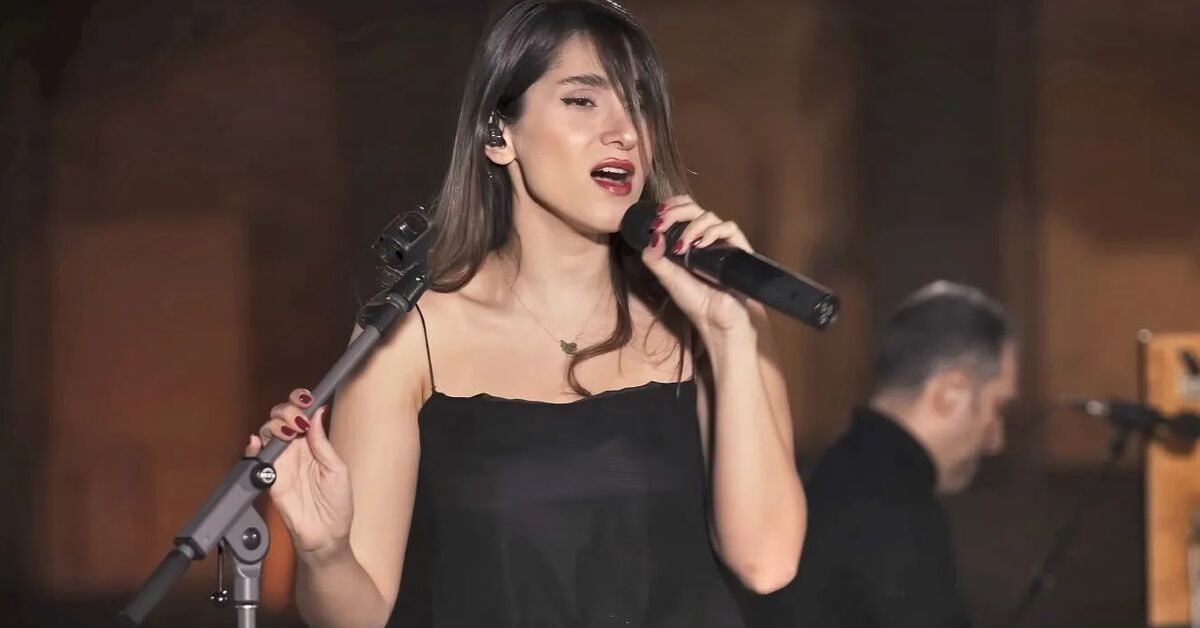
An Iranian singer and her bandmates have been flogged over a concert in which she performed without a hijab, one of their lawyers said Monday, as the Islamic Republic signals it is increasing enforcement of laws requiring women to cover their hair in public. What happened: Singer Parastoo Ahmadi and four of her associates each received 74 lashes after being convicted of public indecency and “publishing obscene and immoral content online,” the pro-reformist outlet Emtedad reported, citing their lawyer, Mostafa Nili. A member of the defense team told the BBC that Ahmadi, three musicians who performed with her and the singer’s producer received the lashes in the holy city of Qom. They additionally received a two-year ban on travel and artistic activity, according to the reports. The incident occurred in December 2024 when Ahmadi, 29, performed in Qom wearing a sleeveless shirt and without a hijab. The concert remains available on her YouTube channel and has received more than 3.3 million views. Ahmadi sings traditional Iranian songs and has more than 77,000 subscribers on YouTube.🚨🚨🚨 Les autorités iraniennes ont infligé lundi 74 coups de fouet à la chanteuse de 29 ans Parastoo Ahmadi, qui s'était produite sans voile dans une vidéo diffusée sur YouTube, a rapporté l'agence de presse Isna, citant son avocat. pic.twitter.com/LxnrMmrZNX— L'Orient-Le Jour (@LOrientLeJour) November 23, 2026 Iranian law has required women to cover their hair and wear loose-fitting clothing in public since the 1979 revolution, though enforcement has been inconsistent and many women now go without headscarves, particularly in Tehran.Ahmadi was originally convicted in June, and the sentence was upheld in September. She was arrested in December 2024 shortly after the concert and quickly released, the London-based Iran International reported. Why it matters: Adherence to Iran’s hijab law has decreased since 2022, when widespread protests rocked Iran after a young woman died in police custody after being detained for improperly wearing her hijab. Iranian women often post photos of themselves on social media without the hijab. Agence France-Presse reported in April that it is becoming increasingly common in parts of Tehran and other cities to see women out in public without a head covering. Gholam-Ali Haddad-Adel, a former parliament speaker, said in September that "war conditions" are keeping authorities from enforcing the hijab law as strictly as they would like. But lax compliance predates the war, which began Feb. 28. AFP reported in December 2025 that more women were appearing in public without hijabs.Still, officials have said over the past year that they plan to step up enforcement. In late October, Tehran prosecutor Ali Salehi threatened "decisive and deterrent measures" against government entities that fail to enforce the hijab rules, according to IranWire, an outlet critical of the government, which cited the judiciary. He spoke at a meeting of the government's Chastity and Hijab Task Force.In October 2025, an Iranian official announced the deployment of 80,000 personnel to Tehran province to ensure women were complying. The force included educators and judicial officers. Know more: Other Iranian artists have been persecuted for alleged violations of modesty laws. Singer Mehdi Yarrahi was arrested in 2023 for releasing a song in which he encouraged Iranian women to take off the head coverings. He was released on bail later that year. Singer Zara Esmaeili was arrested in 2024 for singing on camera in public without her hijab. It was not clear when she was released, but she is now based in France, according to Iranian media.
Iranian singer flogged 74 times for performing without hijab: What to know
Full Article
Original Source
Read the full article at Al-monitor →KhanList aggregates and links to publicly available news content. We do not host full articles from third-party sources. Always verify important information with original sources.