
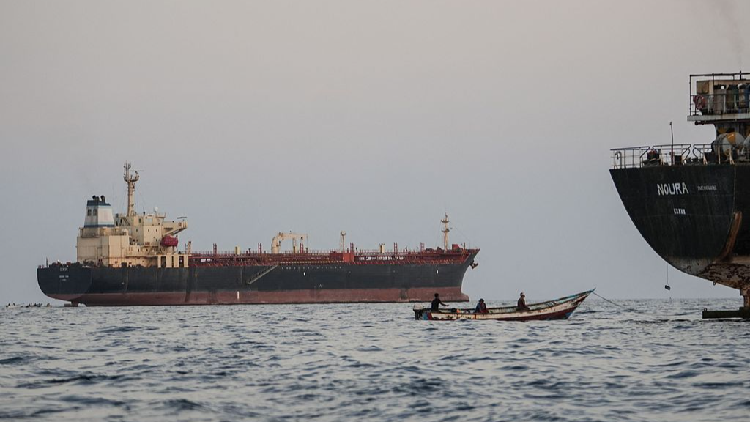
Iranian President Masoud Pezeshkian addresses day two of the opening of the 81st Session of the United Nations General Assembly at UN headquarters in New York, US, September 23, 2026. /VCG Iranian President Masoud Pezeshkian addresses day two of the opening of the 81st Session of the United Nations General Assembly at UN headquarters in New York, US, September 23, 2026. /VCG Iran and the United States remain far apart on how to end their war but diplomacy must continue, a senior Iranian official told Reuters on Wednesday, as the two sides held their first known indirect talks since a ceasefire collapsed in July.The Iranian official, speaking on condition of anonymity, said Tehran was reviewing Washington's response to its peace proposals, which prioritize lifting a US naval blockade on Iranian ports and reopening the Strait of Hormuz."There are still many differences between the Iranian and US positions, but diplomacy is continuing," the official said.The dispute over the Strait of Hormuz was also at the center of Iranian President Masoud Pezeshkian's address to the 193-member United Nations General Assembly on Wednesday. Before the war, the strategic waterway was a conduit for roughly one-fifth of global oil and liquefied natural gas shipments."It cannot be the case that everyone benefits from the Strait of Hormuz while we are denied access to shipping through this waterway. The permanent deployment of hostile fleets and the expansion of the war will not lead to peace," Pezeshkian said. "The Iranian people will not bow to pressure."Iran has sought to exert greater control over the strait and collect fees from ships using the waterway. Washington has rejected those demands and insisted that the strait must remain fully open to international shipping.Against this backdrop, Iranian Foreign Minister Abbas Araghchi and US envoys Steve Witkoff and Jared Kushner communicated indirectly on Tuesday through mediators. The talks marked the first known exchange between senior Iranian and US officials since the July ceasefire collapsed.Iranian Foreign Ministry spokesperson Esmail Baghaei said Tehran had conveyed conditions during a two-hour exchange of messages with Washington via a Qatari mediator. These included an end to the war on all fronts, a halt to US "acts of aggression" and the release of frozen Iranian assets. Commercial vessels are anchored off Yemen's coast at Bab al-Mandeb, in the straits connecting the Red Sea with the Gulf of Aden and the Indian Ocean, September 12, 2026. /VCG Commercial vessels are anchored off Yemen's coast at Bab al-Mandeb, in the straits connecting the Red Sea with the Gulf of Aden and the Indian Ocean, September 12, 2026. /VCG US Secretary of State Marco Rubio told reporters on Wednesday that a deal with Iran would involve hard work over a period of time, adding that US President Donald Trump also had military options.The US has also said it will impose so-called secondary sanctions against any country that allows Iranian flights after Wednesday.Mohsen Rezaei, secretary of Iran's Supreme National Security Council, told state TV that Iran would ensure neighboring countries' airports could not function if they stop Iranian flights.The war, launched by Trump in February alongside Israel as "Operation Epic Fury," has lasted nearly seven months, killing thousands of people, disrupting global energy supplies and spreading to other countries in the region – particularly more recently to Yemen.Tensions have also continued to threaten commercial shipping through the region's strategic waterways. In the latest reported attack in the Strait of Hormuz, Britain's UKMTO maritime security agency said a cargo ship had been hit by projectiles, causing two casualties among the crew. The crew was evacuated and the ship was on fire and adrift.Yemen's Houthi group said on Wednesday that more than 400 commercial vessels had crossed the strategic Bab al-Mandab Strait between September 11 and September 21, as fighting continued near the key waterway.It said daily traffic averaged more than 40 commercial vessels, including container ships, and claimed that international shipping was proceeding normally and safely, except for Saudi vessels, which it said are subject to a maritime ban.The numbers could not be independently verified. Separate ship-tracking data have shown fluctuations in traffic through Bab al-Mandab since the latest escalation, including periods of sharply reduced daily crossings.Meanwhile, exports from the United Arab Emirates have already recovered to pre-war levels, and Saudi Arabia has sold 60 million barrels of Gulf oil for both this month and next, to be delivered beyond the strait off the coast of Oman.Nevertheless, a third of Gulf oil is estimated to be missing from global supplies. Shortages have particularly hit refined products such as diesel, causing inflation, pushing up interest rates and hurting Trump's Republicans ahead of November's midterm elections.(With input from agencies)
Iranian official: Iran, US far apart in peace talks, diplomacy ongoing
Full Article
Original Source
Read the full article at News →KhanList aggregates and links to publicly available news content. We do not host full articles from third-party sources. Always verify important information with original sources.