
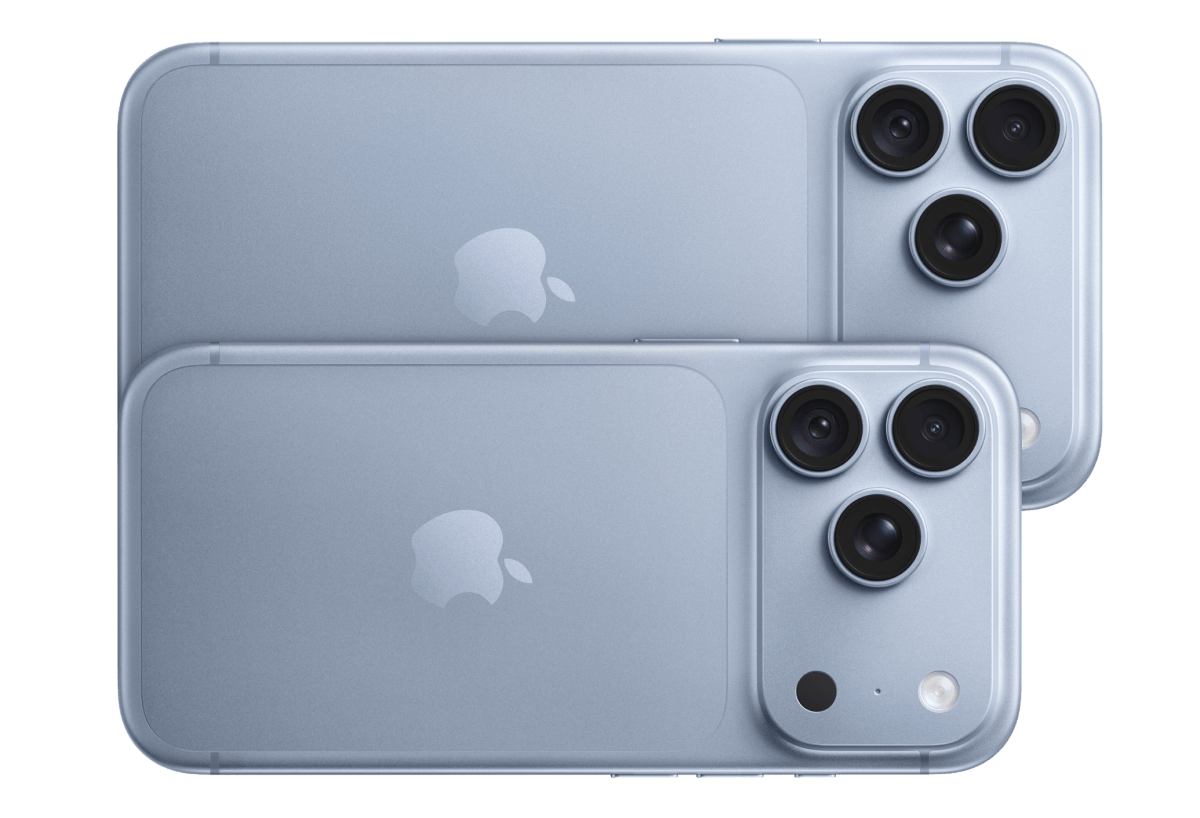
Apple doesn’t roll out new iPhones every September because it’s fond of fall colors. In fact, if you’re a fellow old like me, you might remember the days when models like the iPhone 3G or iPhone 4 hit stores in the summertime. It wasn’t until 2012 and the iPhone 5 that Apple settled on fall release dates for its main models. The fall rollouts are timed so that retail shelves are packed with new models just in time for the holiday shopping season. That way, people pressed for new gift ideas can always grab the latest iPhone model, and Apple’s financial division can celebrate a merry Christmas indeed toting up the sales figures. A glance at the calendar right at this moment reveals that we find ourselves in that sweet spot right between the September release of the new iPhone 18 Pro models and the time when people start stampeding to stores, online or otherwise, looking for gadgets to buy ahead of the holidays. And that means deciding whether the latest iPhones should replace whatever phone you happen to be carrying around at the moment. Of course, early adopters are going to take the plunge right away. But for the rest of us, deciding whether to upgrade to a new iPhone takes time, with that go/no-go decision hinging on exactly what the latest model can do that our current phone cannot. I feel like I’m well-positioned to answer that question, having handled every iPhone since the first one came out in 2007. And, more germane to the issue at hand, I’ve also had a chance to spend some time using the iPhone 18 Pro to see just what’s different with Apple’s latest phone and how it builds upon what’s come before. What’s new In case your thoughts have wandered off to more current matters like the iPhone Duo or the newly unveiled Apple HomeView, the iPhone 18 Pro debuted in September alongside the iPhone Duo as this year’s additions to the iPhone lineup. Apple only introduced Pro models alongside the iPhone Duo this fall, a break from its traditional pattern of releasing a standard iPhone flagship at the same time. Instead, you’ll have to wait for an iPhone 18 model, with rumors pointing to a spring 2027 launch. The phones Apple did release this year promise better performance, longer battery life, new camera capabilities and — thanks to the inclusion of iOS 27 — a smarter, more capable Siri. The phones also cost $100 more than their predecessors — the iPhone 17 Pro series — after those 2025 models saw a price hike of their own. Apple could hand-wave the higher base model cost of the iPhone 17 Pro by boosting the included storage to 256GB, so you were paying the same that you would have for a similarly sized iPhone 16 Pro. No such pricing contortions exist for the iPhone 18 Pro — these are straight-up price hikes, so you’re paying more for this year’s models than you ever have for one of Apple’s Pro phones. The iPhone 18 Pro looks a lot like its predecessor, which introduced a camera plateau that stretches across the back of the phone and houses the three rear lenses. (It also frees up internal space for a bigger battery, which may be its best contribution to iPhone design.) To my eye, the colors on the iPhone 18 Pro look a little more unified than the two-tone approach of the iPhone 17 Pro that incorporated different shades. I hadn’t used the iPhone 17 Pro that extensively, so holding the iPhone 18 Pro and its similar design is a bit jarring, especially when you’ve got the device in a landscape orientation. Playing a game or watching a video, I found my fingers occasionally landing on those jutting rear lenses, though that may be something I get used to with more use. Certainly, switching over from a standard iPhone 17 and its less prominent camera array, I found the Pro design quite different. As for those colors, the iPhone 18 Pro comes in the standard silver and black, with glacier and burgundy options for those who want a little more flash in their lives. My glacier review model certainly looks stylish with a blueish tint to an otherwise silvery cast. Personally, though, I like brighter colors for my phone as opposed to the staid tones Apple favors for its Pro models. Those are just a few minor changes introduced with the iPhone 18 Pro. The biggest additions can be summed up thusly: Better performance: Apple’s annual processor upgrade takes the form of the A20 Pro, a system-on-chip offering a 6-core CPU, 7-core GPU and dual 16-core Neural Engine to handle all that on-device AI that’s now front-and-center on Apple’s devices. Apple promises a boost over what the A19 Pro powering the iPhone 17 Pro models offered, but the more relevant improvement involves older phones. I ran Geekbench 7 on my iPhone 18 Pro and got single- and multicore scores that were impressively better than the A18 Pro-powered iPhone 16 Pro. More significantly, the iPhone 18 Pro also features a redesigned thermal management system to keep things from getting hot enough to affect performance, particularly when it comes to older models. I certainly didn’t run into any problems playing PUBG Mobile, a fairly demanding multiplayer shooter game that the iPhone 18 Pro handles with aplomb. On a side note, I was able to play the game outside, and while some of the richer graphical details were lost in the sun’s glare, the action remained visible enough on the iPhone display for me to claim victory. Longer battery life: Apple never reveals the size of the batteries it includes in its phones but you don’t have to do much digging on the Internet to find out that the eSIM-only version of the iPhone 18 Pro sold here in the U.S. contains a 4,288 mAh power pack. (The iPhone 18 Pro with a physical SIM tray features a slightly smaller 4,056 mAh cell.) For context, the iPhone 18 Pro’s battery is just a smidge larger than what Apple used in the iPhone 17 Pro (4,252 mAh in the eSIM model) but a massive leap from the iPhone 16 Pro’s 3,582 mAh battery. Apple prefers to talk about battery power in terms of how long you can perform certain tasks, with the iPhone 18 Pro capable of providing up to 45 hours of video playback. That’s a jump up from the 33 hours listed for the iPhone 17 Pro, so credit the more efficient A20 Pro chipset for that gain. I certainly noticed the iPhone 18 Pro’s staying power when using the phone. One afternoon, I took the fully charged iPhone out to take photos, play some games and stream some video, wrapping up my usage by nightfall. After not plugging in the phone to recharge overnight, the iPhone 18 Pro still had 63% of its charge left the next morning. You’re getting a long-lasting phone with this model. Camera improvements: The triple 48MP rear cameras introduced with the iPhone 17 Pro are back for an encore with the new model, as Apple adds a new trick to the mix in the form of a variable aperture for the main lens. You can widen the aperture to f/1.48 to let in more light or opt for an f/4.0 aperture for greater depth of field. There’s also an f/2.8 setting when you want to capture more details in the background along with the f/1.8 default aperture. On-board intelligence can pick the aperture, depending on what you’re shooting, how much light there is, and whether there’s motion in the shot. But in keeping with the phone’s Pro label, aperture can be set manually, too, by tapping the Camera Control button and selecting Lens Aperture. Image sample taken at f/4. Image taken at f/18. You can see the effect in this pair of shots I took of some Halloween decorations. The trees and background are much sharper in the photo with the f/4 aperture than they are in the one taken at the default setting. That’s not to say one photo is necessarily better than the other, but the iPhone 18 Pro certainly affords you more control. Image taken at f/4. Image taken at f/1.48. Toggling between apertures can change up the look of your photos. I shot an outdoor scene at night using various apertures, and the one taken at f/4 has a neat starburst effect around one of the jack-o’-lanterns in the background. That’s missing from the photo taken with an f/1.48 aperture. It’s easy to see how someone with more impressive photographic chops than mine could use the variable aperture on the iPhone 18 Pro to produce some very creative-looking images. You’ll find other new features with the iPhone 18 Pro’s cameras, like a smart focus tracking capability. Double-tap on whatever subject you want to track, and the iPhone 18 Pro will keep things in focus, even if that subject moves in and out of the frame. I figure this will be an excellent tool for capturing photo and video of my cat, who isn’t always the most cooperative subject when it comes to photography. More advanced users will appreciate that the iPhone 18 Pro adds pro-level controls for adjusting white balance, shutter speed and more. (And thanks to a change in iOS 27, you can now pick which controls to pin to the top of the viewfinder.) The newly introduced Photographic Styles 3 lets you adjust texture and grain control alongside tone and color, while an Apple Reference Image feature offers a way of verifying a photo’s authenticity. When shooting video, you can also apply the Cinematic mode after the fact in the Photos app. Improved on-board intelligence: The other marquee feature for this year’s crop of iPhones is the improved artificial intelligence features highlighted by a Siri assistant that’s more aware of you and the contents of your device and can take more decisive actions. That’s something powered by iOS 27, so it’s not necessarily exclusive to the iPhone 18 Pro; any phone that supports Apple Intelligence benefits from the more advanced AI in iOS 27. That said, the A20 Pro chipset and its beefier Neural Engine figure to carry out AI commands faster than on older phones. Whether that’s fast enough for the end user to notice is debatable. It’s also worth noting that some iOS 27 features require newer iPhones — you’ll need an iPhone 17 or later to take advantage of the dual capture capabilities added to FaceTime, for example, while altering the expressivity and pace of Siri requires at least an iPhone 17 Pro. So if you’ve got an older device, upgrading to the iPhone 18 Pro lets you access all of iOS 27’s capabilities. Who should upgrade? People who demand the latest phone every year or join the crush of early adopters grabbing a new iPhone the moment it becomes available — I’m going to guess that Venn diagram is pretty close to a perfect circle — don’t need me to tell them if the iPhone 18 Pro merits an upgrade. Rather, let’s look at this from the perspective of someone who’s been holding on to their iPhone for at least two years and is wondering whether there are enough new features on offer to justify a purchase — particularly in light of the iPhone 18 Pro’s higher price. The iPhone 18 Pro’s camera setup is definitely an upgrade for anyone with an iPhone 16 Pro or older. That particular model only had a pair of 48MP lenses on the wide and ultrawide cameras, while you made do with a 12MP sensor for telephoto shots. The iPhone 15 Pro had just a single 48MP sensor, turning to 12MP shooters for its ultrawide and telephoto cameras. You can count on higher resolution shots from the new phone even before you take the variable aperture feature into consideration. And that variable aperture does give the iPhone 18 Pro’s cameras greater flexibility, even if everyone who buys the phone doesn’t end up putting the feature to extensive use. If your primary activity on the iPhone is taking photos, then an iPhone 18 Pro upgrade makes a lot of sense; if you’re more of a casual photographer, the camera upgrades are a less compelling point, impressive though they may be. But the iPhone 18 Pro offers other upgrades over older phones, particularly when it comes to battery life. Apple promises nearly twice the video playback time of the iPhone 15 Pro — 45 hours on the new model compared to 23 hours with the 2023 model. iPhone 16 Pro owners can expect to get a device that lasts much longer on a charge should they upgrade. Other improvements should be noticeable as well. The iPhone 18 Pro’s display is brighter than the one on either the iPhone 16 Pro or the iPhone 15 Pro. (Its 6.3-inch panel is bigger than the iPhone 15 Pro’s 6.1-inch display, too.) The Dynamic Island on the new model is smaller. And the A20 Pro powering the latest phone is more powerful than what’s come before it. The fact remains, though, that you’re paying $200 more for an iPhone 18 Pro than you did for one of those earlier Pro models. That’s not chump change, especially in this economy, though you’re getting a lot of improvements to take the sting out of that higher price. What about the iPhone 18? There’s another group of would-be upgraders, though — the folks who would normally get the standard iPhone but have no iPhone 18 to turn to at this particular moment. Is the iPhone 18 Pro the model that finally convinces them to go Pro or would it be better to hold out until Apple introduces a cheaper model at some point next year? I’ve been a long-time user of Apple’s standard iPhones — before the iPhone 17 I work with now, I carried around an iPhone 12. And for me, upgrading to the iPhone 18 Pro from one of those base models would be a much harder sell. That’s not a reflection of the iPhone 18 Pro itself, which we’ve established as delivering a number of significant improvements. Rather, it’s the nature of the improvements — they’re fairly high-end for what someone like me uses his phone for. And I suspect that’s probably the case for owners of the iPhone 16, iPhone 15 or even earlier models. As noted above, having a main camera with a variable aperture that you can control is a great feature that produces some really compelling photographs. But is that the sort of thing that moves the needle for someone used to a more basic iPhone? And even if it was more than a nice-to-have feature for that kind of iPhone owner, is it the sort of thing you’d want to pay hundreds of dollars more than what you’re used to handing over for one of Apple’s smartphones? The answer to the first question is probably not, and I’m betting the answer to the second is a “no” carved out of giant rocks. No one likes waiting — Tom Petty even wrote a song about it — but Apple is almost certainly going to release more devices into the iPhone 18 family, possibly as soon as the first few months of 2027. And when it does arrive, the iPhone 18 may not have all the Pro-level features found in the iPhone 18 Pro I’ve been testing, but it should deliver some key improvements of its own. And it certainly won’t hit the $1,199 price that Apple’s Pro phones now command. The last word Apple has set a yearly challenge for itself — release a new phone each year that’s better than the ones that came before it. The iPhone 18 Pro offers enough tweaks and new capabilities to fulfill that brief, and Pro phone users who’ve been holding on to older models will find the upgrade worthwhile, even with the higher cost. The rest of us will have to wait to see what features trickle down to the more affordable iPhone 18. [Philip Michaels has been writing about technology since 1999, most notably for Macworld and Tom’s Guide. He currently finds himself between jobs, so if you need someone who can string a few sentences together (or make your sentences read a lot better), drop him a line.] If you appreciate articles like this one, support us by becoming a Six Colors subscriber. Subscribers get access to an exclusive podcast, members-only stories, and a special community.
iPhone 18 Pro Review: Apple’s priciest Pro phone ever poses a challenge for upgraders
Full Article
Original Source
Read the full article at Sixcolors →KhanList aggregates and links to publicly available news content. We do not host full articles from third-party sources. Always verify important information with original sources.