
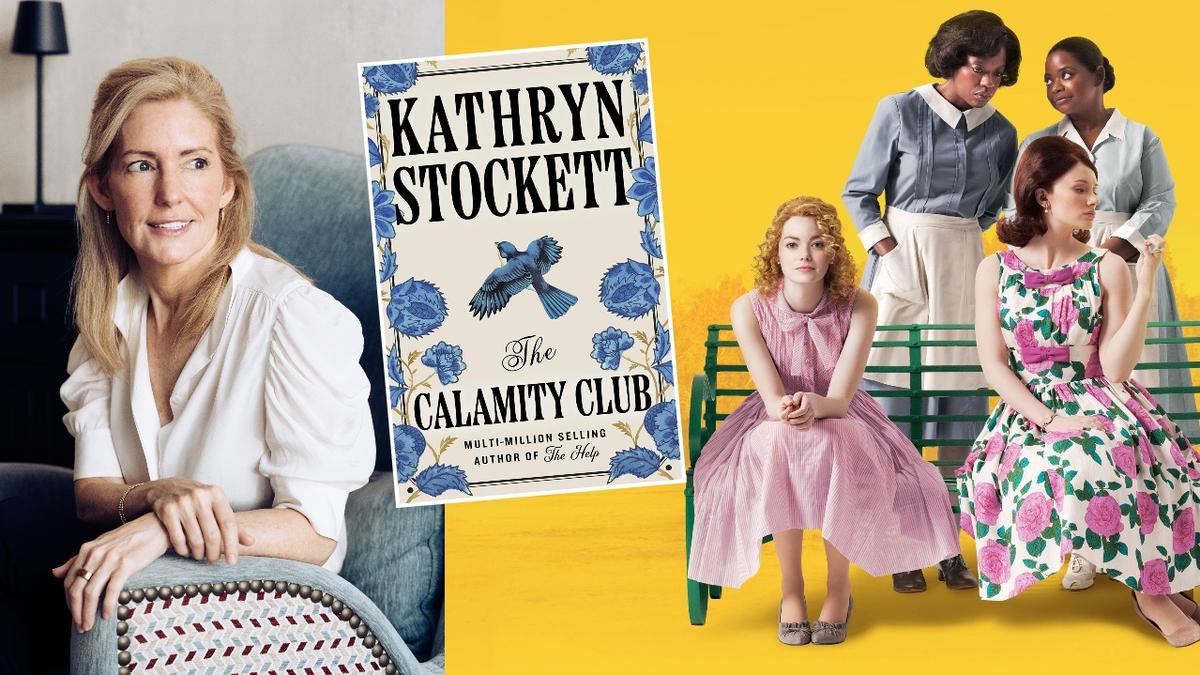
American novelist Kathryn Stockett’s debut novel, The Help (2009), became a phenomenal success but her second, The Calamity Club (Penguin India), took her 17 years to complete. Set in Mississippi during the decade-long Great Depression and its aftermath, The Calamity Club explores a bleak chapter in American history, when government policies included forced-sterilisation programmes and the detention of women deemed “promiscuous” or otherwise considered socially undesirable.The novel offers a vivid and unsparing portrait of American society at the time through three central characters: 11-year-old “orphan” Meg Lefleur; her mother, Charlie, who finds herself bearing the brunt of these government schemes; and Birdie Calhoun, who seeks security and stability from her well-off sister Frances, who has married into the wealthy Tartt family. While spotlighting the history of women’s fight for their rights, Stockett weaves an absorbing narrative, bringing together questions of class, power, family and women’s struggle for autonomy. In this conversation, the author discusses why the novel took nearly two decades to write, and how she persevered with it despite the controversy that followed The Help (which intensified following the release of the film adaptation starring Viola Davis and Octavia Spencer in 2011; Stockett was criticised, mostly, for telling the story of black women’s experiences through a white protagonist). Edited excerpts: A still from ‘The Help’ (2011). You have spoken about the time it took you to write ‘The Calamity Club’. Was it because of the pressure that came with the success of ‘The Help’? Let me start by saying, writing The Help and The Calamity Club were quite different experiences. As a southerner living in New York City 17 years ago, I was terribly homesick. I missed hearing the voices from back home and writing in those voices was the best way I knew to alleviate the feeling. I wrote the story without any expectations (and I faced 60 rejections from agents), so the success of The Help certainly took me by surprise, maybe more than anyone else. When I started writing The Calamity Club, though, this time it wasn’t just me alone in a room curing homesickness; it was me and all those readers and literary critics staring me down. The pressure was paralysing at times. It also didn’t serve me that I was intent on writing a book that wouldn’t draw the same criticisms that The Help did. So, I tried to write a very cautious, uncontentious story that (unsurprisingly) turned out rather bland. I almost quit altogether, but I didn’t want to give up on these characters, especially Meg. The feeling of failure hit hard when my publisher cancelled my contract because I still hadn’t turned in a second novel after almost 10 years. I suppose in some ways that set me free. I had nothing to lose, so I rewrote the story with honesty and fearlessness, that confronted many of the same issues that The Help did: sexism, racism, and when there was no other choice, laughing at how absurd hypocrisy can be. What did your research involve? Were there any real incidents that inspired the storyline of ‘The Calamity Club’? When I set out to write a story, it always starts with the voice, rather than a certain time in history or even a specific place, though I do like to set my stories in Mississippi where I’m from. The characters tend to inform me of when and where they are, and so I start researching much as one would unearth an artefact, as if it were underground, already whole, and it’s my job to uncover it. Once I knew we were in 1933, historical research allowed me to reconstruct the town of Oxford, Mississippi, as it looked then. I went through thousands of photographs, read countless historical accounts, and even interviewed a few folks who remembered this time. So that the reader could feel Mississippi in the 1933, I used juxtaposition. I showed the Tartts’ wealthy lifestyle compared to folks who could barely afford basic necessities; I showed the pristine Ole Miss campus in the 30s, and how every walk of life came together on the square to give the readers a sense of the complexity and fullness of this southern town. When Birdie, a rural, Mississippi Delta girl, walks around the square for the first time, she passes City Grocery selling vegetables she’s never even seen before, she gawks at a new modern contraption on a lady’s head in a beauty parlour, and she’s surprised, as was I, that so many businesses were doing pretty good in such hard times, in Mississippi, no less. Birdie doesn’t fail to notice though, the growing line of men, black and white, leaning on a porch rail, waiting for work that might never come. Meg wants God to give her “something better than five months alone in that room”, but she also wants it to “stick”. It is both heartbreaking and comical. How crucial was it for you to write something that could contain both sentiments simultaneously? Humour is so very important to me, as a storyteller, as a way to illuminate the truth, which is often heartbreaking. I don’t know how anyone gets through the darkest periods of their life without finding a spark of humour in them. It’s certainly how I stay sane as a writer and a mother and someone coming from a place so full of beauty and horror as Mississippi. If one compares the racism and sexism during the period the novel explores with contemporary times, it would seem little has changed. Would you agree? I agree that racism and sexism are still problems in the U.S., but I would be remiss if I didn’t acknowledge how much has changed for the better. That did not come easily, or by accident or simply because times changed. People have fought so hard, dedicating their lives, even giving their lives, for equal rights. When it comes to women’s rights, I hope the readers of The Calamity Club will realise this: that we cannot take women’s rights for granted. What feels permanent can vanish with startling speed — not just here in the U.S., but everywhere. We cannot afford complacency. We must protect what exists, fight for what doesn’t yet exist, and refuse to treat either as someone else’s responsibility. The interviewer is a non-binary queer writer, essayist, and culture critic.
Interview | Kathryn Stockett returns with new novel 17 years after ‘The Help’
Full Article
Original Source
Read the full article at Thehindu →KhanList aggregates and links to publicly available news content. We do not host full articles from third-party sources. Always verify important information with original sources.