
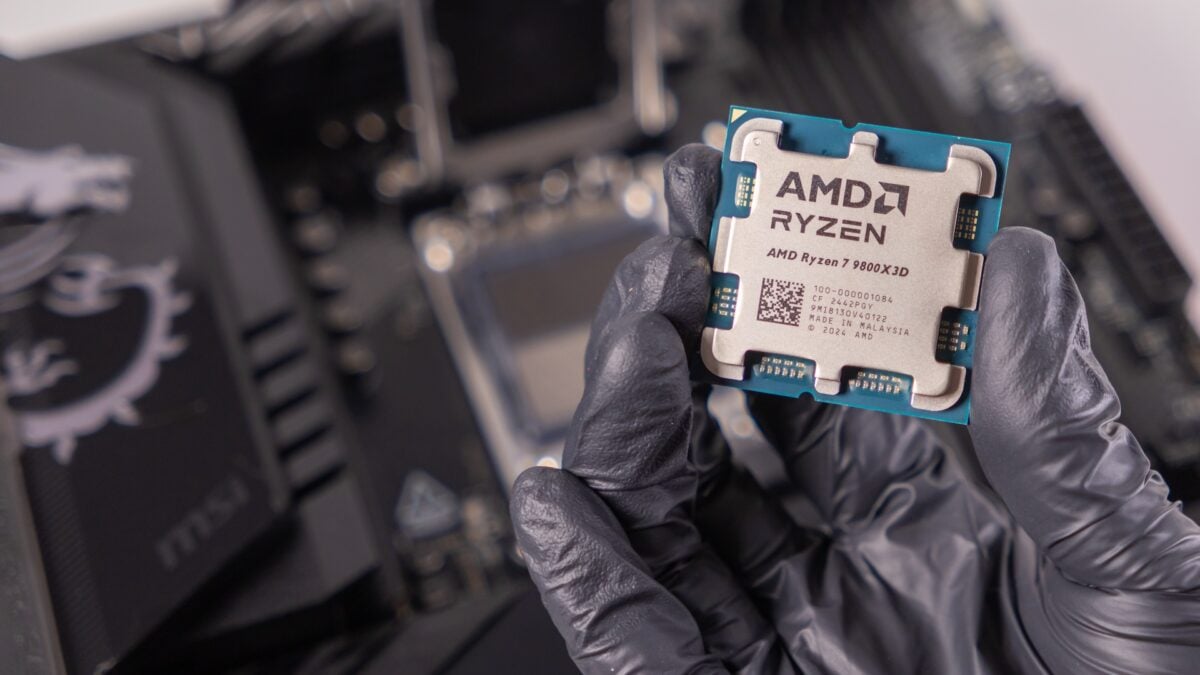
Want to know what’s coming next for your AMD-based desktop PC? We can glean an inkling of what’s coming next from AMD through its latest Zen 6 EPYC enterprise-grade processors. These are server-level chips that are built for a specific use case, so you can’t apples-to-apples compare them with any kind of desktop PC-level chip. They are, however, using the same upcoming microarchitecture. For one, these chips are built on TSMC’s N2P processing node, meaning they are 2nm chips that promise to be more efficient than the 4nm Zen 5 platform. What’s more, each of the Zen 6 chiplets—the individual integrated circuits that make up a processor—contain up to 12 performance cores. A Zen 5 chip could only hold up to eight. Though each chiplet can still hold 4MB of L3 cache per core, more cores means it can peak at 48MB L3 cache per complex compared to 32MB on the older chips. These chips also peak at a higher 5.3GHz frequency compared to the 5GHz on the previous gen. AMD Zen 6 in detail: With +27 percent IPC, it's the fastest AMD processor$AMD pic.twitter.com/Bd5JdbcZ4n — TechEpiphany (@TechEpiphanyYT) November 10, 2026 For the uninitiated, it’s a lot of complicated technobabble, but you can read more on this write-up at TechPowerUp. Suffice it to say, AMD’s next-gen Zen 6 chips will be more efficient and more powerful than before, but the more important thing is how these chips may reduce latency by upping core counts per CCD (core complex die). It all points to AMD potentially increasing the core counts across its chip lineup, which may be especially important for gamers. If Ryzen 7 chips increase their load to 12 cores, they will certainly entertain more performance for gamers. More cores on more complicated chips will necessarily mean a pricier processor, as well. AMD didn’t reinvent the wheel with last year’s biggest chips. Its Zen 5-based Ryzen 7 9850X3D was a clock speed upgrade to the already-peak 9800X3D. Team Red also pushed an even more ludicrous Ryzen 9 9950X3D2 Dual Edition, a jack-of-all-trades, master-of-everything chip built for both gamers and creators. There does seem to be a version of Zen 6 already that can support a stacked cache, such as the Venice-X 9006X SP7. Based on these specs, AMD may be considering packing even more memory onto its next-gen chips. Intel is also planning to reveal its own desktop level CPUs next year. That will include, in the company’s own words, “high-end desktop chips” in its upcoming Nova Lake series. Intel is likely planning to launch its own variety of similar tech to the 3D v-cache, though we don’t yet know how these new chips based on Intel’s own 18a-P process node stack up. The least we can say is that 2027 will be an interesting year for hardcore CPU nerds. It will be a rougher time for the typical consumer who just wants to build their next PC. AMD CEO Lisa Su recently told Yahoo Finance that “we are a data center-first company.” The irony is that AMD also claimed that sell-through of PC components slowed in its latest earnings call, blaming “higher memory and component costs.” The demand for high-bandwidth memory at these same data centers is what has caused such a spike in PC component costs. If anything, whatever comes out of AMD next may be its most powerful and most expensive processors it has produced.
Intel’s Gonna Have a Hard Time Beating AMD’s Next-Gen Gaming CPUs
Full Article
Original Source
Read the full article at Gizmodo →KhanList aggregates and links to publicly available news content. We do not host full articles from third-party sources. Always verify important information with original sources.