
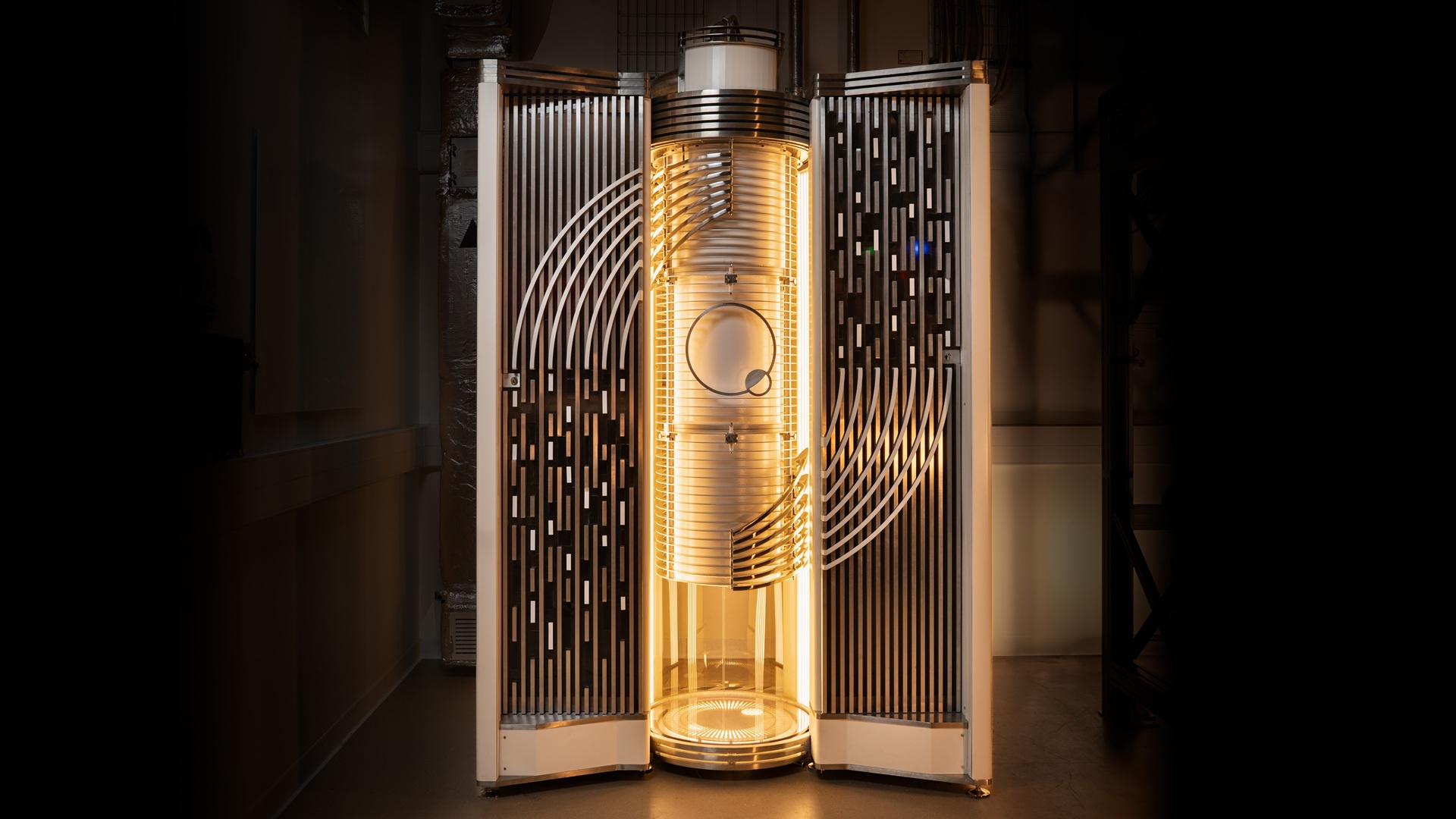
Scientists in the US have found a hidden atomic disorder inside silicon quantum devices that could help answer the long-standing question of why some qubits fail or perform inconsistently. The project was carried out by a team at Argonne National Laboratory (ANL). The researchers studied an industrially manufactured 12-qubit-class silicon quantum dot processor from Intel. For the study, they used highly sensitive measurements to map variations in the material at the nanoscale. Their analysis traced the long-standing qubit problem to random changes at the atomic level. The findings could lead to the development of more reliable silicon qubits and larger quantum computers. Silicon spin qubits are promising because they can use existing semiconductor manufacturing methods. “This study revealed that disorder on the atomic scale in the quantum well is the main source of variability of valley splitting,” ANL said. Tracing qubit failures Unlike conventional computer bits, which represent information as either 0 or 1, silicon spin qubits rely on the spin of individual electrons. An electron’s spin can point up or down in a magnetic field, somewhat like a tiny compass needle. To create these qubits, scientists trap a single electron inside an extremely thin layer of silicon known as a quantum well. Electrons in silicon also have another quantum property known as a valley state. The energy difference between these states is called valley splitting. The Chicago quantum computing testbed at Argonne National Laboratory (ANL).Credit: Argonne National Laboratory (ANL) Valley splitting competes with the electron spin states used to perform quantum computations. Once the splitting becomes too small, the electrons can leak into unwanted valley states. This can lead to errors and reduce the fidelity of the qubit. That said, valley splitting can vary greatly between devices. Even though the team suspected that material defects and inconsistencies played a role, the underlying cause of these variations remained unclear. To investigate the issue the research team used the Chicago Quantum Computing Testbed, which is operated by the Q-NEXT National Quantum Information Science Research Center. The facility is the first full-stack, solid-state qubit testbed at a US National Laboratory. Testing silicon qubits The scientists relied on electrical spectroscopy to measure valley splitting while moving the position of a quantum dot along the silicon quantum well. This made it possible to create a nanoscale map showing how valley splitting changed from one location to another. They then evaluated how these variations changed across different distances and found that random atomic changes in the alloyed quantum well were the main cause of valley splitting variability. Knowing where the variability originates could help semiconductor manufacturers to focus on improving the materials and fabrication processes for silicon quantum device production. The collaboration linked Intel’s semiconductor manufacturing with ANL’s quantum expertise. According to Jonathan Marcks, PhD, a scientist at ANL, the work could speed up research by removing one of the field’s biggest hurdles. “It can be difficult to build even a few quantum dot qubits,” he said in a press statement. “But with Intel, the prospect of making a ton of qubits on a practical device using quantum dots suddenly seems a lot more realistic.” Reducing the atomic variations could help manufacturers produce silicon qubits with more consistent valley splitting and higher fidelity. This could make it easier to scale quantum processors to much larger numbers of qubits. The research was funded by the US Department of Energy’s Office of Science through the Q-NEXT center. The study has been published in the journal Nature Communications. Get the latest in engineering, tech, space & science - delivered daily to your inbox.Based in Skopje, North Macedonia. Her work has appeared in Daily Mail, Mirror, Daily Star, Yahoo, NationalWorld, Newsweek, Press Gazette and others. She covers stories on batteries, wind energy, sustainable shipping and new discoveries. When she's not chasing the next big science story, she's traveling, exploring new cultures, or enjoying good food with even better wine.
Intel`s 12-qubit silicon chip uncovers atomic disorder that disrupts qubit stability
Full Article
Original Source
Read the full article at Interestingengineering →KhanList aggregates and links to publicly available news content. We do not host full articles from third-party sources. Always verify important information with original sources.