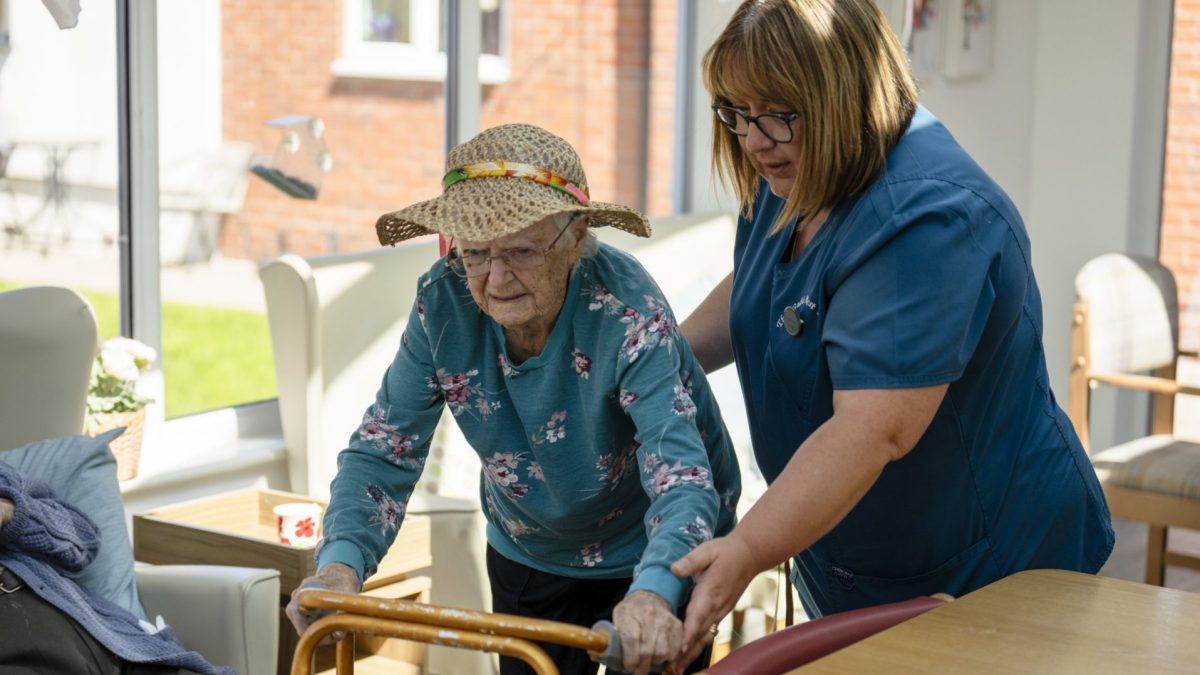
In the garden at The Gables care home in the West Midlands town of Kidderminster, Robert Thompson is taking a break from a performance by a visiting singer to enjoy the sunshine. As the singer launches into “Boogie Woogie Bugle Boy”, a hit by The Andrews Sisters from 1941, 82-year-old Mr Thompson, wearing a checked shirt and flat cap, says he’s “very happy here”. But he almost wasn’t allowed to stay at The Gables after his savings dropped below the self-funding threshold and Worcestershire County Council stepped in to pay for his place. Local authorities are legally obliged to fund people’s care if their assets are worth less than £23,250. This threshold is resulting in care home residents across the country being moved by councils looking to save money. In Mr Thompson’s case, social workers attempted to move him to a cheaper home to save £80 per week. His carers say it nearly killed him. Robert Thompson says Worcestershire County Council’s attempt to move him to a cheaper care home affected his health (Photo: Andrew Fox) His story sums up the concerns held by many people in the care system about councils’ limits on what they’re prepared to pay, meaning increasing numbers of elderly people face being moved when their money runs out. It’s a process that ends friendships and disrupts routines. They could end up in a home that’s far from their family or less suitable for them. They often have no choice over where they’re placed. Studies indicate huge effects on health and wellbeing, potentially hastening decline and death. Residents at The Gables enjoy dancing with their carers and friends (Photo: Andrew Fox) Local authorities stress that for years they have been under severe financial strain while facing growing demand for care services. In Worcestershire, the council has raised taxes, frozen recruitment, and accessed emergency government funds this year to stay afloat. Worcestershire County Council was run by the Conservatives until 2025 when Reform became the biggest party. The party warned in February that the council was facing “effective bankruptcy” and raised council tax by nearly 9 per cent. The authority is now led by the Greens, after the Tories conspired with other parties to oust the Reform leader – but says it remains “committed to ensuring that every person is treated with dignity, respect and compassion”. Experts warn that growing numbers of councils are breaching their care provision obligations. They argue that vulnerable older people who are supposed to be protected by the law are suffering as a result. Mr Thompson’s story is an example of this. How a resident ended up in hospital after proposed move Kim Northwood, manager of The Gables – which has 30 rooms and is rated Good by the Care Quality Commission – explains that the 82-year-old had been living there for a couple of years when his money virtually ran out and he needed Worcestershire to begin funding his care. The home’s fee for his care was £900 a week at the time. Kim suggested discounting this to £850, but the council wasn’t prepared to pay more than £770 – below the average cost of around £1,300 per week in England. Nearly two-thirds of this covers daily living costs such as accommodation, food and electricity. Kim Northwood is worried about how councils are trying to move more care-home residents for financial reasons (Photo: Andrew Fox) Ms Northwood says she began receiving calls from other homes that had been approached by Worcestershire to potentially take Mr Thompson – but the council did not inform him of the move. A social worker belatedly gave him the bad news later that week. Within a couple of days, he suffered a fit. “He’s never had a seizure in his life,” says Ms Northwood. Mr Thompson says this was caused by the stress of fearing he’d have to leave. Ms Northwood agrees. So do her colleagues, who noticed his sudden decline. “He didn’t want to move and the reality that he might be going was horrific,” she says. “He ended up in a hospital.” She secured a letter from Mr Thompson’s GP, warning how a transfer could harm him. This persuaded the council to pay more and allow him to stay. Mr Thompson remained in hospital for three weeks, however, and Ms Northwood feared the damage had been done. “He’d got depression,” she says. “He wasn’t eating, he didn’t want to drink… The hospital phoned me and said: ‘He’s got 48 hours to live, can he come home to die?’ I said yes.” She went away for a business trip fearing Mr Thompson would be dead when she returned. Instead, she found the former gardener on his feet. Jessica Cooper, left, works at The Gables with her sister Jade Southall (Photo: Andrew Fox) A “new form of life” came out of him, says Jessica Cooper, activity coordinator at The Gables. “Robert lived in another home before here… He wasn’t happy there. He must have been thinking: ‘What if I end up in a place like that again?’” The impact of telling residents they are moving can’t be underestimated, says Ms Cooper. “You know what stress can do to people, especially at an old age where you think: ‘This is where I’m going to stay’.” Why a 100-year-old resident was nearly forced out Attempts to move elderly residents can be deeply distressing for their families too, says Ms Cooper. She introduces me to the home’s eldest resident, Barbara Haworth, who was also at risk of being forced out – despite being 100 years old. Ms Haworth arrived at The Gables in 2024 and soon settled in. Last year, however, her funds fell below the self-funding threshold. The home offered the council a reduction of £50 a week, but that was still £100 above Worcestershire’s limit, so the local authority informed her daughters she would probably be moved. “That affected them massively,” says Ms Cooper. “You’d see the worry on their faces.” She explains that Ms Haworth “knows where her bedroom is, she knows where she sits at lunchtime, she recognises our faces… All of that would have changed”. No other local homes could take on Barbara Haworth’s needs (Photo: Andrew Fox) The centenarian was only handed a reprieve because no homes in the area said they could meet her needs. The fact it was even a possibility shows “the system is dreadful”, says Ms Northwood. The compassion and patience that carers need is clear when I chat with Pam, another resident. I ask the former shorthand secretary how long she has lived here. “Just two or three weeks,” she replies. When a carer suggests it’s been longer, Pam thinks for a moment and says two or three months. In fact, the carer tells me quietly, it’s been two or three years. Emma Bradley, the home’s deputy manager, has worked in care for decades. In a previous role, she was on the minimum wage when she learnt a relative was paid £6 more per hour for stacking shelves at Aldi, but she couldn’t bear to switch jobs. “I need to be helping people.” Ms Bradley says that MPs “need to open their eyes” about how councils’ financial struggles can affect vulnerable people. “They wouldn’t dream of ripping a child out of a home because it’s cheaper in the next place, but it’s happening all the time to these older people and it’s heartbreaking.” Some residents are granted extra funding from the NHS, but this is also being restricted. For example, residents needing incontinence pads previously received four per day from the state – already far fewer than they typically need – but this was recently rationed to three. Homes like The Gables must now spend more of their own money filling what charities have labelled the “pad gap”. Andy Burnham has previously argued for a National Care Service to run alongside the NHS, where social care would be free at the point of use. The Health Foundation estimates that an NHS-style social care system would cost £18.7bn extra a year by 2035. Emma Bradley argues the Government must provide local councils with more funding for social care (Photo: Andrew Fox) Mark Fitton, the council’s strategic director for adults and communities, recognises why decisions to move residents can be “concerning”. He insists: “In all cases, we work closely with individuals and their families to understand their needs and review decisions where appropriate, balancing these alongside our duty to use public resources responsibly. “Our recent Care Quality Commission assessment recognised that people feel listened to, respected and involved in decisions about their care, which reflects the dedication and professionalism of our staff.” Nevertheless, staff at The Gables believe the problem is worsening. Mr Thompson may be staying with them, but the carers are waiting to hear who the council want to move next. @robhastings.bsky.social
Inside the care home fighting to stop 100-year-olds from being evicted
Full Article
Original Source
Read the full article at Inews →KhanList aggregates and links to publicly available news content. We do not host full articles from third-party sources. Always verify important information with original sources.