
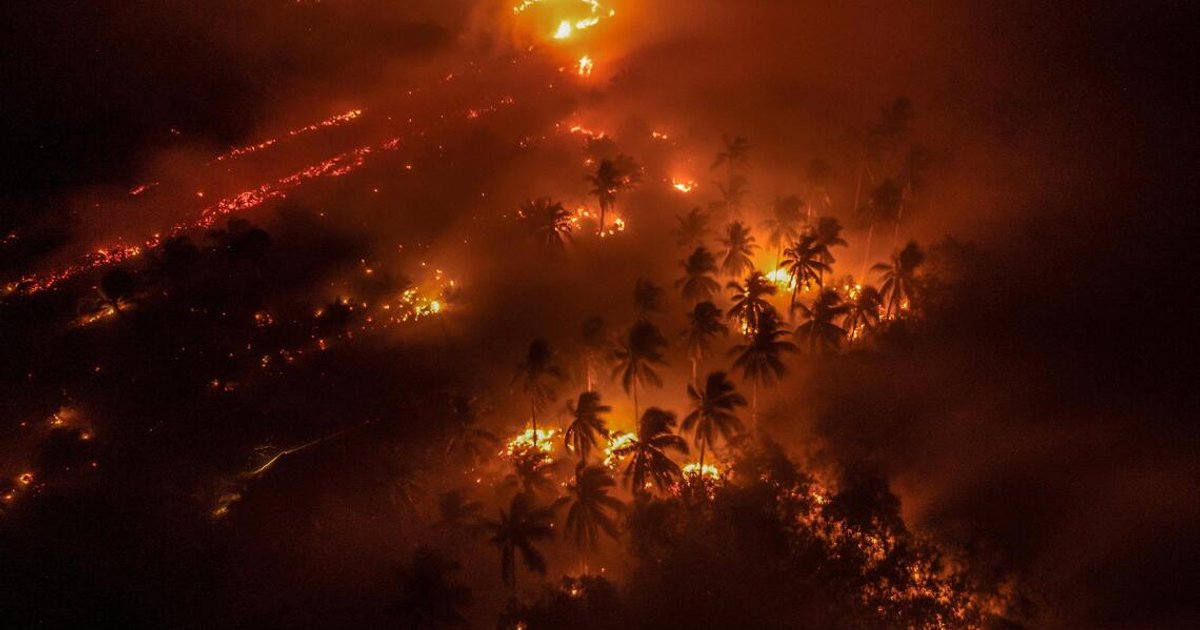
JAKARTA - Indonesia has blamed peatland degradation by past food estates for its worst wildfire season in 11 years, and will work to restore its peat ecosystem, a senior official said on Oct 15 as thick haze continued to blanket its cities and drift into neighbouring countries.The South-east Asian nation is struggling to put out its most intense wildfire since 2015 after an El Nino-driven drought made its forests and land highly flammable.The fires have been raging for months and hundreds of thousands of people have contracted respiratory illnesses in seven Indonesian provinces alone.The transboundary haze has also polluted the air in neighbouring countries, with schools suspended in Timor-Leste and some states of Malaysia.Indonesian cities, especially in Sumatra and Kalimantan, are being choked by haze, with the air pollution index far exceeding the “hazardous” level of 300.The Katingan district of Central Kalimantan had a reading of nearly 1,600 earlier on Oct 15, while the provincial capital Palangka Raya recorded nearly 1,300.Central Kalimantan and South Sumatra are currently the worst affected areas due to peatland fires, which smoulder slowly beneath the surface and can re-emerge anytime, and also produce thicker smoke.“As a result of long-standing interventions, the peatlands in Central Kalimantan and South Sumatra have suffered serious degradation. Massive drainage efforts were carried out, fundamentally altering the natural properties of the peat,” said deputy food minister Hanif Faisol Nurofiq, identifying a food estate project in the 1990s as one of the causes of degradation.“Today, a large portion of these peatlands has been destroyed,” he said.Peatland protection group Pantau Gambut estimated that out of 24 million hectares of Indonesian peatland, 16 million hectares have been made more fire-prone as a result of ecosystem damage, including extensive deforestation and the depletion of water tables.A 2024 study conducted by Pantau Gambut showed that only 3% of the peatland damaged by fires over the 2015-2019 period has been restored into forest, while 54% was converted into monoculture plantations, mainly oil palm.The government is aiming to drill wells to rewet peatlands and improve water canal management, Hanif said.“It is quite simple, yet we have forgotten, neglected, or failed to carry it out,” he said.Dozens of residents of Palangka Raya, which has been swathed in thick orange smog this week, staged a protest at its governor’s office on Oct 15, calling for the situation to be handled more effectively, local news reported.“The sky yesterday was very yellow... People’s activities are far reduced because of this condition. We hope there will be rain soon that will ease this problem,” a 46-year-old Palangka Raya resident named Adinata told Reuters. REUTERS
Indonesia blames peatland degradation for raging fires, vows restoration
Full Article
Original Source
Read the full article at Straitstimes →KhanList aggregates and links to publicly available news content. We do not host full articles from third-party sources. Always verify important information with original sources.