
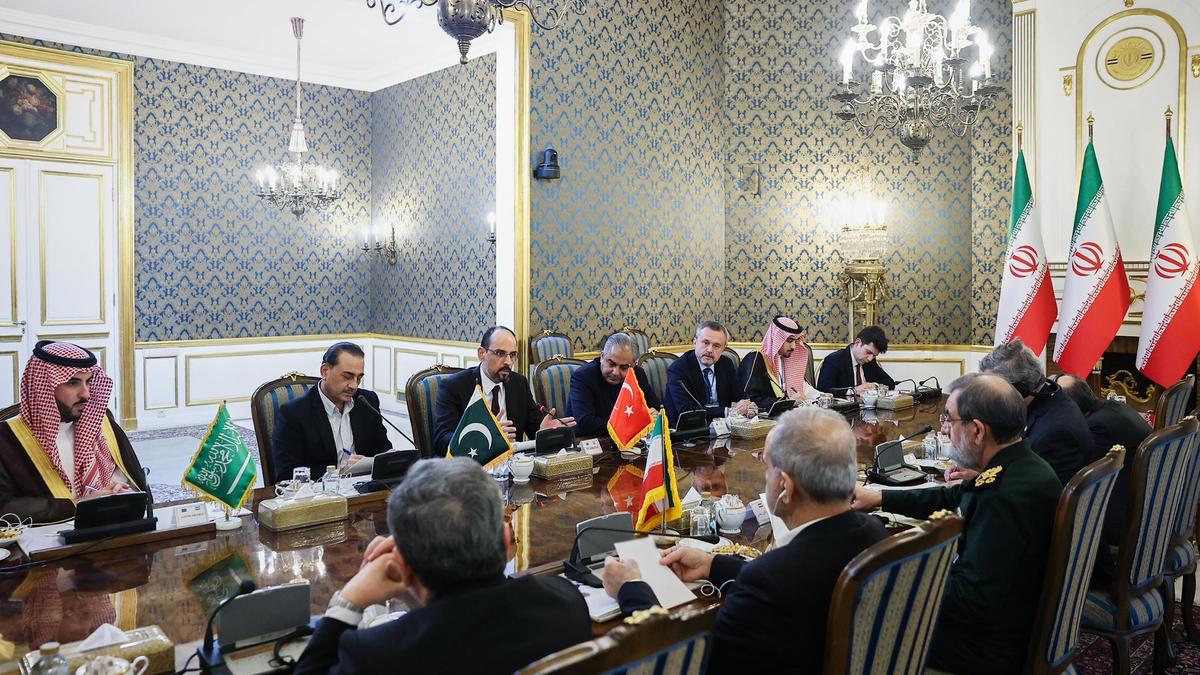
‘Saudi Arabia, Türkiye and Pakistan travelling to Iran for this exchange came as a surprise to many given that Tehran had struck several Arab countries in response to American and Israeli aggression’ | Photo Credit: VIA AP More than eight months after the United States and Israel launched strikes on Iran, West Asia remains on tenterhooks, as the United States, Israel, and Iran continue to flirt with a resumption of military hostilities. Elections in Israel as well as the U.S. midterm polls offered an interesting pause, even as war rhetoric remained high. Amid these tensions, an alliance of Saudi Arabia, Türkiye and Pakistan, known as the “Mecca Agreement”, arrived in Iran’s capital in October to discuss regional security.A large part of Iran’s response since the U.S. and Israel began bombing the country in February 2026 has been to target American interests, including data centres, and military installations across the Gulf states. This forms part of Tehran’s strategy of asymmetric warfare, shaped by its view of the conflict as an existential threat to the Islamic Republic, particularly following the killing of Supreme Leader Ayatollah Ali Khamenei in an airstrike. Published - November 04, 2026 12:08 am IST
In Tehran, a search for the future of West Asian security
Full Article
Original Source
Read the full article at Thehindu →KhanList aggregates and links to publicly available news content. We do not host full articles from third-party sources. Always verify important information with original sources.