
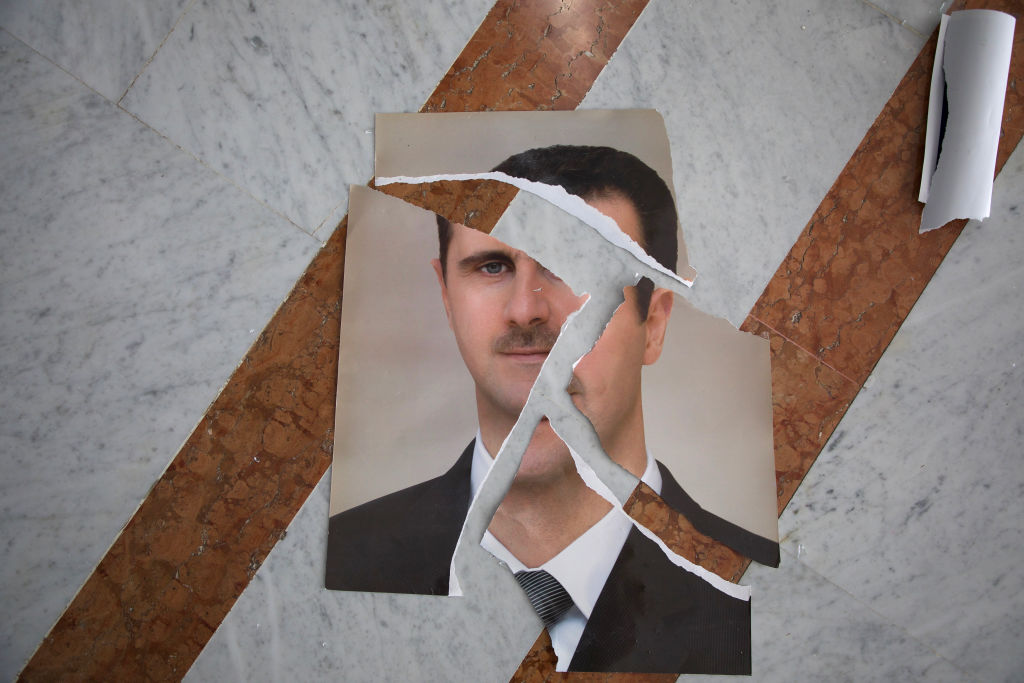
For nearly a quarter-century, former Syrian dictator Bashar al-Assad presided over a repressive system that tortured and killed Syrians with little expectation that he would ever answer for its crimes. That changed, at least symbolically, on August 11, when a Syrian court sentenced him to death in absentia alongside six others, including Atef Najib, a former security chief in the Daraa province and the only defendant in this case currently in Syrian custody for war crimes. The ruling is a milestone for a country still reckoning with decades of state violence, but Assad himself remains beyond the court’s reach, residing in Russia alongside many of his cronies, with Moscow refusing extradition. The verdict also exposes the limits of Syria’s approach to accountability. Damascus has moved to prosecute crimes committed by the Assad regime while showing far less willingness to address abuses committed by its own forces. Moscow was one of Assad’s principal backers during the Syrian civil war, deploying Russian forces to help keep his regime in power before ultimately providing refuge to Assad, his family, and other regime figures after his regime was overthrown. Yet Assad’s collapse did not sever ties between Syria and Russia. President Ahmad al-Sharaa has visited Moscow twice since taking power, Russia still maintains a reduced military presence in Syria, and Damascus continues to buy Russian oil and grain. That continuing relationship has given Syria an opening to press Moscow publicly for Assad’s extradition. Russia continues to refuse, however, and the death sentence will make a reversal even less likely. For Moscow, Assad no longer holds much strategic value, but that does not mean they would surrender him simply at Damascus’ request. Doing so without extracting concessions would allow the Syrian government to appear to be dictating terms to Moscow, a perception that Russia is seeking to avoid. If Russia ever agrees to hand Assad over, it is more likely to treat him as a bargaining chip, trading him for guarantees protecting more important Russian interests in Syria, including its military footprint. Accountability Remains Incomplete The Assad verdict represented a milestone for the Syrian judicial system as the first sentencing for a war crime, with the court relying on the original Syrian penal code for its procedures. The detention of his cousin, Atef Najib, who was directly responsible for the killing and torture of protesters in the southern city of Daraa when the Syrian uprising began in March 2011, is similarly significant. The Syrian leadership has repeatedly emphasized that accountability must be established to build a stable Syria. Sharaa said that, “There is a fine line between transitional justice and civil peace, and we will pursue all those who have committed crimes against the Syrian people.” However, individuals and forces aligned with the new government have faced far less accountability for their own abuses. In 2025, pro-government forces and militias were implicated in two major episodes of sectarian violence, one targeting the Alawite minority along Syria’s western coast and another targeting Druze communities in southern Syria. Although Damascus initiated legal proceedings in both cases, accountability has remained limited. Following the coastal massacres, a government-appointed investigative committee identified 298 suspects accused of abuses against Alawites, yet only seven appeared at the first public trial. The response to the violence against the Druze has been even narrower. The government identified and arrested just 23 members of the security forces, despite footage appearing to implicate far larger numbers of fighters. Washington Should Press Damascus for Equal Accountability President Donald Trump has emphasized national unity as one of the measures by which he judges the success of Syria’s transition, praising President Ahmad al-Sharaa for having “unified the country.” Yet Damascus’s failure to hold perpetrators on all sides accountable has fueled distrust of the new government among many of Syria’s ethnic and religious minorities. The United States should make clear that lasting stability and genuine national unity will require accountability for crimes regardless of who committed them. Ahmad Sharawi is a senior research analyst at the Foundation for Defense of Democracies (FDD). For more analysis from Ahmad and FDD, please subscribe HERE. Follow FDD on X @FDD. Follow Ahmad on X @AhmadA_Sharawi. FDD is a Washington, DC-based, nonpartisan research institute focusing on national security and foreign policy.
In Syria, Selective Prosecution of War Crimes Fosters Disunity
Full Article
Original Source
Read the full article at Fdd →KhanList aggregates and links to publicly available news content. We do not host full articles from third-party sources. Always verify important information with original sources.