
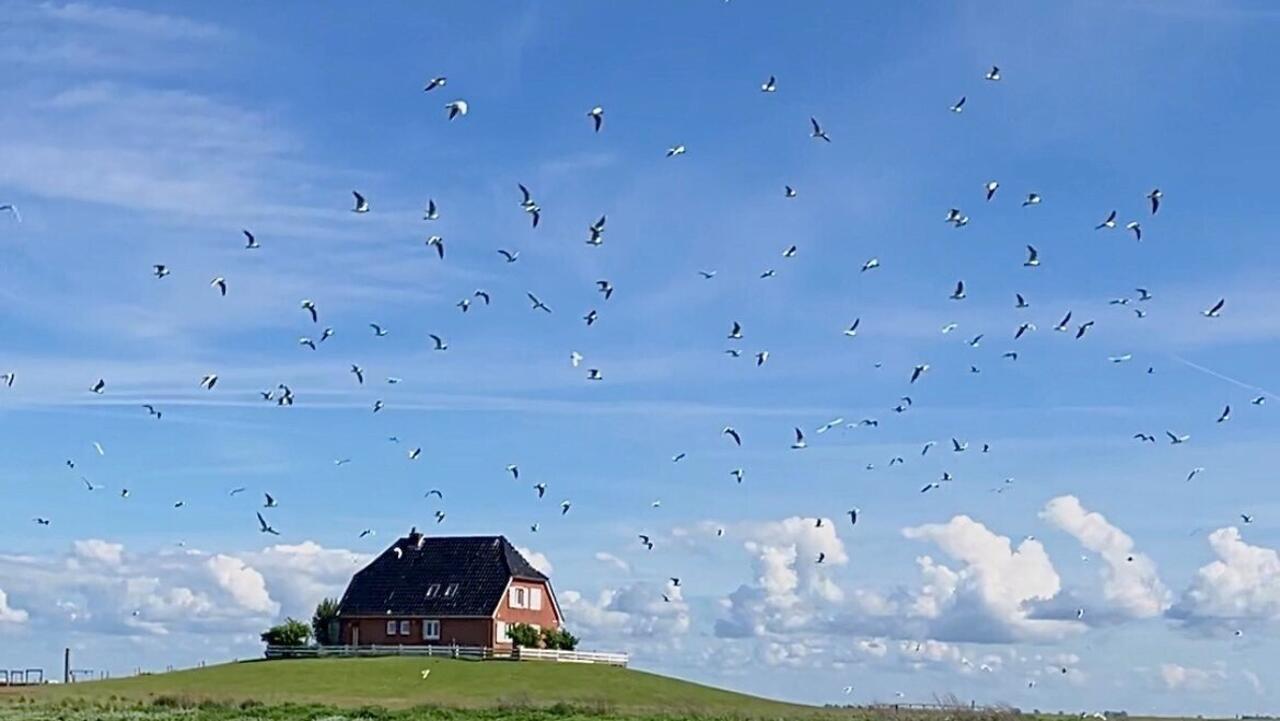
Three out of five bird species are in decline worldwide, and one in eight is threatened with extinction. In the Halligen islands of northern Germany, a sanctuary for migratory birds is under threat due to rising sea levels. These 10 small islands – listed as a Unesco World Natural Heritage Site – are home to hundreds of thousands of migratory birds travelling between Africa and the Arctic Circle, as well as many breeding birds. Issued on: 25/10/2026 - 09:00 3 min Reading time Ruth Kruse’s family has lived on the island of Nordstrandischmoor in northern Germany for more than 300 years. And for as long as anyone there can remember, the comings and goings of migratory and breeding birds have set the rhythm of their daily lives. The bird that symbolises the Halligen is the oyster catcher – 4 percent of the global population of the species nests on these islands. "Here, on our Halligen islands, more than 10,000 black-headed gulls nest," Kruse told RFI. "I also counted 400 pairs of common terns, as well as little terns, common ringed plovers and, of course, the oyster catcher, which is listed on the Red List of threatened species." She added: "Some colonies number up to 2,000 breeding pairs, or 4,000 individuals. If you try to cross the area on foot, you’re bound to step on a nest." Ornithologist Elisabeth Kirchhoff said: "If you compare the area of these tiny islets with the vast expanses elsewhere in Europe, you realise that the Halligen islands may be just a tiny pinhead, but they have a considerable influence." The bird that symbolises the Halligen islands is the oyster catcher. © Léo Bernard / RFI Rising sea level For the past 50 years, the inhabitants of the islands have been counting birds every fortnight. And over the past 15 years, the population of some species have declined sharply – in part due to rising sea levels caused by climate change. The North Sea now often floods these small, flat islands, which have no dykes, during the spring. "When the water comes, the birds flutter about frantically and can’t do anything but watch. If they have baby birds, they try to drive them away from the danger by crying out. But they cannot pick them up in their beaks and fly away,” says Julian Winkelmann, bird monitoring officer on the Hallig Norderoog. "Many baby birds also die within a couple of days after the flooding. This is because they are still completely soaked and their plumage is not yet waterproof, so they suffer from hypothermia," he explains. All the species of birds that breed on the Halligen islands build their nests on the ground. © Stefanie Schüler / RFI Cop17 biodiversity summit to confront funding gap for wildlife conservation On Kruse’s island, a flood swept away a large number of nests last June. "And then the Halligen are deserted, right in the middle of the breeding season. You can’t hear a single bird anymore. And that really is very sad," she said. German authorities and the European Union are implementing various adaptation programmes in an attempt to save the Halligen from disappearing altogether amid rising sea levels. Kirchhoff warns: "We could say 'never mind, it’s not worth the effort, let them go under, we’re not going to protect them any more'. But then we’re accepting that, sooner or later, the birds will disappear too." This article has been adapted from the original version in French by Stefanie Schüler.
In Germany’s Halligen islands, a bird sanctuary faces rising sea levels
Full Article
Original Source
Read the full article at Rfi →KhanList aggregates and links to publicly available news content. We do not host full articles from third-party sources. Always verify important information with original sources.