
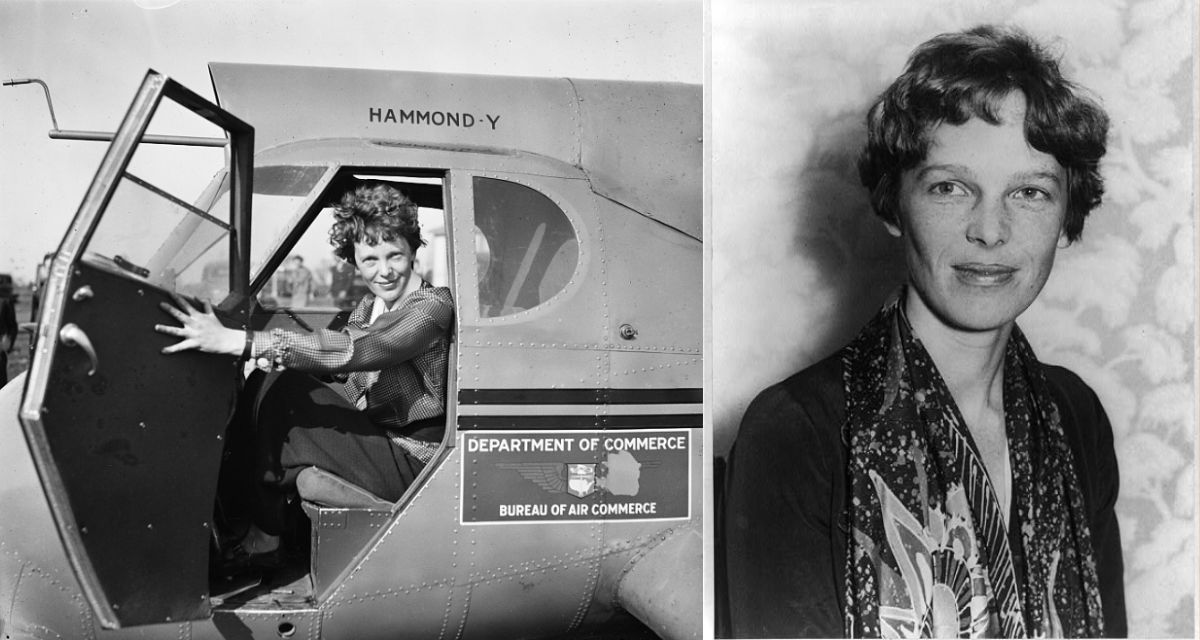
Amelia Earhart’s accomplishments in aviation made her a household name in the United States by 1928, when she became the first woman to cross the Atlantic by airplane. Her feats in flying continued to stack up. In 1932, she became the first woman to fly nonstop solo across the United States. By 1933, she had begun a new entrepreneurial venture: designing a women’s fashion line. Before the influencers of today, Earhart endorsed many products throughout her public career. But her personal love for design and unique personal fashion culminated in a first-of-its-kind activewear collection for women that changed the way clothes were worn (and sold) for years to come. Amelia Earhart’s fashion line beginnings Earhart previously made clothes for herself. An August 1934 Woman’s Home Companion article about her line claimed, “Long before she ever stepped into a plane—when she was in high school in fact—Miss Earhart began making her own clothes.” She had also designed a practical two-piece flying suit for the Ninety-Nines, an organization of women pilots, in 1930. Earhart married her publisher and publicist George Putnam in 1931. Putnam became her manager and helped Earhart develop a personal brand, which included booking her for appearances and lectures. He was also behind the idea for Earhart to start her own fashion line, as was another well-known woman in fashion: Italian fashion designer Elsa Schiaparelli. When the two women met in February 1933, they discussed “functional clothing for ‘active living,’” according to The Henry Ford. With Putnam’s help, she designed and produced everything in her Amelia Earhart Fashions line in a suite at New York’s Hotel Seymour. Amelia Earhart Fashions debuts collection The garments debuted at R.H. Macy & Co. in New York later in 1933. She had created a 25-outfit clothing line that was revolutionary in many ways. First, she sold each item as a “separate”—meaning different tops could be paired with various bottoms. “You can wear the skirt with other tops and the top with other skirts,” Woman’s Home Companion reported. The line was “ready-to-wear” and could be purchased and worn directly off the rack. (At the time, sewing patterns were also available for women who could not afford to buy the pre-made clothes.) “The brand’s label, sewn into each garment, featured Earhart’s signature in black with a thin red line streaking through it as it trailed behind a soaring red plane,” according to The Henry Ford. Earhart also incorporated elements of aviation, such as “a parachute cord or tie or belt, a ball-bearing belt buckle, wing bolts and nuts for buttons,” into her designs. Other aviation-inspired elements included raincoats made of parachute silk that had buttons shaped like propellers. Her clothes were a first in activewear, with fabrics purposefully wrinkle-free for women on the move. Her shirts featured extra-long tails that could be tucked in and stay in place during movement. According to the Federal Aviation Administration, Earhart said, “I made up my mind that if the wearers of the shirts I designed for any reason took time out to stand on their heads, there would still be enough shirt to still stay tucked in!” She said, “I tried to put the freedom that is in flying into the clothes.”
In 1933, Amelia Earhart revolutionized women’s fashion by creating aviator-themed activewear
Full Article
Original Source
Read the full article at Upworthy →KhanList aggregates and links to publicly available news content. We do not host full articles from third-party sources. Always verify important information with original sources.