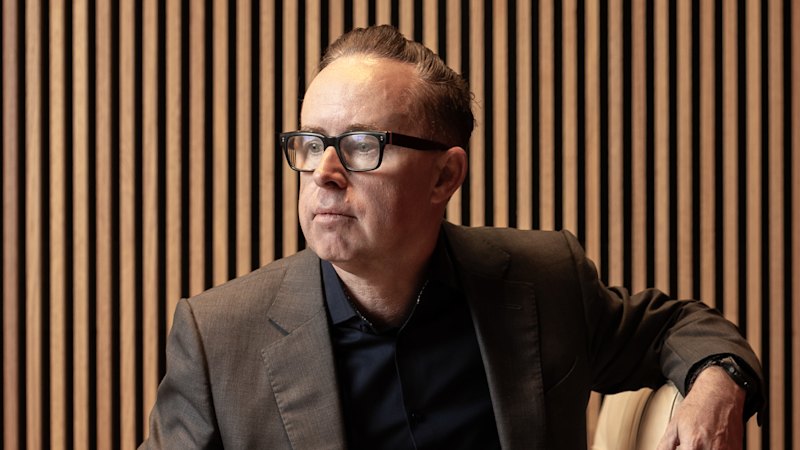
Worse than the global financial crisis. Worse than the aftermath of the September 11 attacks. A shock to the industry that could cost the company 10,000 jobs.In 2020, these predictions of the damage COVID-19 would wreak on the aviation industry were ringing in the ears of the Qantas board and chief executive Alan Joyce when the “Flying Kangaroo” announced it would sack 1820 ground crew. The High Court later ruled the workers were sacked illegally and many are still waiting for compensation.Former Qantas chief executive Alan Joyce: “I apologise for the angst that was generated.”Louie DouvisIt is only now, six years later – and three after stepping down as Qantas’ CEO – that Joyce has expressed some regret. His admission comes with caveats.Joyce says that if in August 2020, someone had told him “... on the other end of this there was going to be a vaccine, the vaccine was going to be effective, and that when the vaccine was going to work, there would be a massive rebound in demand – absolutely you would have made different decisions”.“So with the information we had at the time, I still don’t think there was any other decision you could make,” he told this masthead during a video call from his Sydney home.“Hindsight is a great thing.”Speaking ahead of the launch of his book, Alan Joyce: Riding the Jet Stream, this week, Joyce said that despite his regrets, he cannot explain the post-lockdown resentment that continues to linger among the public.‘I was the frog in the proverbial hot water and I didn’t know how hot it had gotten.’Alan JoyceThat’s perhaps not surprising from a man who, during his near 15-year tenure in the cockpit of Australia’s national airline, was not well known for his contrition. In moments of organisational chaos, political controversy and the “ghost flights” scandal, he was not prone to apology. Even now, the bottom line in Joyce’s mind was the bottom line of the company: Qantas survived COVID intact, and its shareholders didn’t lose a cent.For Joyce, who spent an earlier portion of his career at Ansett Australia, keeping an airline alive is not academic. He had a front-row seat to Ansett’s collapse, having been its head of network planning when he left the company in 2000. It collapsed in 2001.“I’m actually very, very proud of the fact that I’m not sitting here and apologising for Qantas going bankrupt, [something] that many airlines around the world did,” Joyce says, pointing to the dozens of airlines around the world that went bankrupt, forced into mergers or put under administration during that period of time. That tally included Virgin Australia in 2020.“I think we would have caused more problems, more angst, if I was sitting here, and apologising for Qantas going bankrupt.”Qantas posted losses in 2021 and 2022 as COVID brought the business to a standstill, with an underlying loss before tax of $1.8 billion, only to swing decisively to a $2.4 billion profit in 2023 as public fury mounted over spiralling ticket prices and abysmal service outcomes. Joyce resigned two months early in September 2023.Credit where it’s duePublic anger compounded after the so-called “ghost flight” scandal, in which the Australian Competition and Consumer Commission fined Qantas $120 million for selling tickets for 8000 already cancelled flights.During COVID, Qantas appeared to bank up to $1.6 billion COVID travel credits that customers were unable to use amid mass flight cancellations triggered by border closures. The company did not clearly inform customers they were entitled to refunds.Under pressure, Qantas repeatedly extended the refund deadlines. It also agreed to a $105 million settlement following a class action against Qantas over the COVID-19 flight credits.Competitor Virgin, Joyce notes, just pocketed nearly $93 million because their credits expired. A Virgin spokesperson said: “More than 90 per cent of COVID credits were redeemed by guests”. Qantas has since removed all expiry dates and the outstanding amount remains on the balance sheet. The credits Qantas holds were worth $240 million as of December 31, 2025.“I apologise for the angst that was generated [for] the customers on it, but the reality was we had 22 million bookings in the system [and] the system wasn’t designed to do an automatic refund,” he said.On many of Joyce or the airline’s most notable public controversies, his responses follow this familiar formula: “I’m sorry, but …“We were trying to fix things on the go, but it got a lot better as we went through it... Eventually, we got there and probably had the best policy of any airline out there,” he says.‘Part of the job’Few in corporate Australia have faced scrutiny or public pressure in the way Joyce did, particularly through the latter stages of his tenure. At Qantas, he says, they joked about the “Himalayas of brand reporting,” referring to the drastic peaks and troughs of consumer sentiment.Joyce faced white-hot anger from airline customers during his time at the helm. In 2024, a best-selling book by journalist Joe Aston probing the company’s dealings with politicians captured public attention. Some singled him out over the airline’s stance on social issues.Joyce, now happily married to his long-term partner Shane Lloyd, was criticised for the organisation’s support of the “Yes” campaign for marriage equality in 2017. Two-thirds of Australians voted supporting the campaign, but that didn’t stop a protester smashing a pie into Joyce’s face while he spoke on stage at a Perth event. When senior Coalition politician Peter Dutton criticised a group of CEOs who signed a letter supporting the campaign, Joyce was the one he singled out.Joyce endured attacks and criticism over the company’s position on social issues.That aside, Joyce doesn’t see himself as a victim, or a fall guy for post-lockdown resentment. He accepts “because it was part of the job”, the bouts of extreme criticism he was at times subjected to. He also laments what he describes as the reluctance of corporate leaders to advocate on political and social issues as Qantas did in 2017 and in 2023, when the company supported the unsuccessful referendum campaign for an Indigenous Voice to parliament.“I think there’s obviously fewer people doing it, if any, and I think that’s a shame because I think corporations are part of society,” he says.On whether broader societal discontent in the post-COVID years played a role in the criticism, he said: “I really can’t answer that because I certainly don’t have any post-lockdown resentment.”“Maybe some people in the community do, but I certainly don’t.”Of Aston’s book, The Chairman’s Lounge, Joyce denied its claim he upgraded Prime Minister Anthony Albanese’s son to the lounge, an invitation-only club usually reserved for politicians and business leaders.The book also alleged Joyce arranged flight upgrades for the prime minister and senior politicians. He said others in the company had the ability to arrange upgrades.“I do not remember him ever ringing me asking for an upgrade. I had to get my PA to do it on a computer … I rang her when the claim came out,” he says. “She said she had no memory of ever doing it for me. Anytime I did an upgrade I signed a document. I believe the documentation was checked and there’s no document for me signing.”Prime Minister Anthony Albanese with former Qantas chief executive Alan Joyce in 2023.AAPThe exit lounge Ultimately, Joyce’s legacy echoes at higher volume within the aviation industry than it does in the public arena or political circles.When Joyce stepped down as CEO, trust in the Qantas brand was at a low ebb and his replacement, Vanessa Hudson, who was chief financial officer under Joyce, is seeking to rebuild it.Other parts of his handover were brighter. Budget subsidiary Jetstar, of which Joyce was the founding CEO, remains profitable and has announced a slew of new routes despite rising fuel costs. Project Sunrise, a Joyce brainchild to connect Sydney to London non-stop appears to be on track for the first flights to begin next year, with the specially adapted Airbus A350 having visited Melbourne last week.Internationally, Joyce remains a respected voice in global aviation, having served as chairman of the oneworld governing board, as well as chairman of the board of governors for the International Air Transport Association.It wasn’t until his first year after leaving, while decompressing from 15 years as CEO, that he realised the full extent of the high-pressure situation he was in during his twilight months in the role.“I was the frog in the proverbial hot water and I didn’t know how hot it had gotten,” he says.He spent that year enjoying a quieter life with husband Shane and travelled back to Ireland to look after his mother. Joyce was later persuaded to write the book, which he described as a “cathartic experience”.Uncertain futureAsked about the impact of the unfolding Middle East conflict on global aviation, Joyce said the situation could go either way and executives would be preparing for a wide range of scenarios – everything from another ceasefire and a return to normal (in which case oil prices drop and demand surges).Or the conflict could widen to the point that not just the Persian Gulf is closed, but also the Red Sea. If so, that’s when “you get into really bad territory for airlines”.Joyce, who studied physics and mathematics at the Dublin Institute of Technology and later studied at Trinity College, said airlines would be examining the probability of each scenario.If the conflict paralyses oil shipments, “it doesn’t matter how much you’re willing to pay, you just don’t get supply”. That situation would be something akin to “COVID without the masks”, Joyce said, and flights would be grounded again.After reading Joyce’s book and listening to him discuss his career at length, one can have no doubt that if he was still in charge of an airline navigating the challenges coming out of the Middle East, there would be no question about his approach.He would listen to the experts and take whatever action he thought necessary to protect the company, however drastic, no matter the personal cost.And he wouldn’t apologise for it.The Business Briefing newsletter delivers major stories, exclusive coverage and expert opinion. Sign up to get it every weekday morning.Chris Zappone is a senior reporter covering aviation and business. He is former digital foreign editor.Connect via X, Facebook or email.From our partners
‘I’m sorry ... but’: Apologetic Alan Joyce tells his side of the Qantas story
Full Article
Original Source
Read the full article at Smh →KhanList aggregates and links to publicly available news content. We do not host full articles from third-party sources. Always verify important information with original sources.