
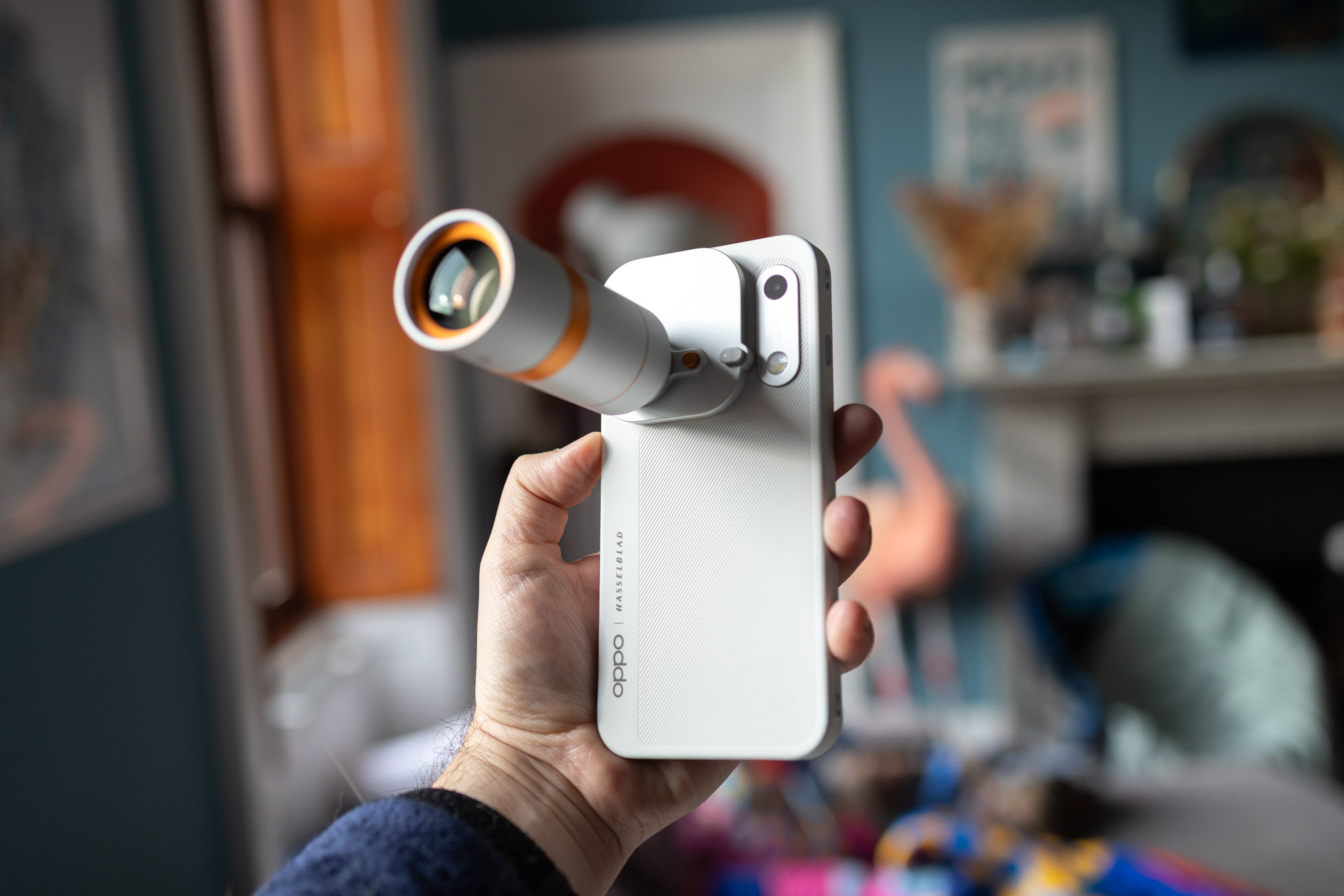
It feels a bit weird to be writing about Oppo’s new Find X10 Pro Max flagship phone. I only reviewed the company’s last flagship, the Find X9 Ultra, back in June. But as the larger number in the name suggests, the X10 Pro Max is the first of Oppo’s next generation of Android phones, packing a whole suite of new tech, from fancy new camera sensors to the new MediaTek Dimensity 9600 Pro chip. I’ve been testing it for the past week or so, and there’s no question it’s a powerhouse phone that’s well worthy of its flagship title. But I said much the same about the Find X9 Ultra, with both phones boasting incredible Hasselblad-branded camera setups and potent processors. Both also make use of detachable telephoto zoom lenses for shooting long-distance photos. It’s not that I have any problem with the X10 Pro Max so far — it’s great in every respect — it’s just that I don’t know why it needs to exist so soon after the X9 Ultra debuted. I’ve already been quite vocal about companies launching new flagships every year and the X10 Pro Max doesn’t seem to have moved the story on all that much since the X9 Ultra. And at a starting price of £1,499 in the UK (roughly $2,010) the Pro Max costs roughly the same as the X9 Ultra, too. It does come with a “complimentary accessory” in the form of either the detachable telephoto lens or an Oppo smartwatch. The glass and metal design looks classy.Andrew Lanxon/CNET Between the Find X9 Pro launched last October and the X10 Pro Max seen today, there are clear upgrades across the board. But between the more recent Find X9 Ultra and the Find X10 Pro Max it’s less clear-cut. Right now, I can’t tell you which has the better camera — both the X10 Pro Max and the six-month-old X9 Ultra have awesome setups, and I’ve taken great photos with both. The Ultra phones have traditionally stood apart from the Pro phones by having better screens, processors and camera systems. With the X10 Pro Max matching — or beating — the X9 Ultra’s performance across the board, I’m struggling to understand why you’d pick one over the other. Maybe this distinction will become clearer later. Or for a more positive spin, I find myself in a situation where both these phones appear so equally superb that I can’t choose between them. If you live in the US, this is something of a moot point. Oppo doesn’t officially sell its phones in your country, so you can’t buy either of them. If you’re still keen to know more about this phone, here’s what I like so far. Oppo Find X10 Pro Max: Great cameras with new tech I’ve been impressed with the cameras on Oppo’s recent phones, and the Find X10 Pro Max is no exception. It echoes some of what I saw in the Find X9 Ultra (200-megapixel main and telephoto lenses), but it bumps the ultrawide to 200 megapixels and adds an interesting upgrade to its main camera sensor. There are a whole bunch of cameras and sensors on the back.Andrew Lanxon/CNET The main camera uses a Samsung Isocell HPC sensor with something called DeepPix technology. What this essentially does is allow for more light information to be captured, resulting in a dynamic range (the difference between the brightest and darkest parts of an image) of around 17 stops. That’s up there with professional cinema cameras, but it also sounds like similar technology to the LOFIC (lateral overflow integration capacitor) sensor seen in phones like the Leitzphone by Leica and Xiaomi and in the recent DJI Osmo Pocket 4P. Because I’m neither an image sensor engineer nor a physicist, I can’t tell you exactly how these technologies differ — or if it really matters, as fundamentally they aim to achieve the same thing: better-looking images with more light information captured. Technicalities of the sensor aside, I’ve been pleased with many of the images I’ve taken with the phone so far. Dynamic range is (perhaps unsurprisingly) excellent, with colors that look punchy yet natural in both tone and saturation. Taken with the main camera, this shot has great dynamic range, with bold colors that still look realistic.Andrew Lanxon/CNET And again, I love the vibrant but natural tones of this scene from the main camera. It’s pin-sharp, too.Andrew Lanxon/CNET I like this shot, but I do think it looks a bit too “HDR” from the image processing.Andrew Lanxon/CNET This shot is a little drab, but it’s still packed with detail.Andrew Lanxon/CNET While some images can look a bit overprocessed, with unnaturally lightened shadows, I think the phone gets the balance right better than many Android cameras. Oppo also says it’s taken a lighter-touch approach with artificial image sharpening, instead giving images a more natural appearance when it comes to fine details. I think this has worked for the most part, although I sometimes find it goes too far the other way, with some highlights having a noticeable haziness and lack of definition around them. I shot this in the Master mode in order to take manual control of the white balance, as well as make extra edits in Adobe Lightroom.Andrew Lanxon/CNET I used Master mode here too to choose my own white balance as well as use manual focus to ensure focus was on the owl and not on the bars of the cage.Andrew Lanxon/CNET Like with the Find X9 Ultra, I found that some of my favorite shots were taken using the Master mode where I took manual control of settings, including white balance, and in some cases shot in DNG raw to apply my own edits in Adobe Lightroom. The ultrawide has been bumped to 200 megapixels and its shots are crystal clear. I used one of the color filters here to add some drama to the scene.Andrew Lanxon/CNET Taken at 6X zoom, this shot of a man with his falcon looks great.Andrew Lanxon/CNET At 3X optical zoom this shot is vibrant, with rich colors. There is a softness to the highlights around the yellow pylons in the middle, however.Andrew Lanxon/CNET There’s little color shift between the main and ultrawide lenses, and the 3x optical telephoto camera captures crisp details, with almost no noticeable drop in quality when you push the zoom to 6x by using digital cropping. With the telephoto lens attached I could snag this shot of a seagull needlessly trying to ride a boat. Surely it knows it can fly?Andrew Lanxon/CNET You can go right up to 40X zoom, though the details become noticeable softer at this point.Andrew Lanxon/CNET If you want to take the zoom even further, slap on the physical telephoto zoom lens to achieve an optical zoom up to 10x and a digital zoom up to a whopping 40x. I’ve used these lenses on the X9 Ultra and the X9 Pro before and they’re good fun, especially if you’re into wildlife photography and want to capture a bird off in the distance. The quality isn’t great when you push it right to 40x, and the phone uses AI to upscale some of the details, but it’s far better than what you’d achieve with the phone by itself. I don’t know exactly how much the X10 Pro Max’s telephoto lens will cost, but keep in mind that the Hasselblad lens for the Find X9 Ultra was a princely $400 accessory. I used one of the camera’s color profiles to give a slight filmic look to this scene.Andrew Lanxon/CNET There are a variety of new filters to choose from, all of which use a grid-based adjustment system, not unlike Apple’s Photographic Styles.Andrew Lanxon/CNET I love taking panoramic images like this.Andrew Lanxon/CNET The camera comes with extras like the Hasselblad XPAN mode for taking wide, narrow panoramic images, along with a new color filter tool that’s basically identical to the color and tone grid Apple uses in its Photographic Styles. Still, I’m not complaining — it works well and it’s easy to craft a more creative look for your image. I suspect Apple may not be thrilled at the similar interface. I’m overall impressed with the camera on the Find 10 Pro Max. It’s more than capable of taking stunning images, especially if you’re into your zoomed-in shots. But I can’t say if it’s any better than the Find X9 Ultra, or even if it’s supposed to be. The new sensor technology should mean it’s the better camera, but the Find X9 Ultra has a second telephoto zoom camera, a longer telephoto accessory and it’s covered in Hasselblad branding and colors. To understand the minute differences between their camera capabilities, I need time to put the two phones side-by-side. I also want to test it against the Leitzphone to see how the DeepPix sensor compares to the LOFIC one. The Leitzphone’s sensor is also physically larger, and the phone itself offers unique photography tricks like its continuous telephoto zoom, its physical settings wheel and its variety of Leica film profiles, all of which make it the camera phone to beat, in my opinion. Oppo Find X10 Pro Max: Solid performance, too many apps The Find X10 Pro Max is powered by the latest MediaTek Dimensity 9600 Pro chip, rather than a Qualcomm chip as you’ll find in the Find X9 Ultra. There are some differences in performance between the two processors, with the X10 Pro putting in better processing scores on Geekbench 7, while the Find X9 Ultra’s Qualcomm Snapdragon 8 Elite Gen 5 chip consistently outperforms on 3DMark’s graphics benchmark test. It’s a high performance phone in every sense.Andrew Lanxon/CNET In everyday use, the X10 Pro Max was capable of handling everything I could throw at it, from demanding games like Genshin Impact to editing images in Adobe Lightroom. I honestly can’t say I find the phone to be any more (or less) powerful than the X9 Ultra, so if you were hoping to choose between the phones on benchmark tests alone, then you’re out of luck. What continues to bug me with Oppo’s phones is the needless amount of junk you’ll find preinstalled the first time you turn it on. There are third-party apps such as Temu, TikTok, ChatGPT and LinkedIn, and apps I’ve never heard of, including Bigo Live and iQiyi. Throw in the wealth of Oppo’s own apps, shopping services and theme stores, and the phone feels cluttered before you’ve even had a chance to download anything of your own. This is nothing new, though — I leveraged the same criticism at the Find X9 Ultra, and indeed many other Android phones. Yes, you can uninstall any of the garbage you don’t want, but it irks me that these expensive phones feel ad-supported because of the casserole of nonsense clogging your app library. Oppo Find X10 Pro Max: Battery life and other features The Find X10 Pro Max packs a whopping 8,000-mAh silicon-carbon battery, at least in my test version; some EU regions will have a slightly smaller 7,150-mAh battery. After an hour of our YouTube streaming rundown test, the phone had dropped from full to 98% remaining and by the third hour was only down to 89%. I don’t love the amount of preinstalled junk on the phone.Andrew Lanxon/CNET That’s not bad at all, putting the phone in line with top performers like the Samsung Galaxy S26 Ultra although not quite troubling the epic stamina of the iPhone 18 Pro Max. It also didn’t quite beat the scores achieved by the Find X9 Ultra. Still, it’s a great effort and you should comfortably expect the phone to offer at least a full day of demanding use with enough spare to get you a fair way into day two. The phone supports 80-watt wired fast charging which should make it extremely quick to put some juice back in the tank if you’re running short before heading outside. Though you’ll need to get a compatible fast charger. Oppo also reckons the battery is optimized for longevity, promising the battery capacity will only drop to 80% after five years. While I obviously haven’t been able to test this, I’m pleased that there’s a focus on longer-lasting hardware to keep your device going for longer. Oppo offers five years of software updates and six years of security updates, which is a step behind the seven years Google and Samsung offer, but I suppose it could be worse. Oppo Find X10 Pro Max: Should you buy it? As I mentioned at the start, I find this phone’s existence confusing. It’s a camera powerhouse, but it comes right off the back of another Oppo camera powerhouse — there’s a huge amount of overlap in what these phones offer and who might be interested in buying them. They’re both superb, no question about that, but it’s like inviting two Michelin Star chefs to cook the same meal for your party — there might be subtle differences that mean some like one over another, but at the end of the day, why have both? I rarely wish for companies to offer less in their product lineups, but in this instance I feel Oppo might have been wise to hold back some of its camera innovations — especially the new sensor tech. Instead, the Find X10 Pro Max could have been more focused on general lifestyle, productivity and gaming, giving the Find X9 Ultra a bit more breathing room. Everything is great about this phone from its vibrant display to its awesome cameras. But I loved the same about the X9 Ultra, too.Andrew Lanxon/CNET Then, after Spring next year, the company could launch the Find X10 Ultra, packed with incredible camera tech that totally changes the game and makes it feel fresh and exciting. Instead, the X10 Pro Max feels so close to its six-month-old sibling that I’m struggling to work out which one is actually better and, more importantly, why both need to exist at the same time. Early adopters who shelled out the high price for the Find X9 Ultra specifically for the camera performance may well feel a little cheated that the company has so quickly launched a phone with brand-new, superior image sensor technology. It feels like Oppo is at risk of diluting its impact, cannibalizing sales of its own products and potentially even alienating existing customers. But company strategy aside, the X10 Pro Max is excellent, offering everything you’d need from a flagship phone right now. It’s got enough power for any of your daily tasks and the camera is well-equipped to capture your world as you see it. How it compares to the competition remains to be seen.
I’m Baffled by Oppo’s Find X10 Pro Max, but I Love It Anyway
Full Article
Original Source
Read the full article at Cnet →KhanList aggregates and links to publicly available news content. We do not host full articles from third-party sources. Always verify important information with original sources.