
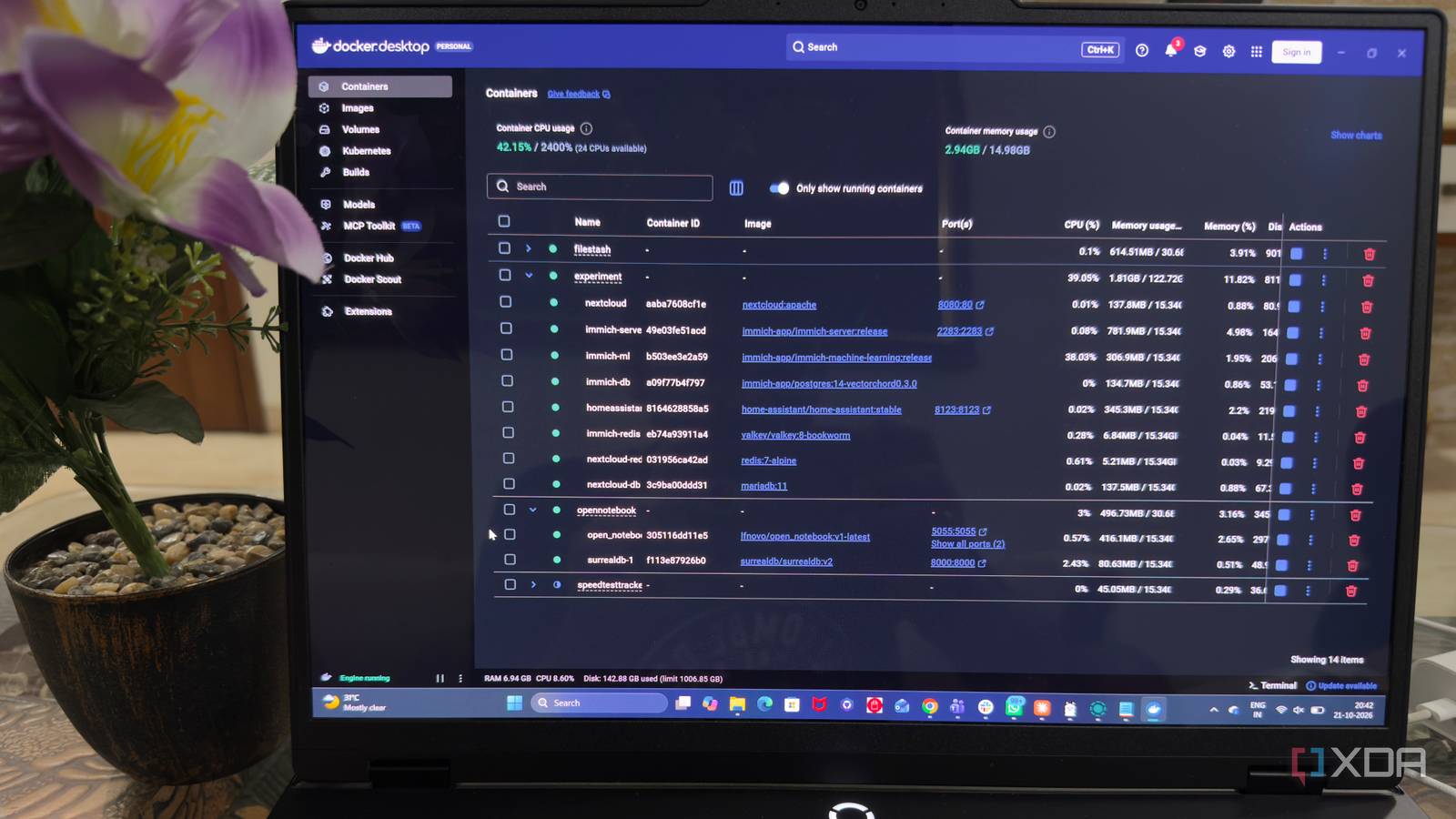
Published Oct 21, 2026, 5:30 PM EDT Beginning his professional journey in the tech industry in 2018, Yash spent over three years as a Software Engineer. After that, he shifted his focus to empowering readers through informative and engaging content on his tech blog – DiGiTAL BiRYANi. He has also published tech articles for MakeTechEasier. He loves to explore new tech gadgets and platforms. When he is not writing, you’ll find him exploring food. He is known as Digital Chef Yash among his readers because of his love for Technology and Food. At first, I saw self-hosting as a simple way to cut my monthly expenses. Why pay for software when I could run free, open-source alternatives on my own hardware? It seemed like an easy decision, especially when I wanted more control over my data and the tools I used. But after years of self-hosting, I realized the financial side wasn't as straightforward as I expected. The more I explored, the more I questioned whether I was actually saving money. Here's what changed my perspective and how I approach self-hosting today. The software was free, but nothing else was Free software comes with a price Most of the tools I wanted to self-host were open-source, and I could run them on my own hardware without paying for licenses. On paper, it looked like an easy way to cut recurring expenses. But the software was only one part of the equation. I also had to account for electricity to keep my services running around the clock, extra storage for my growing file collection, and external drives to keep backups safe. Networking equipment and replacement drives added to the expenses, too. These costs were easy to ignore because they rarely showed up together. But over time, these small expenses added up. I was avoiding monthly subscriptions, yet self-hosting was costing me more than the price of the software suggested. My time became the most expensive part The hidden cost of constant maintenance The highest cost I underestimated was the time I spent keeping everything running. Setting up a self-hosted service is usually straightforward, but keeping it running smoothly is a different story. I often found myself troubleshooting failed updates, checking logs, fixing configuration issues, and figuring out why something that worked yesterday had suddenly stopped working. Even small problems could take longer than expected. Sometimes, I would sit down to use a service only to spend the next hour fixing it instead. I also had to keep track of updates and make sure changes didn't break other parts of my setup. I enjoy experimenting with technology, but maintaining services can quickly turn that excitement into a chore. My time has value, too, and spending an entire evening fixing a minor issue isn't always worth it. The more services I hosted, the more time I needed to keep everything running. Not every service is worth self-hosting Convenience has a price, and I started missing it Over time, I stopped treating every subscription as something I needed to replace. Just because I could self-host an alternative didn't mean it was the smarter choice. Some services were inexpensive enough that running my own version offered very little financial benefit. Others required too much effort for something I barely used. I started looking at what I was actually getting from a paid service. If a subscription cost only a few dollars a month and worked reliably across all my devices, replacing it wasn't always worth the effort. I also had to consider features that open-source alternatives might lack or require extra configuration to match. Now, I choose what to self-host more carefully. I prefer running services that offer meaningful privacy, control, or long-term savings. For everything else, I'm comfortable paying a subscription. Saving money shouldn't mean turning every simple service into another project. Hardware upgrades became an endless rabbit hole One upgrade always led to another I initially thought my existing hardware would be enough to run most of my self-hosted services. But as I experimented with more applications, I started paying closer attention to my server's limitations. Some services needed more RAM, while others benefited from a faster processor or additional storage. Before long, I was considering upgrades I hadn't planned to buy. The problem was that every upgrade opened the door to something else. More powerful hardware meant I could run heavier applications, which made me curious about trying even more services. I kept finding new reasons to improve my setup, even when my existing hardware was doing its job. Looking back, I realized there was no clear finish line. I could always buy something better or build a more capable server. Instead of treating hardware as a one-time investment, I had turned it into an ongoing expense. The money saved on subscriptions didn't always stay saved. I still self-host, but saving money isn't my only goal anymore I haven't given up on self-hosting, and I don't think you should either. I just look at it differently now. Instead of trying to replace every paid service, I focus on what genuinely benefits from running on my own hardware. For me, privacy, control, and the freedom to experiment can justify the extra cost. But I no longer assume that free software automatically means cheaper ownership. Sometimes, paying for a reliable service is the smarter choice. Self-hosting makes the most sense when I know why I'm doing it, not just because I can.
I thought self-hosting would save me money, but my years of experience proved otherwise
Full Article
Original Source
Read the full article at Xda-developers →KhanList aggregates and links to publicly available news content. We do not host full articles from third-party sources. Always verify important information with original sources.