
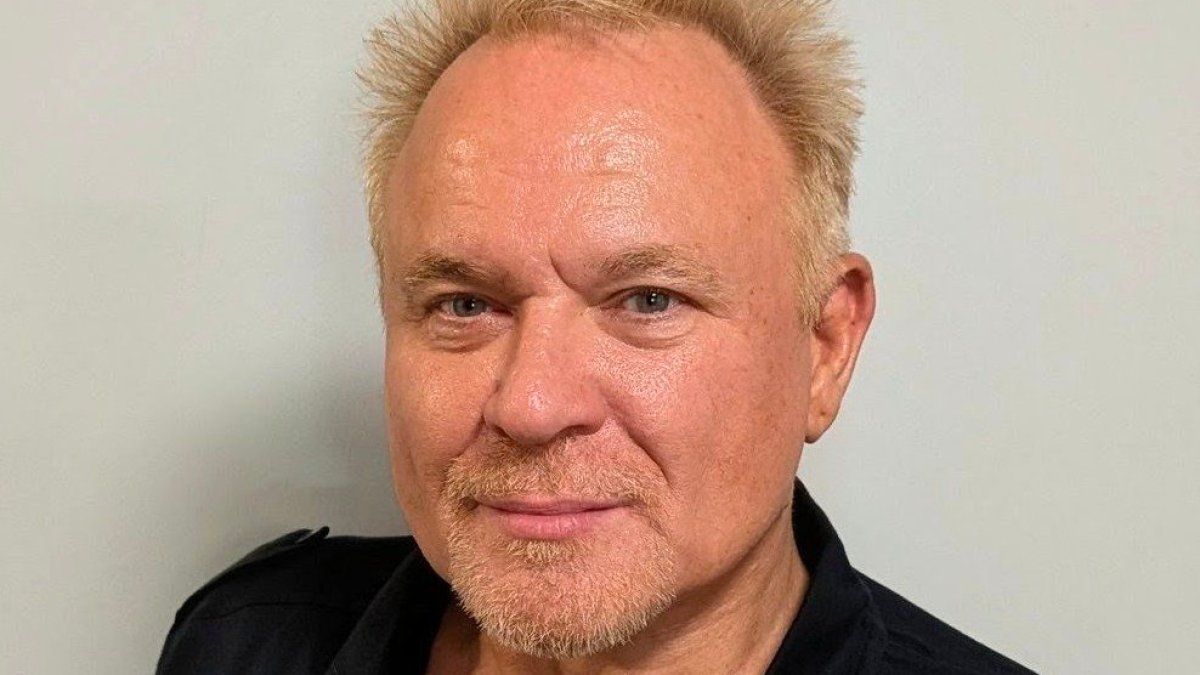
A long-awaited review of the main disability benefit has recommended an overhaul of the system to allow disabled people to “achieve better health, higher living standards and greater independence”. The review, co-chaired by disability minister Sir Stephen Timms, has proposed both short and long-term changes to personal independence payments (PIP) for its 4 million claimants across England and Wales. Among the immediate changes unveiled today are a fast-track route for people with severe conditions and those with a terminal illness. In the long term, the report recommends an improved assessment process that looks at a person’s real-life additional costs and individual needs. Those claiming the payments – currently worth up to £800 a month – have raised concerns over how the changes will help them, with some describing the current process as “intrusive” and “not worth the money”. The report itself was co-produced by disabled people, more than 40,000 of whom contacted the review with over 90 per cent of them describing the current PIP process negatively. The changes come as the Government is under pressure to bring down welfare spending, with the Office for Budget Responsibility forecasting that the PIP bill will rise from £32bn in 2026–27 to £41bn by 2030–31. The Timms report comes a week after a separate review by Alan Milburn recommended scrapping PIP for under-25s altogether. ‘PIP process already hangs over my head’ Mik Scarlet, 61, who is set to be reassessed next year for the first time in 10 years, told The i Paper that the PIP process is already “hanging over [his] head”. He said that while avoiding lengthy assessments would be “great”, he is unsure whether his disability will qualify as severe. After a spinal chord injury, Mik was left paraplegic at the age of 16 and began receiving the disability living allowance (DLA). He was moved onto the PIP scheme in 2017, where he underwent another assessment. Mik said that medical terminology – such as paraplegia – used in his assessment was not understood correctly by evaluators, so his claim was initially refused. After a spinal chord injury, Mik was left paraplegic at the age of 16. He moved onto the PIP scheme in 2017 He claims it took a year of fighting for his claim to finally be approved, but the process was arduous. Mik recalls having to write a paragraph about how he goes to the toilet, and claims assessors will use people’s appearance as a sign that they are not as disabled as they might suggest. “They do things like say, ‘Oh well, the patient seemed washed and confident.’ And you’re like, yeah, it’s not whether I’m washed or not, it’s how I got washed; who helped me wash,” he said. “I honestly don’t think the amount of emotional turmoil the process requires to get the money is necessarily worth the money.” ‘It’s a very intrusive process’ Maddy Alexander-Grout is an ambulatory wheelchair user, meaning she uses a wheelchair often but can sometimes walk with a stick. The 43-year-old, who has several disabilities including hypermobile Ehlers-Danlos syndrome, postural tachycardia syndrome (POTS), ADHD and autism, has just completed her assessment for PIP and is awaiting a result. For Maddy, a campaigner from Southampton who also runs her own clothing brand for people with disabilities, it never crossed her mind to claim PIP until walking became more difficult and she was forced to save £2,000 to buy a wheelchair. The campaigner also spends quite a lot of money on private chiropractor appointments and takeaway meals when her carer is not around. She told The i Paper: “I can’t cook, so I have to order takeaways or get food delivered. Lots of people think, ‘You can’t spend government money on that.’ “But it is a reasonable adjustment for people who can’t cook for themselves. My hands shake, so I can’t safely take food out of the microwave because I might burn myself.” Despite the payments, and working as co-CEO of charity Phab, Maddy said she is “not sitting on a great pile of cash” and will need to find £6,500 for a new wheelchair next year. Maddy is a campaigner from Southampton who also runs her own clothing brand for people with disabilities “The thing is, for someone like me, buying a wheelchair is the same as everyone that’s not disabled buying their legs,” she said. “It’s like, ‘Your legs are broken, we’re going to take them away, and you need to buy a new pair.’ It’s that essential. I would not be able to live at all without it.” Maddy questions why the fast-track mechanism should only apply to people with severe or degenerative conditions. “Disability doesn’t have to be degenerative to be really debilitating for somebody,” Maddy said. “And just because it’s not getting any worse doesn’t mean it’s not really bad to start with.” Maddy also warned that an assessment based on individual expenses could leave disabled people having to account for every purchase they make. “And it’s a very intrusive process, having your finances trawled through,” she said. “Essentially, it shames disabled people for what they’re spending money on.” ‘You have to prove you’re disabled enough’ Lavinia Scott, 34, from Ilford in east London, had to get her nine-year-old daughter to write a letter outlining what caring responsibilities she has for her mother in order for Lavinia to get disability benefits. This was Lavinia’s third attempt to get PIP, which she receives along with the health element of Universal Credit because she has fibromyalgia, joint hypermobility, borderline personality disorder, arthritis and autism. “I don’t want to get my kids to write letters about what they do,” Lavinia said. “It’s like you have to prove you’re disabled enough….you’d think having your medical records should be enough, but it’s not.” She was told at one point that she didn’t fit the criteria for struggling with washing because she mentioned that she sometimes used baby wipes to clean herself instead of showering. Lavinia Scott from Ilford told The i Paper that her PIP payments come to £107 a week “Having to go through trying to explain all of that to fit into a form just doesn’t seem practical,” she said. Lavinia uses her PIP payments, which come to £107 a week, to provide “respite” for her children, five, 10, and 15, so they can have a “normal childhood” as well as caring for her. “This year, my youngest was able to have a birthday party in a soft play centre, which is not cheap, and then for my oldest, she was able to have a birthday meal with a group of friends…which I know would not happen if I didn’t have PIP,” she said. She also uses it to pay for school uniforms and a Nuffield gym membership to take water aerobics classes and a steam room and sauna, which helps with her chronic pain. Any money she has left over at the end of the month goes towards paying off debts such as water bills. What report’s authors say about PIP Timms acknowledged on Tuesday that while the PIP system “is valued,” it is “no longer fit for purpose”. Sharon Brennan, co-chair of the review, added: “Our new vision for PIP will more closely understand people’s aspirations, and the real-life costs and barriers that are preventing people from achieving them. “Disabled people contribute £274bn in annual spending power and make highly valued contributions to society, this should be recognised and supported by a new benefit that we hope will also no longer feel dehumanising to claim.” Dr Clenton Farquharson, the other co-chair of the review, said: “If the bus is inaccessible and you have to pay for a taxi, the extra cost is yours. “That’s true whether you’re going to work or having Sunday lunch with family. PIP helps people meet those costs and decide for themselves how to live their lives.”
I’m a PIP claimant – the emotional turmoil of applying is not worth the money
Full Article
Original Source
Read the full article at Inews →KhanList aggregates and links to publicly available news content. We do not host full articles from third-party sources. Always verify important information with original sources.