
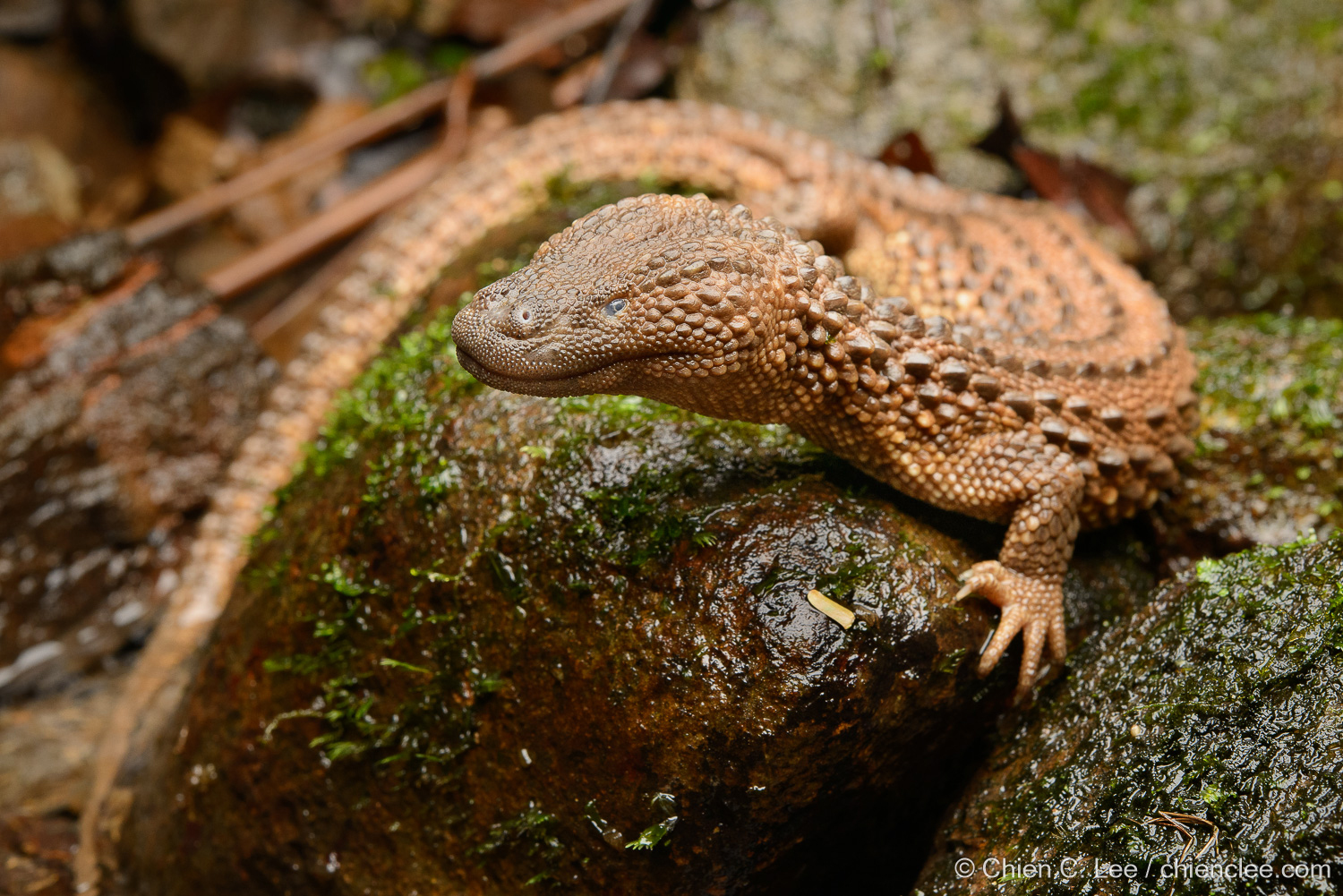
The global wildlife trade is a multibillion-dollar industry that mixes legal business and illegal transactions. It’s a major driver of biodiversity loss, and even legal trade is often unsustainable.Canada is a significant player but struggles to enforce a key law that bans the import of wildlife taken illegally in other countries.This gap allows various protected species to be brought into Canada illegally, sold and sometimes bred. It is far easier than one might expect to access the illegal wildlife trade in Canada. Chris Shepherd, a senior conservation advocate with the Center for Biological Diversity, knows this firsthand. On a recent call with Mongabay, he recounted attending a reptile fair in Canada and speaking to a seller who told him he regularly received shipments of “anything you want” from the U.S. “I asked him about a few illegal [Indonesian] animals … he said, ‘Oh, I just sold out of those. I’ll get more next weekend,’” Shepherd said. Globally, the black-market wildlife trade is driving many species toward extinction, and it’s extremely lucrative: Poaching and illegal sales of wildlife are valued at about $20 billion annually, according to a paper published last year in the journal Ecology and Evolution. Meanwhile, the legal trade is estimated at $220 billion a year, trading at least 70,000 species, that are often shipped or smuggled in vast numbers. Meanwhile, there’s little data on sustainability, according to a broad international study. Beyond the conservation concerns, this trade also poses a serious public health threat. Importing animals from around the globe without proper oversight can expose both humans and livestock to zoonotic diseases that jump between species. Examples include Ebola, tuberculosis, rabies, avian influenza and COVID-19, to name a few. The illegal wildlife trade is also a national security issue because of the perpetrators: International organized crime syndicates run these black-market operations, which can only function through bribes, fraud, complicity and corruption. Few realize that Canada is a significant player in these trade arenas. A lack of enforcement is making the problem worse: A Canadian law bans the import of wildlife that was taken illegally in another country, but doesn’t require proof of origin at the border, rendering the law a paper tiger. Other countries such as Australia and Japan have recently implemented rules placing the onus on importers to prove the legality of their goods, said Sheldon Jordan, a former wildlife enforcement director with the Canadian government. “Canada, right now, doesn’t have that legal framework,” he said. “So it’s pretty hard to say that in the current context, the law is really worth much more than the paper that it’s written on.” A Canadian Border Services agent speaks to a traveller entering Canada at the Wild Horse Border Crossing in Alberta. Image credit Qwexcxewq via Wikimedia Commons (CC BY 4.0). Monitoring imports The volume of imports into Canada is overwhelming. In 2025, the Port of Vancouver handled a record 170.4 million metric tons of cargo and 365,000 tons came through Vancouver International Airport. Customs officials essentially triage personal and commercial imports, Jordan explained, sorting those that appear compliant with laws and regulations from those that require special attention. A box containing several lizards, for example, might get pulled aside so it could be inspected by a wildlife officer. When the Canada Border Services Agency (CBSA) suspects a traveler or shipment entering the country is moving undeclared wildlife, officers will conduct an examination until their suspicion is proven either right or wrong, an agency spokesperson told Mongabay in an email. Travelers and shipments are selected for further examination based on factors including risk assessment, undercover intelligence, environmental scans and specific requirements from federal departments. Commercial shipments must include a manifest declaring what’s inside, Jordan said, and officials generally start from the premise that what is declared on the manifest is what’s actually inside the cargo. If border officers find live wildlife that might break foreign laws, they will inspect the shipment and review the import declaration and other documentation, the agency said. Some packages are x-rayed. If officers suspect that a shipment doesn’t have proper paperwork, they will pull it aside and contact Environment and Climate Change Canada (ECCC), the department responsible for the country’s wildlife trade. “With any species of fauna or flora, whether living or dead … that is regulated by foreign legislation, but is not CITES-listed, ensuring compliance with domestic laws becomes more complex,” an ECCC spokesperson told Mongabay in an email. CITES, an international treaty, regulates global commerce in endangered plant and animal species. A case of animal products in St. John’s International Airport in Newfoundland and Labrador. Image credit: shankar s. via Wikimedia Commons (CC BY 2.0). Canada’s role in the trade Canada’s role in this trade has garnered increased attention lately, but Shepherd still characterized it as “completely under the radar,” with a mix of legal imports and illegal trafficking. It’s also unclear whether the volume of trade is going up or down, he said. The country is a source of wildlife and their parts and products, and it has both a domestic market and also acts as a transit point, Jordan said. Native Canadian species in the trade include narwhal (Monodon monoceros), whose tusks are coveted as trophies; glass eels (Anguilla rostrata), which are shipped to Asia for aquaculture and eaten as a delicacy; and black bears (Ursus americanus), whose gall bladders are coveted for their bile, an ingredient in traditional Chinese medicine, among others. All three are listed under CITES. Much of Canada’s demand, on the other hand, focuses on the exotic pet trade, including reptiles, felines and birds. A federal law, the Wild Animal and Plant Protection and Regulation of International and Interprovincial Trade Act (WAPPRIITA), prohibits the import of any plant or animal “that was possessed, distributed or transported in contravention of any law of any foreign state.” Jordan likened this to a large net. This net works relatively well for species listed under CITES, though illegal trade still occurs. For species listed on Appendix I of the agreement, trade is mostly prohibited; Appendix II requires export and import permits and without that paperwork, Jordan said, trade is illegal. But for animals not listed under CITES, Canada and some other countries don’t require documentation proving that a specimen was taken legally when it’s imported. “The fact that you don’t have any requirement to demonstrate upon import that this [wildlife] was acquired legally … it basically rips a great big hole in this net that stuff can get through,” Jordan said. This problem extends beyond just wildlife crime. One example is logging: Between 15% and 30% of the global timber supply is illegally harvested, according to INTERPOL, and Canada is one of the world’s leading importers of wood products. However, it’s not always easy to determine origins. “Even though it is illegal to bring it in, by the time a tree has been processed into a bunch of cardboard boxes … it’s really hard to tell where it came from,” Jordan said. The pet trade is another example. Since different nations have different laws regulating the legal collection, possession and sale of wildlife, the status of exotic pets can shift along the way from their country of origin to a buyer, said Michèle Hamers, an animal welfare policy expert. A particular animal could go from “legal to illegal to legal to illegal, depending on where [it] sits in the supply chain.” There are other loopholes, too. Traders can successfully launder illegal specimens by mixing them with shipments of captive-bred animals that have permits — or by breeding animals poached from the wild and selling their offspring as captive-bred. These sales pass as legal but are not. This happens with many species, including tarantulas and monitor lizards, according to Shepherd, as well as parrots and songbirds, which sell for large sums and are highly coveted by collectors. Sri Lanka, for example, has protected all its reptiles for at least 90 years, Shepherd said, but you can still buy Sri Lankan species in Canada, which raises questions. “Did your great-great-great-grandparents start a captive breeding program of Sri Lankan reptiles before World War I?” he said. “I don’t think so.” A Malaysian purple-femur tarantula, a popular species in the pet trade. Traders will sneak illegal Malaysian tarantulas into a country like Canada to sell their offspring. Image © Cheongweei Gan via iNaturalist (CC BY 4.0). How to stem the tide? Other countries around the world, including Australia and the U.S., have outlawed the import of animals or plants poached from the wild, and in some cases are doing more to enforce it than Canada, according to Jordan. The U.S. requires wildlife import declarations that provide “a little bit more information than what you would get in the Canadian context,” he said, but the U.S. system is still “very far from perfect.” Australia and Japan, meanwhile, require lumber importers to prove their products were legally procured, and the European Union has moved in the same direction for fish and seafood, Jordan said. “It seems like out of the G7 [advanced industrial democracies], Canada is an outlier in terms of facilitating the entry of illegally taken wildlife from other countries,” Jordan said. “But this isn’t something that officers can easily take on right now in the current legal framework. It’s that simple.” An ECCC spokesperson told Mongabay in an email that if a foreign, non-CITES species was accompanied by appropriate documentation, “it would assist ECCC enforcement officers in further validating compliance with our domestic legislation.” The department did not respond to a Mongabay question regarding possible momentum toward changing the law. In Canada, environmental crime does not have the same level of policy focus as other environmental initiatives, like work on climate change or the Kunming-Montreal Global Biodiversity Framework, Jordan said. Most of the country’s environmental laws date from the 1980s and 1990s, and on the federal level, Canada “is really overdue for a look at … the impacts, the risks and the threats of crime,” he said. An important question, he asks, is: “How do we take them on in a 21st-century context?” ECCC’s spokesperson defended its enforcement branch, saying that it “continuously reviews and updates gaps in legislation, reviews fine and penalty regimes and recommends improvements.” On a larger scale, plans are underway that, if successful, would shape how wildlife trade is policed internationally. One big step would be to include wildlife crime under the United Nations Convention against Transnational Organized Crime (UNTOC), a global agreement that fosters international cooperation when tackling major crimes. Without this inclusion, countries “cannot [fully] collaborate on international or transnational environmental crimes,” Jordan said. Brazil is expected to propose the inclusion of environmental crimes under UNTOC at the convention’s meeting in October, sources say, with other countries including Brazil, China, France and the Democratic Republic of Congo as co-sponsors. This would provide an important tool, especially for small or developing countries that don’t have the diplomatic reach to build cooperative agreements with other countries, Jordan said. “Given the value of environmental crime … and its linkages with other crime areas, it’s a no-brainer to increase the amount of mechanisms, of tools, for authorities to go after bad guys, so that bad guys can’t hide behind borders,” he added. An ECCC spokesperson said in an email that Canada “remains open to discussion” on the proposal. Though they stopped short of saying the country would support a new UNTOC protocol, they said the agreement is already broadly applicable, and strengthening its implementation, beefing up international cooperation and making fuller use of existing enforcement tools, can deliver “effective and concrete” results. Even if border enforcement is improved, trafficked wildlife will still slip through the cracks, Shepherd said, and Canada should also investigate the companies profiting from wildlife that was poached from the wild, smuggled into the country and illegally sold. Hamers pointed out that there is a role for members of the public in all this, too. Citizens can flag advertisements for illegal wildlife online, for instance, and report them to relevant authorities in their countries. Social media is a growing wildlife marketplace. That approach requires public education and getting citizens onboard to help stem the tide. The wildlife trade is “not niche, but it’s also not what people care about, necessarily — until they learn about it, and know about it, and then they think it’s horrible,” Hamers said. It’s important to call for “more resources, more money, more people to be trained — yes, sure,” Hamers said. “But let’s be creative and find other possible solutions that could help address this problem sustainably over the long-term.” Banner image: An earless monitor lizard, endemic to Borneo. Monitor lizards are among the species that traders launder by smuggling into a country like Canada in order to sell their offspring. Image credit Chien C. Lee via Wikimedia Commons (CC BY-SA 4.0). New global guidelines needed to rein in the wildlife pet trade (commentary) Citations: Mozer, A., Prost, S. (2023). An introduction to illegal wildlife trade and its effects on biodiversity and society. Forensic Science International: Animals and Environments, 3, 100064. doi:10.1016/j.fsiae.2023.100064 Biondo, M. V., Calado, R. (2025). Enhancing wildlife trade monitoring in the European Union—No need to reinvent the wheel. Ecology and Evolution, 15(9). e72090. doi:10.1002/ece3.72090 Michael Marshall, B., Alamshah, A. L., Cardoso, P., Cassey, P., Chekunov, S., Eskew, E. A., … Hughes, A. C. (2025). The magnitude of legal wildlife trade and implications for species survival. Proceedings of the National Academy of Sciences, 122(2), e2410774121. doi:10.1073/pnas.2410774121 Guynup, S., Shepherd, C.R., … Shepherd, L. (2020). The True Costs of Wildlife Trafficking. Georgetown Journal of International Affairs 21, 28-37. doi:10.1353/gia.2020.0023. Travis, D., Watson, R., … Tauer, A. (2011). The spread of pathogens through trade in wildlife. Scientific and Technical Review, 30(1), 219-239. doi:10.20506/rst.30.1.2035 FEEDBACK: Use this form to send a message to the author or editor of this post. If you’d like to post a public comment, you can do so at the bottom of the page. Cite this articleAlex Megerle (2026). Illegal wildlife continues to slip through Canada’s borders. Experts explain how. Mongabay Conservation news. DOI: https://doi.org/10.66709/news-331249 Credits Topics
Illegal wildlife continues to slip through Canada’s borders. Experts explain how
Full Article
Original Source
Read the full article at News →KhanList aggregates and links to publicly available news content. We do not host full articles from third-party sources. Always verify important information with original sources.