
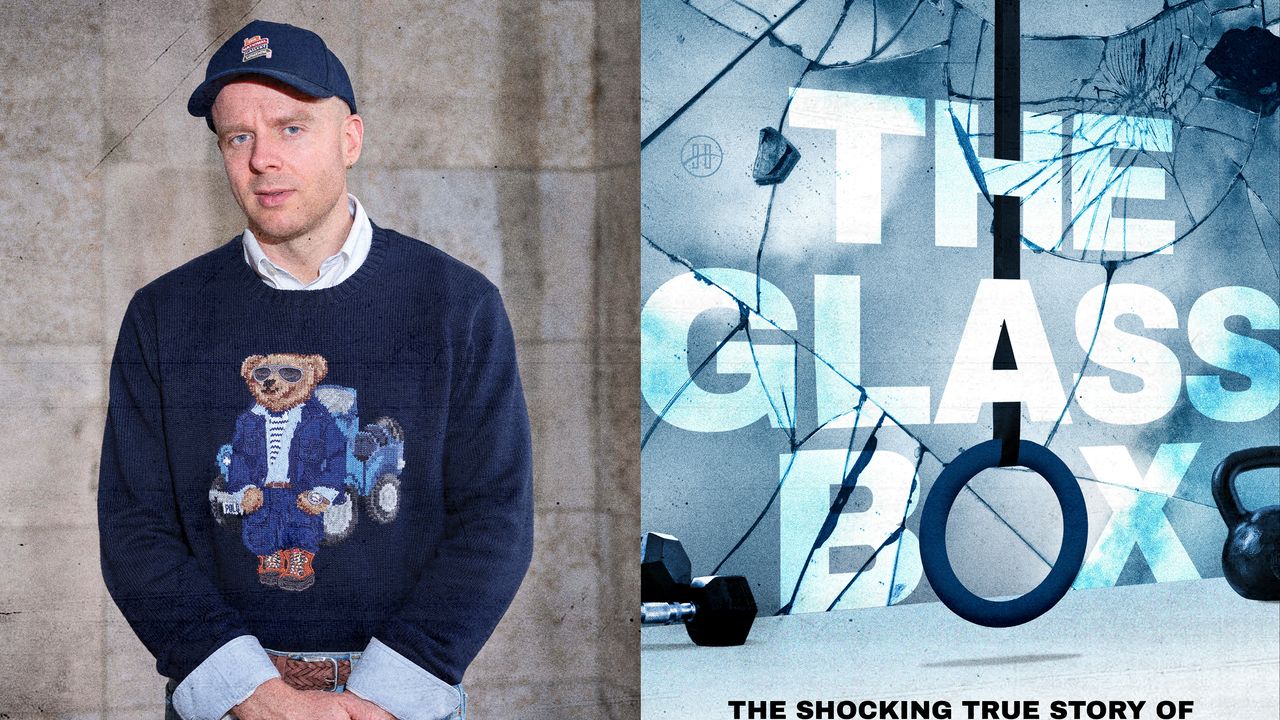
CrossFit could easily hold the distinction of being the most popular—and certainly the most universally recognized—fitness movement ever. At its peak, the company, founded in 2000, boasted over 15,000 affiliate gyms, or “boxes,” in more than 150 countries and was enlisting nearly 50,000 coaches each year. Somewhere along the line, to many people (including my mom), the word CrossFit became synonymous for working out.But you may have noticed that people don’t talk as much about CrossFit nowadays as they used to. Following an assorted variety of allegations against its mercurial founder Greg Glassman in 2020, and the tragic and seemingly avoidable death of an athlete at the 2024 CrossFit Games, the company has been gradually losing its chalky grip on popular culture.But the storytelling around CrossFit’s rise and fall is anything but done and dusted, as I learned while reading Calum Marsh’s new book, The Glass Box—a fascinating, staggeringly detailed account of not only CrossFit’s rocket-propelled rise and spectacular flame-out, as told by insider sources including Glassman himself, but a trove of previously unshared anecdotes that make it hard to put down.A few days after the book’s late-October release, I spoke to Marsh about airing CrossFit’s dirtiest laundry, how the cultishness of CrossFit has spread to other fitness crazes, and why an old-fashioned barbell snatch is the ultimate kryptonite for the modern performative male.GQ: In the book you expose how many in the CrossFit community, including CrossFit leadership, would tend to go after anyone they deemed a critic, regardless of how objective or accurate the criticism. Did you ever worry that writing this book might put a target on your back?Calum Marsh: The first 50 people I spoke to were basically warning me off the subject, telling me that it was going to be an uphill battle and that if the people that I was writing about were unhappy with how I wrote about them, they would criticize me or attempt to defame me. They have a long history, which I've chronicled in the book, of creating campaigns of bad will towards their critics. They are really experienced at mobilizing the internet and mobilizing social media in order to discredit people that they consider critics or, as I sometimes frame it in the book, heretics.But, on the other hand, I knew that I was going to be approaching this from a journalistically rigorous perspective, and that it was going to be an account of what actually happened, from the people who were involved. It wasn't going to be a book about my opinion or my personal take on CrossFit. So I felt quite secure that the things I was writing in the book were the best possible representation of the truth.How has the book been received so far?There's been a lot of focus on some of the more, shall we say, sordid details. There was an article in the New York Post that basically pulled all that out and made the book seem like it was some scandalous hit piece. That's not the book I tried to write, and it's not the book I think I wrote. The book I wrote is a very fair, even-handed assessment of a man and the business that he created. It includes true stories about his behavior that may not be the most flattering, and it includes, I think, testament to the brilliance of what he created and all of the great things that he did.It's been amusing to see the reception somewhat split among some hardcore CrossFitters. They're upset because they think it's a takedown of Greg Glassman that's biased against him. And then other critics think that I'm way too generous to him, or way too flattering. Someone said I was too affectionate towards him. It's funny to me that two different people can read it and have polar opposite views. But hopefully that means that it's just objective.People have long joked about how CrossFit seems like a cult. But in your book you suggest that CrossFit was, or maybe still is, more of a cult than people realize. I found it particularly interesting how Glassman didn’t seem to practice the healthy lifestyle doctrine he was so ferociously preaching. The book details how he was overweight, would walk through the gym stoned, routinely got excessively drunk, and more. Was the idea of CrossFit as a bonafide cult something that became more apparent to you as you went down this road?It’s something that is always mentioned in relation to CrossFit. There’s actually another book that came out while I was writing my book, called The Cult of CrossFit by Katie Rose Hejtmanek. It's an academic study of the history and sociology of cults, and how CrossFit is a cult by definition. I thought that was really illuminating. There are a lot of similarities that go beyond all the joking, and there are a lot of things about the cult-like nature of CrossFit that have made it intoxicating for some people, and maybe painful in other ways as well.The thing that struck me was how a lot of people, especially earlier CrossFit enthusiasts or devotees, talked to me about the difficulty they had leaving CrossFit. Greg has said many times, and will still say, that they weren't a cult because you could leave at any time. And I always found that to be a fairly unconvincing argument, because many cults say the same thing. A lot of CrossFitters had this experience where they felt like they had really close friends—sometimes even family members or partners—who essentially excommunicated them—cut them off, iced them out, however you want to phrase it—after they either left CrossFit or spoke out against CrossFit. That, to me, is the strongest cult-like parallel.I was really surprised by your account of CrossFit leadership’s lavish spending, hedonism, and assorted eccentricities. It kind of gets into Wolf of Wall Street territory, complete with cocaine, affairs, and a $5,000 private jet trip to Chick-fil-A. You almost forget you’re reading a book about a health and fitness company. Was CrossFit’s internal culture of excess something that you were previously aware of?It really wasn't. I had heard from people that Glassman was generous, and so I knew stories about him spending lavishly on dinners, for example. But it all seemed pretty much within the realm of normal spending for someone who's massively wealthy. It wasn't until I started speaking to people who were more familiar with CrossFit’s finances when I started to learn about the degree to which the spending was out of control. The amount of money they spent relative to what they earned is the most shocking thing to me, because it's not like they were spending that much money while wildly out-earning it. They were almost spending more than they were making. And they were not slowing their spending when the earning slowed. That, to me, as a business reporter, is very, very interesting, because you start to wonder how they let that happen. Was no one there to say, ‘Hey, we need to pump the brakes a little bit?’ As it turned out, there really wasn't.At CrossFit’s peak, Glassman was a major figure in that community—supremely influential and basically a celebrity. Over the years, people literally recalibrated their identities in the image of the brand that he created and led for a long time. Looking at his unceremonious downfall through that lens, it’s not entirely dissimilar to the sudden cancelling of a pop star whose music has inspired and helped people. In your reporting, how have longtime CrossFit affiliates dealt with all the revelations about their leader?A lot of people had this reckoning in 2020 after [Glassman’s George Floyd tweet] and some of the accusations that came out about Glassman then. A lot of gyms deaffiliated from CrossFit, and Greg, of course, stepped down and sold the company. I personally know many people who had a kind of personal reckoning with their level of comfort in supporting the company. But I think that was, at least in some cases, answered by Greg's departure.Others went through this process of divorcing themselves from the CrossFit identity as a brand, but continuing to practice CrossFit as a methodology. There are thousands of gyms all over the world that are CrossFit gyms in all but name. They probably call themselves cross-training or functional fitness now, but if you go in, they still have a Rogue rig, they still have wall balls, they still do snatches—everything you'd expect to see if you walked into a CrossFit gym. The people there are still CrossFitters at heart. They've still given themselves over to the transformative power of the methodology that Greg Glassman invented. But they are no longer endorsing or supporting the brand or the company at large.Does it seem like the broader culture among CrossFit members has changed at all since Glassman left in 2020?I would be willing to bet that if you walked into any CrossFit gym in North America and asked them what the difference is between when Glassman was in charge and when corporate private equity took charge, they wouldn’t know that even happened. The average person, who just goes to CrossFit to get fit and doesn't follow the CrossFit news and isn't obsessed with CrossFit Games, would not have any idea. And this is partly a consequence of the fact that the affiliate model is so loose.That tracks with how you describe the affiliate system in your book, which I found really surprising. They’re just kind of doing their own thing without any real oversight from CrossFit HQ. It was really interesting to read about how in the early years affiliates just had to attend a seminar and pay CrossFit a $500 annual fee to use the CrossFit name, and the company didn’t really want much to do with them from there. You mention in the book that you’ve been doing CrossFit for years—and that you met your wife in a class! When did you start getting into it?I first started going to a box in 2018. I was doing personal training with someone at what I didn't realize was even a CrossFit box. I was doing that personal training for probably about a year before I realized I was doing CrossFit, and then I started doing classes in 2019.Do you still do CrossFit?I do! In fact, I coached a CrossFit class earlier this morning.Oh, wow. So you’ve done a coaching certification as well?Yeah. Well, they don't allow you to call it a certification with the one I have. They're very clear about that language. But I do have my CrossFit Level 1 certificate. I did the course and passed the test.It seems like CrossFit’s decline has been perfectly timed with the rise of Hyrox, another promising young fitness cult. It feels like the passing of a baton—or more like Hyrox prying the baton from CrossFit’s white-knuckled grip. They do have their similarities beyond the workouts: the merch, the jargon, the gatekeeping. Different flavors of the same Kool-Aid, one might say. What’s going on here? Why do you think we’re seeing this increasing cultification of fitness?I think that part of it is just the nature of fandom. If you become enthusiastic about something, you want to identify as an enthusiast, and that means wearing the T-shirt. I went to a Bob Dylan concert on the weekend. I bought a Bob Dylan hat. It's just part of the experience of being a fan of something. I think Hyrox is super interesting, because it does have a lot of cult-like similarities with CrossFit. But the really toxic side—the side that's a bit more nefarious, that involves really giving your life over to it—I haven't seen with Hyrox, at least yet. I feel like there's something missing at the center, possibly the guru figure that Greg Glassman was for CrossFit. Hyrox doesn't really have that. So maybe that missing ingredient has stopped it from being as intense. But, on the whole, I think it's just this level of fandom that is baked into everything in culture now.Having charted so much mainstream fitness history in researching your book, where do you see fitness culture going from here? What’s next?There's a journalist named Hannah Singleton, who writes about fitness a lot. She recently wrote a piece about how athleticism is the new flex for people, and I think that’s sort of the direction we're moving in. For example, Hyrox. It's in the same vein as running a marathon or doing an ultra race, where it's an achievement that you can brandish. You can put it on your LinkedIn. You can say that you've done this and that. Maybe it's on your resume. You're almost putting up points on your scoreboard. And I think that we're probably going to find either more events along those lines, where it's something that you can be proud of because it's so difficult, or a system in which you can have an overall fitness score. I think people really want to show that they put in the work. They want to impress people with how fit they are. In the same way that people who are into running are obsessively posting about their marathon time or their 10K time, and those milestones are universally understood in running—everyone knows how impressive it is to run a sub-10-minute 5K or a sub-three-hour marathon—the fitness equivalent of that, I think, is still coming.This feels very in line with how performative so much of our culture, including fitness, is becoming.This is one of the things I find interesting in light of CrossFit—and I know that some people are going to think this is not true—but I really do think CrossFit, or let’s say functional fitness, is an antidote to this whole performative thing. It's so hard that it's humbling. You can’t really show up and pretend you did it. You cannot performatively do barbell snatches. If you see someone on social media snatching heavy, it's because they've worked at it for hundreds, if not thousands, of hours, and because they're really strong, really mobile, and really fit. And I say this as someone who both has a copy of Infinite Jest on my bookshelf and wears Satisfy.You can ‘perform’ your sport of choice by posting about it, but things like snatches or ring muscle ups are so physically demanding that it kind of cuts through that bullshit. And I think that we're probably going to increasingly value things that we know on-site are authentic, because there's an authenticity built into it. There's no shortcut there. And that authenticity will become more and more valuable.
If You Didn’t Already Think CrossFit Was a Cult, This Book Will Convince You
Full Article
Original Source
Read the full article at Gq →KhanList aggregates and links to publicly available news content. We do not host full articles from third-party sources. Always verify important information with original sources.