
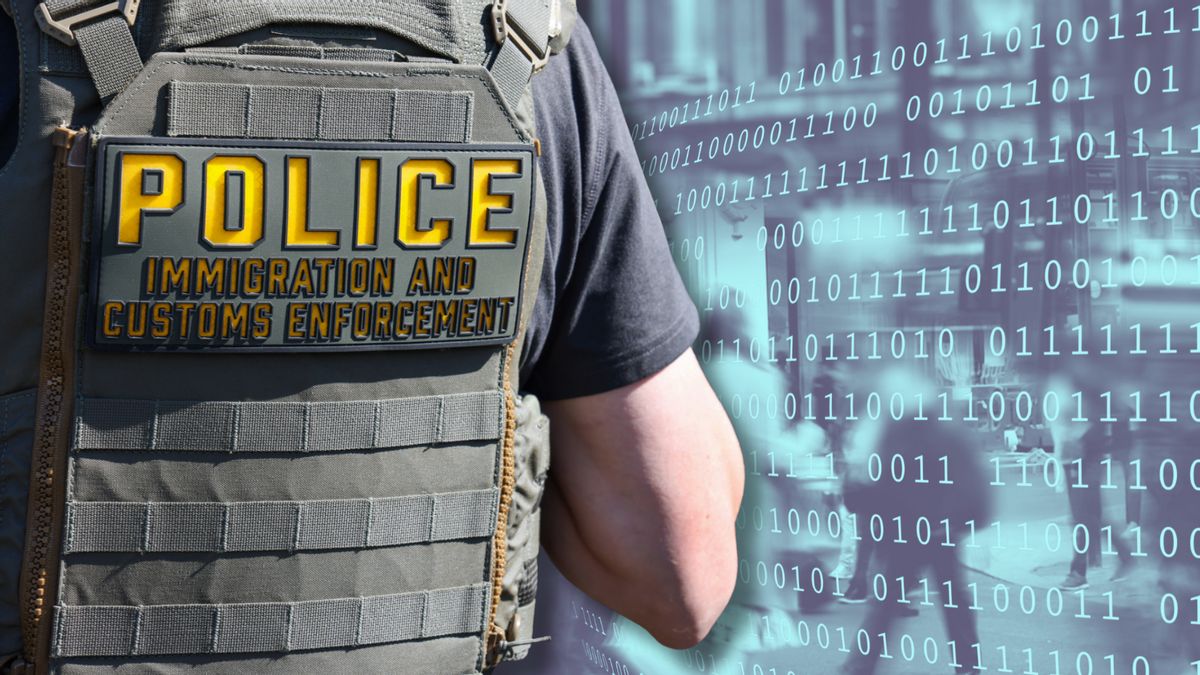
The agency has used the controversial surveillance devices for more than a decade, according to credible investigative reports. Published July 15, 2026 Claim: U.S. Immigration and Customs Enforcement has spent hundreds of thousands of dollars on vehicles equipped with "cell site simulators" (also known as "fake cell towers") that can be used to spy on phones. Rating: ContextThe federal agency has long used the controversial fake cell tower devices, also known as StingRays or cell site simulators. The information about them shared in 2026 social media posts references 2024 and 2025 federal contract data. In July 2026, social media posts claimed that U.S. Immigration and Customs Enforcement has spent hundreds of thousands of dollars on vehicles equipped with "cell-site simulators, also known as fake cellphone towers" that can "impersonate legitimate cell towers, causing nearby phones to connect to them." The claim spread via posts on Facebook, which warned that the cell site simulators allow law enforcement to "identify and locate devices in the area" (screenshot, screenshot). According to the posts, a company called TechOps Specialty Vehicles was outfitting the vehicles with the cell site simulators for ICE. "The surveillance may not stop with the intended target," the posts said. "Phones belonging to bystanders, neighbors, protesters, journalists, or anyone else nearby could also interact with the simulator during its operation." These posts also shared "possible signs" your phone may have interacted with a cell site simulator and alleged ways to reduce the risk of government surveillance via cell site simulators. ICE did, in fact, spend a total of $1.6 million on vehicles equipped with cell site simulators in 2024 and 2025, according to public government spending data. As such, we have rated this claim as true. Cell site simulators, also known as StingRays, work by tricking phones into connecting to the simulator rather than a legitimate cell tower, allowing the user of the simulator to collect data such as the content of a text or voice call, websites visited and identifying information, according to Electronic Frontier Foundation, a nonprofit digital rights group. According to contract information (archived) on the U.S. government's federal spending website, TechOps Specialty Vehicles provided the cell site simulator vehicles. TechOps Specialty Vehicles did not immediately return a request for more information. According to a 2025 TechCrunch report, the company's president, Jon Brianas, said the company provides cell site simulators but doesn't make them in-house. ICE has a long history of using cell site simulators, which are controversial because they collect information from everyone nearby, not just the intended target. Critics say the devices violate the Fourth Amendment, which protects Americans from unreasonable searches and seizures. According to the ACLU — which sucessfully sued for public records from ICE on cell site simulator use — the federal agency used the devices at least 466 times between 2017 and 2019. A Buzzfeed News investigation reportedly found that Homeland Security Investigations, an arm of ICE, used cell site simulators 1,885 times from Jan. 1, 2013, to Oct. 11, 2017. A 2023 report from a federal auditor found that ICE and the Secret Service illegally conducted surveillance using cell site simulators by failing to obtain court orders required under federal law before using the technology. The two agencies also did not adhere to federal privacy policy governing the use of the simulators. Snopes asked ICE several questions about its use of cell site simulators and associated privacy concerns. We await a response. How to find the federal contract yourself A search (archived) for "cell site simulator" on USAspending.gov, the official federal spending website, returned five results, including one contract awarded by ICE. That contract, under ID No. 70CMSD24FR0000115, showed that ICE paid TechOps Specialty Vehicles $1.6 million for "CELL SITE SIMULATOR VEHICLES." Under "Award History," the transaction history indicated that ICE awarded $818,422 to TechOps Specialty Vehicles on Sept. 10, 2024, and an additional $825,708 on May 8, 2025. While searches for keywords returned no evidence that ICE purchased cell site simulators or cell site simulator vehicles in 2026, it is possible that the agency has purchased cell site simulators under different contract descriptions. Can you reduce the risk of this surveillance? Like the claim posts suggest, cell site simulators may drain your phone's battery, interrupt your service or attempt to drop your phone to a 2G connection. However, these issues can happen for plenty of legitimate reasons. There is very little public information about how commercial cell site simulators work, making it difficult for the public to detect and prevent cell site simulator surveillance. Some experts and advocates have built advanced tools that seek to detect some versions of cell site simulators. In 2025, the Electronic Frontier Foundation launched an open-source detector called Rayhunter. Researchers at the University of Washington also built a system that detects "anomalies in the cellular landscape" to indicate where and when the surveillance devices are being used. To protect yourself against cell site simulators, the Electronic Frontier Foundation recommends putting your phone in airplane mode or turning it off entirely. According to the foundation, cell site simulators also can't read end-to-end encrypted messages, such as those on the private messaging app Signal. In addition, Google and Apple have released features that can help protect users against cell site simulators. Sources "About Lockdown Mode." Apple Support, https://support.apple.com/en-us/105120. Accessed 15 July 2026."Android 14 Introduces First-of-Its-Kind Cellular Connectivity Security Features." Google Online Security Blog, https://security.googleblog.com/2023/08/android-14-introduces-first-of-its-kind.html. Accessed 15 July 2026."Bipartisan Committee Staff Report: Clear Guidelines Needed for 'Stingray' Devices." United States House Committee on Oversight and Government Reform, 8 June 2026, https://oversight.house.gov/report/bipartisan-committee-staff-report-clear-guidelines-needed-stingray-devices/.Canada, Communications Security Establishment. "Cell Site Simulators - ITSM.00.108." Canadian Centre for Cyber Security, 12 May 2026, https://www.cyber.gc.ca/en/guidance/cell-site-simulators-itsm00108.Cell-Site Simulators/ IMSI Catchers. https://sls.eff.org/technologies/cell-site-simulators-imsi-catchers. Accessed 15 July 2026.Contract Summary | PIID 70CMSD24FR0000115. https://www.usaspending.gov/award/CONT_AWD_70CMSD24FR0000115_7012_47QMCA19D0014_4732.Department of Homeland Security Office of the Inspector General. Secret Service and ICE Did Not Always Adhere to Statute and Policies Governing Use of Cell-Site Simulators (REDACTED) . 23 Feb. 2023, https://www.oig.dhs.gov/sites/default/files/assets/2023-03/OIG-23-17-Feb23-Redacted.pdf.Flores, Adolfo. "DHS Has Used A Controversial Cell Phone–Tracking Device More Than 1,800 Times." BuzzFeed News, 17 Nov. 2017, https://www.buzzfeednews.com/article/adolfoflores/this-is-how-many-times-the-department-of-homeland-security.Franceschi-Bicchierai, Lorenzo. "ICE Bought Vehicles Equipped with Fake Cell Towers to Spy on Phones." TechCrunch, 7 Oct. 2025, https://techcrunch.com/2025/10/07/ice-bought-vehicles-equipped-with-fake-cell-towers-to-spy-on-phones/.Greenberg, Cooper Quintin and Will. "Meet Rayhunter: A New Open Source Tool from EFF to Detect Cellular Spying." Electronic Frontier Foundation, 4 Mar. 2025, https://www.eff.org/deeplinks/2025/03/meet-rayhunter-new-open-source-tool-eff-detect-cellular-spying.Langston, Jennifer. "Catching the IMSI-Catchers: SeaGlass Brings Transparency to Cell Phone Surveillance." University of Washington, 2 June 2017, https://www.washington.edu/news/2017/06/02/catching-the-imsi-catchers-seaglass-brings-transparency-to-cell-phone-surveillance/.Quintin, Cooper. "A Quick and Dirty Guide to Cell Phone Surveillance at Protests." Electronic Frontier Foundation, 16 June 2020, https://www.eff.org/deeplinks/2020/06/quick-and-dirty-guide-cell-phone-surveillance-protests.———. "Apple and Google Are Introducing New Ways to Defeat Cell Site Simulators, But Is It Enough?" Electronic Frontier Foundation, 13 Sept. 2023, https://www.eff.org/deeplinks/2023/09/apple-and-google-are-introducing-new-ways-defeat-cell-site-simulators-it-enough.Ramirez, Alexia. "ICE Records Confirm That Immigration Enforcement Agencies Are Using Invasive Cell Phone Surveillance Devices | ACLU." American Civil Liberties Union, 27 May 2020, https://www.aclu.org/news/immigrants-rights/ice-records-confirm-that-immigration-enforcement-agencies-are-using-invasive-cell-phone-surveillance-devices.Search Results. https://www.usaspending.gov/search?hash=461a4ff1aff6148fff9f823513aa5889. By Rae Deng Rae Deng specializes in government/politics and is based in Tacoma, Wash. Article Tags
ICE bought vehicles equipped with 'fake cell towers' used to spy on phones. Here's proof
Full Article
Original Source
Read the full article at Snopes →KhanList aggregates and links to publicly available news content. We do not host full articles from third-party sources. Always verify important information with original sources.