
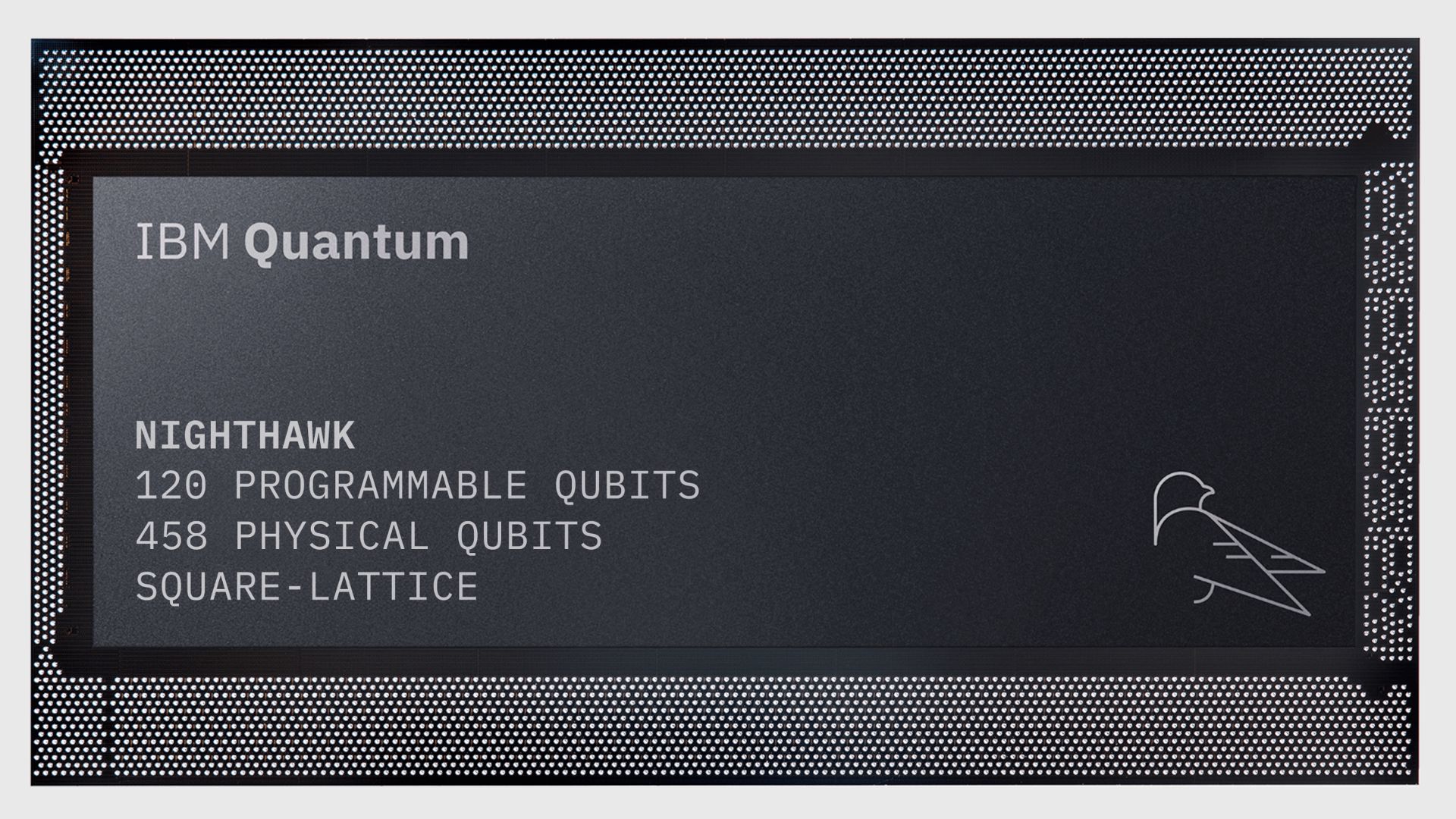
IBM has unveiled its fastest quantum processor yet, the Nighthawk r2, with over 25 times the number of circuits over its predecessor and containing more than 7,500 gates. With this, IBM has improved the speed of computation on its processor without impacting the scale or accuracy of the system, paving the way for future improvements along its Quantum Roadmap. Quantum computing is the next frontier of computing, promising us computations in seconds that even the fastest supercomputers of today would take years to complete. The dawn of the quantum computing age is expected to help us solve problems of climate change, drug discovery, new material research, clean energy and much more. Much like research universities and startups that are working to build quantum computers, commercial entities like Google and IBM too have set their eyes on building commercial-scale quantum computers. IBM has publicly unveiled its roadmap to build quantum computers with a billion circuits and over 2000 qubits by 2033. An important milestone in this path is a fault-tolerant computer with over 100 million gates running on 200 qubits. The arrival of the Nighthawk r2 with 7,500 gates in 2026 is also part of this roadmap. What is Nighthawk r2? In all the hype about how quick quantum computing is, there is a small bit of a delay in computations that is usually missed out. It lasts just a few microseconds but is a major bottleneck that isn’t spoken about much in the media coverage. This is the conditional reset where the qubits inside the quantum circuit must return to their ground state before the next round of computations can begin. For a full reset, a quantum system has to sit idle for hundreds of microseconds between executions. With the Nighthawk r2, IBM has replaced the conditional reset with a dissipative reset gadget where a high-dynamic-range coupler can draw a programmable qubit to its ground state on demand. This reduces the qubit’s T1, or how long it holds its energy, from 200 microseconds to about 25 nanoseconds. Since each qubit is individually connected to the coupler, each qubit can be individually reset without disturbing its neighboring qubits. This reduces the overall idle time between circuit runs to as little as one microsecond and increases computation speeds to 100,000 circuits per second, which is 25 times faster than its predecessor, the Heron. Faster and more useful As scientists have long noted about quantum computing, being fast is not enough. Faster computing also comes with the risk of introducing a large number of errors in the computation, which makes it futile. The higher speed reset in IBM’s new quantum processors has another advantage. It reduces initialization errors by 25x since the system is starting in the ground state every time. The processor also uses square-lattice architecture wherein most qubits are connected to four nearest qubits, an improvement over its predecessors. Nighthawk r2 can use the dissipative reset not hyst between circuits but also during its execution, bringing efficiency gains within the runtime, the company said in a press release. Better circuit throughput also means that Nighthawk can run more workloads within the same allocation, a major win for researchers. IBM also said that the Nighthawk r2 quantum processor is now available on its Quantum Platform. Get the latest in engineering, tech, space & science - delivered daily to your inbox.Ameya is a science writer based in Hyderabad, India. A Molecular Biologist at heart, he traded the micropipette to write about science during the pandemic and does not want to go back. He likes to write about genetics, microbes, technology, and public policy.
IBM`s fastest quantum processor achieves 100,000 circuits per sec computation speeds
Full Article
Original Source
Read the full article at Interestingengineering →KhanList aggregates and links to publicly available news content. We do not host full articles from third-party sources. Always verify important information with original sources.