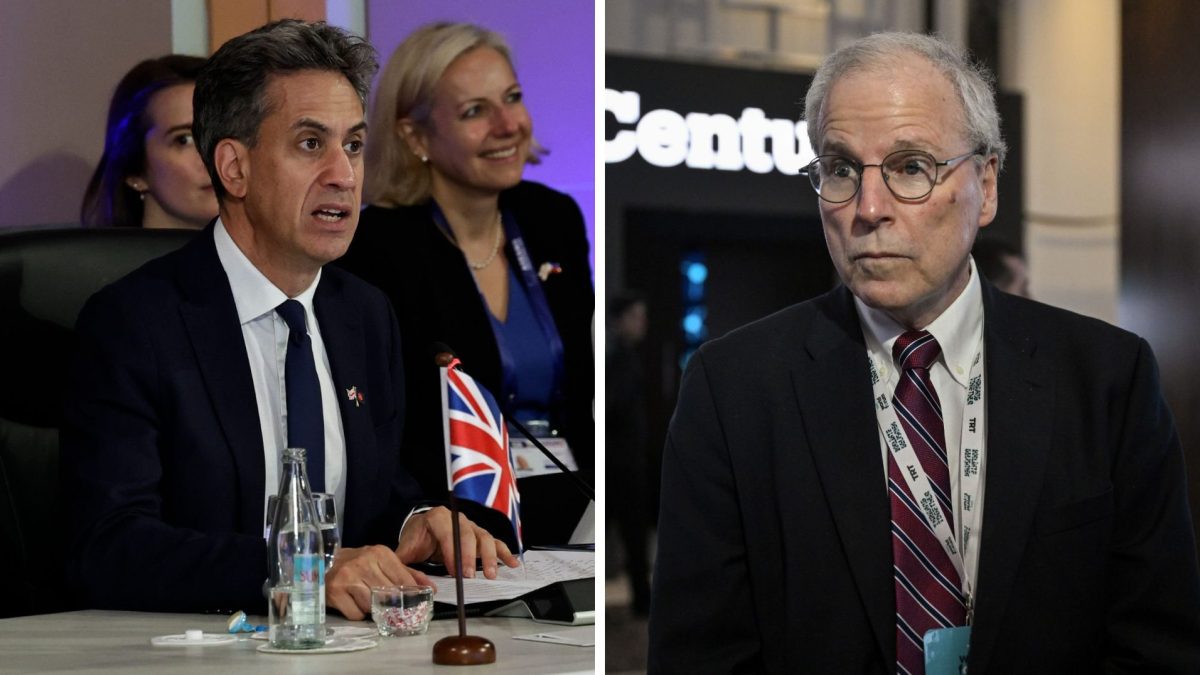
When Andy Burnham appointed Ed Miliband as Foreign Secretary this week, minds immediately went back to the only time in history a parliamentary vote has stopped a Prime Minister from launching military action. When Miliband defeated David Cameron in the Commons in 2013, the Labour leader prevented the UK from joining the US and France in potential air strikes against Bashar al-Assad’s regime in Syria, after the dictator’s forces attacked rebel-held towns with chemical weapons. At the time, three quarters of the British public backed Miliband over his decision. He also played a big role in making a hesitant Barack Obama think again. In the end, the then US president never ordered American jets to take off. Shorts The Syrian civil war dragged on for another 11 years, however, costing hundreds of thousands of lives. The broken country became a hotbed for Isis, leading to several deadly terrorist attacks on British soil. There is no way of knowing whether things would have been different if Miliband had supported Cameron instead. But analysts have been questioning how the new Foreign Secretary would act in a similar situation now – and how he would handle a warmongering Donald Trump. Robert Ford was the US ambassador to Syria in 2013. He strongly backed air strikes – to force Assad to negotiate a peace deal with opponents, and to maintain American authority around the world after Obama’s warning that using chemical weapons was a “red line”. Speaking to The i Paper from New England, Ford argues that Miliband and others made a “bad decision” 13 years ago. If he didn’t want the UK to hit Assad’s murderous regime back then, “when is he ever willing to use force?” However, Ford accepts that the world is very different today, with such a volatile US President in office and the special relationship under strain. British diplomatic sources suggest Miliband may have played an important role in cabinet when Sir Keir Starmer decided not to join Trump in attacking Iran this year – and Ford believes this was very wise. Breaking from a lifetime of diplomatic language, he says: “Donald Trump just has no f**king idea what he’s doing and British caution is very warranted.” How to handle Trump Ed Miliband, left, in his office the day after defeating David Cameron’s plan for military action in Syria in 2013 (Photo: Stefan Rousseau/PA) Ford warns that Miliband faces a huge challenge in managing the transatlantic alliance with more than half of Trump’s term in the White House still to come. “Oh my God, how are we going to survive two and a half more years of this?” asks the veteran, who retired from diplomatic service in 2014 and is now a senior fellow at the Middle East Institute in Washington. “The White House itself and the Department of State are led by people who believe that America is the only superpower, it can do what it wants unilaterally and other countries be damned.” He sums up Trump’s mindset as: “If the Brits and the Europeans don’t want to go along with us, f**k them, we’re going to do it anyway, they’re weak, we need not pay attention to them.” So how can Miliband hope to manage this situation? The only strategy open to the UK is “damage limitation”. Miliband attends a demonstration against Donald Trump in London in 2018 (Photo: Mike Kemp/In Pictures) Suggesting Miliband should follow Starmer’s careful lead, Ford says: “The number one advice is: do not challenge publicly, because it just makes them feel that you’re testing them and they will always respond over the top. Any disagreement has to be done politely, behind closed doors, in a very diplomatic way.” He refers to an age-old maxim: “A diplomat is a person who can tell you to go to hell in such a way that you’re looking forward to the trip.” The trick, says Ford, is to match this politeness with firmness, because Miliband can’t leave any ambiguity hanging in the air after meetings with Trump’s team. Citing American requests for UK forces to help protect ships in the Strait of Hormuz from Iranian attacks as an example, he explains: “If you say, ‘Ok, we’re going to do our best effort,’ to me that would mean maybe you will, maybe you won’t. But they will assume it means, ‘Yes, we’ve got a deal.’ They’ll announce it to the press – and then if it doesn’t happen, they look stupid and feel like they’ve been betrayed.” Did Miliband change the course of history? A Syrian man, attending a protest last year, holds photos of his two daughters who were killed in the chemical attack by Bashar al-Assad’s forces in August 2013 (Photo: Ali Haj Suleiman/Getty) Calls for international action in Syria rose when Assad’s forces attacked opponents with sarin gas on 21 August 2013, killing hundreds of people. This use of chemical weapons was later confirmed by the UN, which called it a war crime. Miliband’s decision to oppose strikes on Syria remains controversial. When Assad’s regime finally collapsed in 2024, Wes Streeting – now Defence Secretary – appeared to criticise the UK’s failure to act, but Miliband remained defiant. “After what happened in Iraq, where hundreds of British troops died and thousands were injured, we could not commit British military forces without a clear plan,” he said. He contended that when Trump launched strikes on Syria in 2017 and 2018, it “did not lead to the end of Assad”, and he didn’t believe the dictator would have gone in 2013 either. Ford disagrees, believing failure to act meant that “Assad knew the Americans weren’t going to touch him,” reducing the incentive for him to ever agree a peace deal. He thinks this left Western-backed opposition forces “seriously discredited” and strengthened Islamist extremists. Isis found themselves “in a better position to recruit” by arguing they alone could defeat Assad. Ford says: “Maybe Ed Miliband was thinking, ‘Let’s allow the United Nations to do their work first.’ But the Syrian government was never going to let the UN do its work. It constantly impeded them and lied.” However, Parliament’s rejection of military action was just one of “several things weighing on Obama that increased his sense of caution”, Ford explains. Barack Obama announcing he would seek Congressional permission to attack the Syrian regime in 2013 (Photo: Kristoffer Tripplaar-Pool/Getty) The US intended to attack a small number of targets for a single day, but Obama was worried about the need for a longer war if Assad were to use chemical weapons again, according to the former ambassador. “I can remember his words,” says Ford. “He said, ‘Y’all are going to come back to me and say we need a second strike, a harder one… We’d escalate up and then who’s in control of it? Not us – Assad.'” He admits this was a fair point and there was “no perfect solution”. “The British decision surprised everyone, including Obama,” he recalls. Consequently, the President felt he had to call a vote of his own in Congress. This decision left Ford “shocked”, because there was little chance of the White House winning support. When Russia instead proposed a deal for Assad to give up his chemical weapons, Obama seized on this “as the necessary fig leaf” to save face while cancelling the vote and abandoning the military plan. Ford felt that Obama’s handling of Syria was a “massive failure” and resigned a few months later. He still wishes the US had done more to stop a war that ended up costing an estimated 650,000 lives. Although he has never worked with the Foreign Secretary, he rates the sibling who held the same role under Gordon Brown. “I think the world of David Miliband,” says Ford. Even in Washington, some people might be wondering if Burnham picked the wrong brother. @robhastings.bsky.social
I was US ambassador when Miliband blocked Syria strikes. He must handle Trump better
Full Article
Original Source
Read the full article at Inews →KhanList aggregates and links to publicly available news content. We do not host full articles from third-party sources. Always verify important information with original sources.