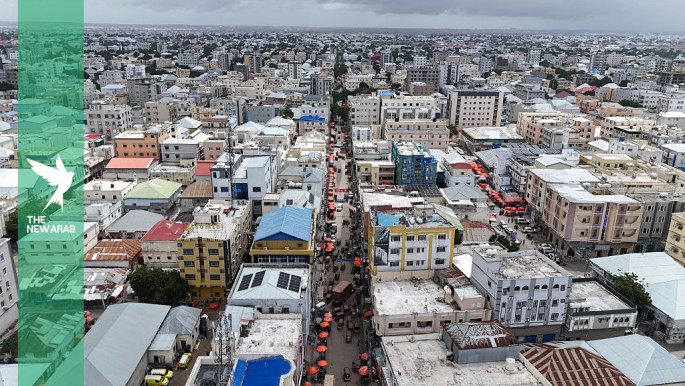
The delegations from the Puntland and Jubaland regional states withdrew from the political talks with the federal government in Mogadishu after failing to make progress on the contentious issues. [Getty]The second round of negotiations between Somalia's federal government and opposition leaders ended on Wednesday, 22 July, without reaching a settlement to end the dispute. The delegations from the Puntland and Jubaland regional states withdrew from the political talks with the federal government in Mogadishu after failing to make progress on the contentious issues. Representatives of Puntland and Jubaland believe that President Hassan Sheikh Mohamud did not show sufficient flexibility or willingness to make concessions on issues related to the federal elections, which, in their view, contributed to the breakdown of the negotiations. According to local media, several Turkish diplomats have been conducting local mediation between the opposition and the government since May. Turkey intensified contacts with all parties involved in the crisis to end the security confrontations that took place in Mogadishu last month, after former Prime Minister Hassan Ali Khaire took up residence in a house in the Hodan district in central Mogadishu. Former Somali President Sharif Sheikh Ahmed also moved to another house in the east of the capital, raising concerns within the federal government over the mobilisation of opposition supporters. The tensions triggered clashes that lasted for two days in the capital before ending following Turkish intervention, bringing the opposition and the government to the negotiating table. The withdrawal of the two delegations comes amid efforts to reach a consensus between the federal government, regional states and political forces over the future of the electoral process, amid continuing disagreements over how the next phase should be managed. The federal government has not yet issued any official comment regarding the withdrawal of the Puntland and Jubaland delegations or the reasons behind the stalled negotiations. Experts say Turkey is currently the most important external partner of Somalia's federal government. It provides training for the Somali army, invests in the health and real estate sectors, and Turkish companies operate Mogadishu airport and the capital's seaport. For this reason, Ankara is keen to prevent the country's security and political situation from deteriorating. In this context, Somali researcher and Somalia Today editor Abdul Wali Al-Sayed told The New Arab that "Turkey's intervention to resolve the dispute between Somalia's federal government and the opposition reflects Ankara's growing influence in Somalia and the Horn of Africa. "Turkey is no longer present only through aid or development projects but now has broad security, economic and geopolitical interests, including military training, security cooperation, trade, maritime resources, and the oil and gas sector," al-Sayed remarked. "Ankara is therefore seeking to prevent any political escalation that could threaten these gains or weaken Somalia's state institutions, with which it maintains strategic partnerships," he added. "Continued tension between the government and the opposition could disrupt security cooperation, affect Turkish economic interests, and create opportunities for competing regional powers to exploit internal divisions." Al-Sayed argues that the success of the Turkish mediation depends on three main factors: Ankara's ability to present itself as an acceptable mediator to all parties; the degree of influence it has over both the government and the opposition; and its ability to contain external actors that may seek to undermine any settlement or keep Somalia in a state of political tension. The Turkish mediation appears to be an attempt to protect political stability in Somalia on the one hand, and safeguard Turkey's accumulated interests on the other. However, it will not succeed fully unless it is matched by genuine Somali willingness to engage in dialogue and make mutual concessions. Many are questioning why Turkish efforts have so far failed to resolve the outstanding issues, particularly direct elections and constitutional amendments, alongside opposition concerns over the misuse of the security apparatus to implement agendas serving the Somali presidency, whose term ended in May. In this regard, Adnan Abdi, a researcher at the Somalia Centre for Studies, told TNA that "there is a genuine opportunity for the Turkish mediation to succeed, and signs of de-escalation and political breakthrough are more evident than before. "This is because the mediation enjoys international backing from the United States, Britain and the European Union, in addition to Turkey's well-established relations and strategic investments, which give it significant influence over the various parties," Abdi said. "Time is also placing increasing pressure on the opposition, pushing it towards accepting a political settlement that would lead to elections being held as soon as possible." Nevertheless, reaching a final agreement remains dependent on resolving the details of the electoral model, including the administrative framework, timetable, funding mechanisms, and the technical and logistical capabilities required for implementation. It also depends on international willingness and pressure to end the political deadlock. Abdi added, "The diversity of the opposition, which consists of four main blocs with differing positions and priorities, adds to the complexity of the dialogue process. It may slow the achievement of a comprehensive consensus or open the door to more complex negotiation scenarios." Regarding Puntland and Jubaland's reasons for ending their boycott of the federal government and joining the dialogue, Adnan believes international pressure is one of the main factors encouraging Puntland to return to the negotiating table, given the international community's desire to unify political positions and achieve a national consensus before the upcoming milestones. As for Jubaland, its president, Ahmed Mohamed Islam (also known as Madobe), is seeking to strengthen his political legitimacy by engaging in a negotiating process that secures recognition of his role as a key partner in any political settlement, particularly amid the ongoing dispute with the federal government over the legitimacy of his administration. However, the participation of Puntland and Jubaland in the dialogue reflects positive indications that the parties are moving closer to more serious understandings, although the core disputed issues still need to be resolved before a comprehensive political agreement can be reached. Article translated from Arabic by Afrah Almatwari. To read the original, click here.
Despite Turkish mediation, Somalia talks stalls
Full Article
Original Source
Read the full article at Newarab →KhanList aggregates and links to publicly available news content. We do not host full articles from third-party sources. Always verify important information with original sources.