
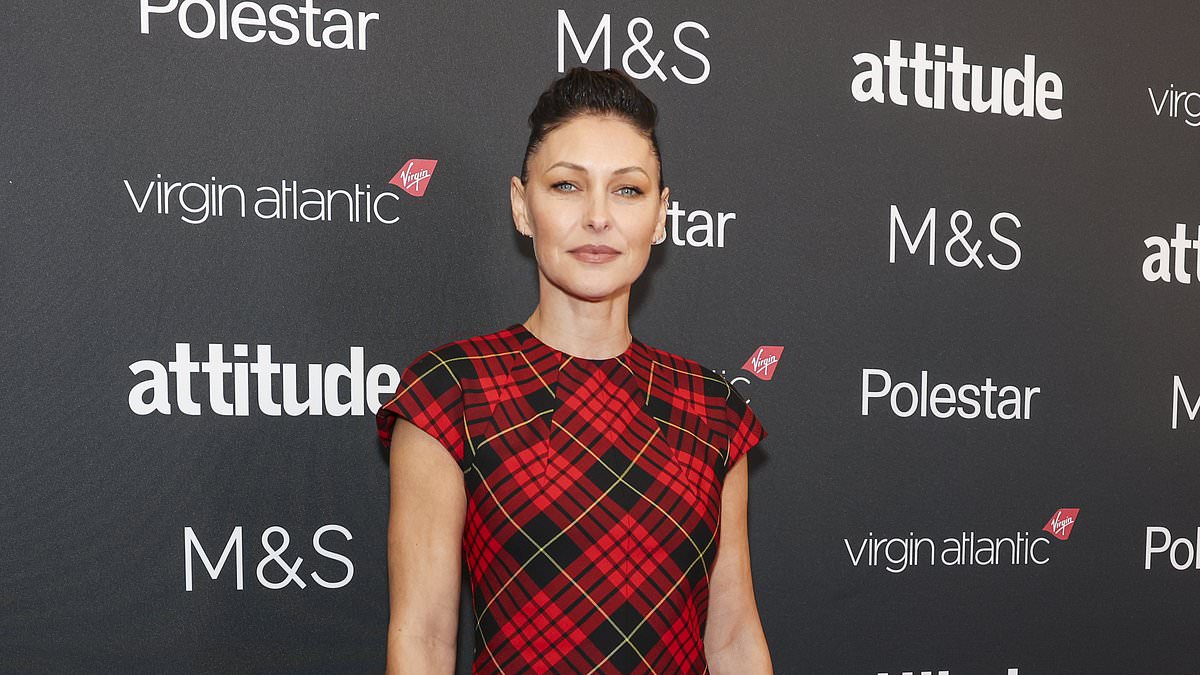
Speak nicely when you are with me.’ That was my granny’s request when I was eight, and it rendered me confused. I had not shouted, used slang or taken the Lord’s name in vain, so what could she possibly mean? Then I realised she wanted me to lose my Birmingham accent.She wasn’t an unkind or snobbish woman, but my singsong lilt irritated her. I think she feared, probably correctly, that it would limit my prospects.As a Brummie you learn very quickly that everyone thinks the way you speak makes you sound uneducated, unsophisticated and unprofessional. It will come as zero surprise to any of us that in a YouGov survey, 28 per cent of respondents said the West Midlands accent is their least favourite. Or that in a 2020 Accent Bias In Britain project, it was ranked in the bottom ten in terms of prestige and pleasantness. Jeremy Clarkson captured the feelings of many when he said, ‘I don’t wish to be rude to the people of Birmingham, but I’m sorry, it makes you sound thick.’But the tide is now turning. Sutton Coldfield-born presenter Emma Willis landed one of the biggest presenting jobs on TV hosting Strictly Come Dancing. And while she admits to toning down her West Midlands accent, it’s still unmistakable. Same with This Morning’s Cat Deeley, who grew up in the same hood as Willis and has a definite twang.Meanwhile, Great British Bake Off’s Alison Hammond, from Kingstanding, has affected zero accent modification and calls herself ‘unapologetically Brummie’. She told a podcast, ‘I applied for ALRA, the Academy Of Live & Recorded Arts. The woman there said, “You do realise we are going to have to modify your accent?” I was like, “Modify? What does that even mean?” They said, “Because you’ve got a really Brummie accent.” I just thought, I am not doing that… I love my voice.’Though my granny’s words affected me, I didn’t quite jettison my accent because I was already being called a snob at school (my dialect was minimal) and didn’t want to risk being further ostracised. I was a class mongrel, with a boarding-school-educated mother who spoke RP (Received Pronunciation) and a father whose career in academia had erased his Lincolnshire accent. I have posh and working-class sides to my family, but my childhood was mainly spent with the latter.I went to a city comp while many of my cousins lived a life of ski trips and private school. They had friends even posher than them who had never met anyone with an accent apart from their cleaner. So, when we played together, they nicknamed me Hilda Ogden, of Coronation Street fame. Never mind she was from Lancashire, she didn’t speak RP, so she and I were the same in their eyes.At university I was teased again for my Brummie accent and slowly, as I spent less time in my home city, it faded. After a few years working on glossy magazines in London, it vanished entirely.At the time, I genuinely believed it had just ebbed away but, if I’m honest with myself, I must have made a conscious decision to eradicate it, fearing it was a hindrance to my professional progression. My best friends from home have kept their accents and if they resent me for abandoning mine, they’ve kindly never said, though one admits to me she still feels the stigma in her 50s.Because the RP club is alive and kicking, and in some quarters it’s still socially acceptable to show disdain for those who speak differently. In 2022, researchers at Northumbria University Newcastle found that most people are unaware of their biases towards accents. ‘People do think that speakers in the north of England are less intelligent, less ambitious, less educated and so on, solely from the way they speak,’ says sociolinguist Dr Robert McKenzie, who led the study.Labour MP Jess Phillips has said her accent is something she is ‘really self-conscious about because people think that those with a Birmingham accent are quite stupid’. I’ve always wondered if this is why Wolverhampton-raised journalist Caitlin Moran’s voice has no Black Country traces.My accent may be buried deep but when I’m with my Brummie mates, and a few glasses of vino down, it comes roaring back. I’ve learnt this is called bidialectalism, which is the ability to shift between two different dialects. Does this make me inauthentic, I wonder?All I do know is that we owe Alison Hammond thanks. She paved the way for future generations of Brummies to speak loudly and proudly.
I was mocked for my Birmingham accent, so I lost it. I hope the Brummie boom led by TV presenters like Alison Hammond means future generations won't want to: ROSIE GREEN
Full Article
Original Source
Read the full article at Dailymail →KhanList aggregates and links to publicly available news content. We do not host full articles from third-party sources. Always verify important information with original sources.