
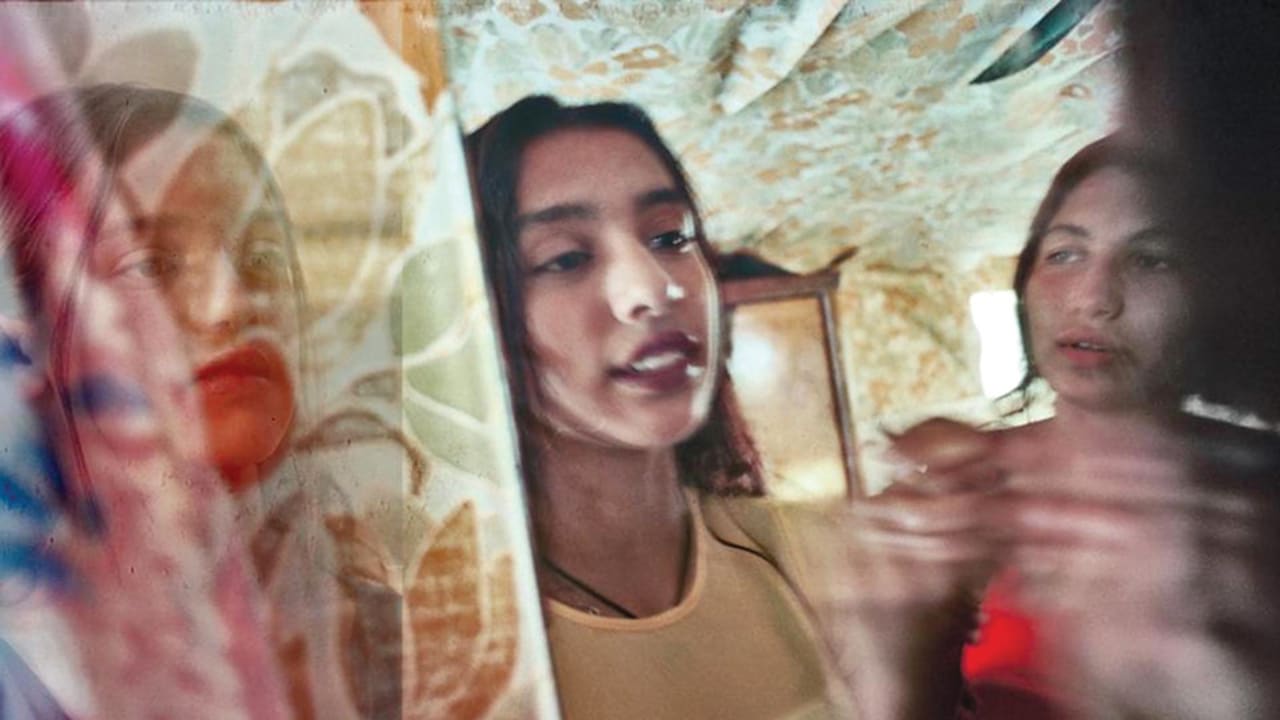
NOVEMBER 14, 2026 10:41The human condition – now there’s a taxing one. We spend our entire lives trying to understand or come to terms with who we are, let alone trying to get some sort of handle on people from very different climes. Then again, if we cast our cerebral and emotional nets a little further, we might, by extension, come up with some epiphanous wisdom that may help us get a less pixelated picture of ourselves.That, in part, is the thinking behind the Anthropological Film Festival, which has been running at the Jerusalem Cinematheque, in collaboration with the Department of Anthropology and Sociology of the Hebrew University, for the past decade and a half.The event is overseen by perennial artistic director Nurit Kedar and academic director Prof. Tamar El-Or, with another staff member at the Hebrew University department, anthropologist, researcher, and filmmaker Dr. Lydia Ginzburg, at the academic production helm.The 15th edition of the festival is scheduled for November 17-19, with 14 movies from expansive ethnic and cultural domains lined up for the three-day program. Since its founding, the festival has paired screenings with lectures by academics from a relevant field, and discussions by learned experts on the subject matter at hand.As such, the likes of communications, religion, and gender lecturer at Sapir Academic College Dr. Rivka Neriya-Ben Shahar, Open University sociologist Prof. Motti Regev, as well as Ginzburg, will provide their Cinematheque audiences with some insight into the whys and wherefores of the human landscape they are about to encounter in the ensuing documentaries.Festival academic producer Dr. Lydia Ginzburg. (credit: Helen Yanovsky)Next week’s lineup also features a couple of guests from abroad: Austrian filmmaker Samira Fux and Canadian-resident Italian counterpart Giovanni Princigalli. The filmic material has been culled from a broad sweep of geographic and societal tracts including, besides Fux and Princigalli’s stomping ground, Nepal, Brazil, Ukraine, and the Dominican Republic.Anthropology for allAs a former archaeologist with a background in Ancient Greek, I can deconstruct the epithet in the festival title thus: anthropos, meaning “person,” and logos, whose various translations include something along the lines of “the study of.”With such generous room for subject matter maneuver, I, somewhat provocatively, suggested to Dr. Ginzburg that numerous fields of exploration might be construed as relating to that commodious purview. While my interviewee initially dismissed my shaky hypothesis, it seems I wasn’t too far off the mark after all.“Everything in life is connected to people,” she says. “Anthropology addresses people. So, from that point of view, everything is connected to human beings. However, not everything is anthropological.” I duly stood corrected.I then get a better idea of the credo behind the annual documentary event. “In this festival we will watch movies that offer us a glimpse of some society or culture – not things we generally see on TV channels like Discovery, even though they show lots of interesting things there.”The idea is to dig into the material at hand and work through the stratified backstory to see how the folks on screen got to where they are. There is a bit more to the field than my blatantly tongue-in-cheek take.“Anthropological cinema is more sophisticated,” Ginzburg explains. “What really interests us here is films that explore cultures and try to understand some kind of intriguing cultural process. We try to show all kinds of tensions and contradictions which exist in cultures, and how different people and groups try to find their way through the contradictory streams, the cultural complexities.”Ensuring the festivalgoers get some quality silver screen offerings, not just focusing on the thematic angle, is also integral to the programming approach. “We bring documentaries that have already been shown at other festivals. Some have won prizes at documentary film festivals around the world.”Digging beneath the pastoral poseThe offshore professionals will talk about their work after the screenings. And it seems there will be plenty for the directors to dig into for our behind-the-scenes enlightenment. Fux’s Piliji tells the story of a small town in Austria’s southernmost state of Carinthia.The film ostensibly focuses on the local gun-making tradition and preserving local heritage but, as the storyline unfolds, a troubling subtext begins to emerge.Ginzburg rolls out the intriguing lay of the land: “Piliji is about a beautiful small town [called Ferlach] near the Slovenian border which earns a living from crafting guns for hunting, beautiful guns.”Appearances can be deceptive, Ginzburg notes. “To begin with, we see the tranquility of the place, and these artisans whose families have been there for generations. But gradually we see the tensions that exist there between people of Austrian extract and those with Slovenian roots.” Locally-born bilingual Fux, who now lives in Vienna, knows the score personally.“Those tensions were greatly aggravated during World War II when Slovenians were persecuted by Austrians and had to go underground, and, in effect, became partisans. The same tensions pop up here and there these days too.”Indeed, Piliji incorporates black-and-white archival documentary footage from “the good old days,” pre-Hitler, showing villagers happily strolling around the place hoisting rifles and craftsmen working on new models. Everyone seemed to be cheerful back then. Was that an idyllic existence, or was there something ominous brewing, a sort of rustic Austrian calm before the Nazi storm?Anyone who follows the news will be aware that the Middle East is not the only spot on the globe beset by intercultural, inter-ethnic issues, but these documentaries provide collateral for that perception in a more reasoned, less politically slanted manner.Is that encouraging for us here, in our regional quagmire? Or does that produce the depressing opposite effect? Perhaps that will become clearer when Fux takes the stage for her post-screening spot on November 18.Life on the fringes of societyPrincigalli, who is coming to Jerusalem with an enlightening, moving, and, in parts, thoroughly entertaining work called The Song of Aida, takes up the second foreign guest slot. Most folks living in this country are familiar with the idea of emigrating to a different country, if not being an actual refugee.The Song of Aida tells the story of a Romanian Roma community living in an encampment near the port town of Bari, Italy, in difficult existential circumstances. The film bridges a 20-year gap, focusing on the titular figure, her teenage dreams of becoming a singer, and the reality she must deal with at the other end of the filmic time span.Princigalli treats his subjects with compassion and with a tender hand on the directorial rudder, deftly complementing the unfolding human storyline with lyrical animation vignettes.“We see what happens to a beautiful young girl, during the course of those 20 years, in a community which has to deal with a lot of problems, and is alienated from society, but it is also very conservative,” Ginzburg explains. “The story is told very beautifully.”Ginzburg says the Cultural Attaché for Quebec will join the director, and the Austrian Cultural Attaché will similarly attend the Piliji screening. That’s not bad going.While Ginzburg may have, understandably, parried my cheeky suggestion that everything in life has an anthropological element, an overarching factor is at play here. I put it to her that all the films in the festival program incorporate universal messages one could quite conceivably apply to our situation here. This time I got the thumbs up.“What these documentaries do is examine the day-to-day lives of people. For example, they look at relationships between family members, within communities, at the relationship between people and state institutions, or economic powers. So it follows that, in all these movies, you can find parallels with what goes on here in Israel, even if the reality [of the movie storyline] occurs in a very different place, such as in indigenous communities in Brazil.”That led us neatly onto the next slot in the screening program. “We are showing two films about communities in Brazil. One [The Garden of Maria] is about the Mbyá Guarani people of Bahia, living on the fringes of São Paulo. The other [As Far As The Eye Can See] is about the Kariri-Xocó community, who are, on the one hand, trying to preserve their rituals and culture.“On the other hand, they are also trying to protect their land and to regain their land, which was expropriated by the state. That may be a little less universal, but it does exist in many countries around the world.”Regardless of political stances, it is easy to see how that correlates to our own backdrop in the wake of regional military altercations and persecution elsewhere, which impacted demographic developments here.The unavoidable cost of warPossibly the most emotive and impressive item on the documentary roster is a Ukrainian contribution called Mariinka. It is a gargantuan piece of work, both in terms of the effort invested in the project by Belgian photographer and filmmaker Pieter-Jan De Pue, and the time he devoted to it..He spent over 10 years following the fortunes of some youngsters from the titular town, which found itself on the frontline in the war with Russia. We see how the violence and financial and emotional hardships affect the subjects’ lives. It is a powerful portrait of a generation coming of age through war.Ginzburg, whose speaker berth takes place before the screening, says De Pue gained valuable relevant experience prior to the Ukrainian project. “He started filming around the time Russia annexed the region of Donbas [where Mariinka is located]. He had previously shot a documentary in Afghanistan, and he discerned parallels between the situations in the two places.”De Pue is clearly a dedicated professional. He spent eight years in Afghanistan filming and capturing still photographic images. The former produced his 2016 documentary The Land of the Enlightened, which won the Best Cinematography Award at the Sundance Film Festival. His photographs were sifted through and compiled in a book called Kings of Afghanistan.His work on Mariinka is nothing short of extraordinary, and he manages to record intimate and almost painfully private moments with the Ukrainian characters, as well as with a couple of Stateside folks. The film shows the unavoidable terrible cost of war, warts and all, and gets up close to people caught up in the military madness.Some subscribe to it all with great patriotic fervor, others take a more circumspect approach but contribute to the war effort regardless, and one character, sent by his siblings far away to the safety of the US, simply and, it must be said, naively just wants to get back to Ukraine to do his bit.It is a striking and horrifying portrayal of the horrors and misery caused by politically motivated evil madness. Ginzburg will dig into that in her preliminary address.“I want to look at what happens to families, relationships with them, and with young people during a war. I want to examine what happens to these relationships, and how these allegiances towards states, and allegiances towards family members, other people, or your community, and how they change over time.”Ginzburg feels there is a message or two to be understood there.“I think that in the last period of time here, the last four years, and more powerfully since October 7, there are quite a few parallels with the arguments and debates, the difficulties we have been through, the violence that has erupted here, how all of that impacts the Israeli sense of community, and what takes place within Israeli families.”In Agridulce (Bittersweet), which comes to us all the way from the Dominican Republic, there is plenty of challenging introspection and presentations of painful personal impasses. Here, too, there are issues relating to the struggle to preserve a musical tradition, and similar to Piliji, racial discrimination intermittently rears its ugly head.But the movie, by Croatian-American filmmaker Frank Pavich, contains plenty of heartwarming and joyous moments too. As the title suggests, it is something of an emotional rollercoaster, but there is a fair chance viewers will come out of the screening smiling, with a song in their hearts.The same sentiment will probably apply to the Austrian documentary Unsere Zeit wird kommen (Our Time Will Come), which looks at the challenges faced by a Gambian-Austrian couple on a legal status level, and in terms of the ethnic and cultural divides to be negotiated.Racism in Austrian society is also brought into focus by director Ivette Löcker, but, as they say, where there’s a will, there is a way.For tickets and more information: jer-cin.org.il/en/article/4284Follow us on Google
Here, there, and everywhere: The 2026 Anthropological Film Festival does the global cultural rounds
Full Article
Original Source
Read the full article at Jpost →KhanList aggregates and links to publicly available news content. We do not host full articles from third-party sources. Always verify important information with original sources.