
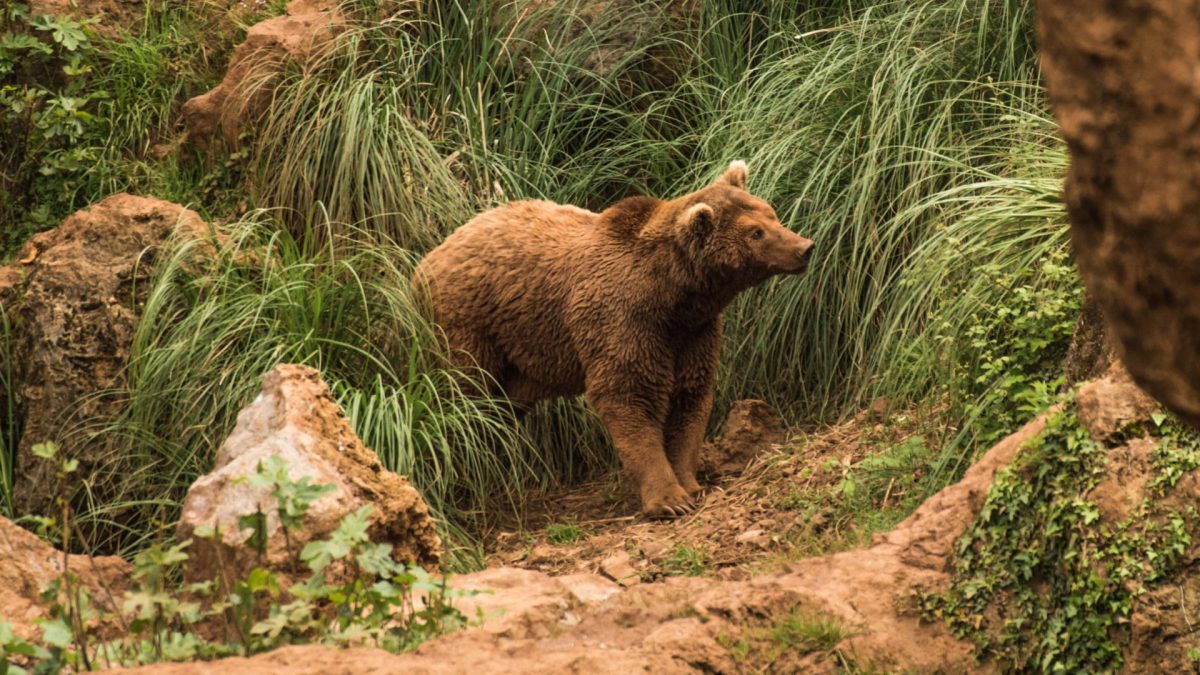
It’s a sunny Sunday at Cabo de Peñas, or Cape of Rocks, the northernmost tip of the Iberian Peninsula. Spiking into the Cantabrian Sea in Spain’s Principality of Asturias, these towering cliffs are an impenetrable tumble of gnarly limestone descending to sea arches and caves carved by the waves. Along the top, sea pinks wave their pom poms, gorse bushes flame and butterflies cling to asphodels, while I watch families and couples stopping for selfies. It seems fitting that this month’s solar eclipse passed over this stretch of lesser-visited Spain, renowned for its wilderness. Green Spain – as Galicia, Asturias, Cantabria and the Basque Country have collectively become known – is made for slow, sustainable travel and is no misnomer, as its swathes of forest prove. Shorts Having departed Cabo de Peñas, we ascend steadily into Somiedo Natural Park, a Unesco biosphere reserve since 2000, where mineral-striped peaks climb more than 2,000 metres skywards across five sharp valleys. In the park’s main town, Pola de Somiedo, there’s a noticeable sense of peace; cats lie languidly and a passing stream adds a trickling soundtrack to this settlement wedged between steep slopes. At the park’s reception and interpretation centre, I learn about the local geology (Somiedo is formed around some of the oldest rocks in Spain) and its importance as an ecosystem for birds, including Egyptian vultures and golden eagles, and mammals like wolves, lynx and – what I’m hoping to see – Cantabrian brown bears. At the Bear Interpretation Centre I find out about their journey from society’s foe to friend. By the early 1990s, the bear population was teetering in the tens because of a combination of hunting (which was legal until 1973), habitat loss, conflict with farmers and slow reproduction cycles. Lagos De Somiedo in Asturias (Photo: Westend61/Getty/Westend61/Albrecht Weier) Today, however, thanks to major conservation efforts and a change in attitudes, the population exceeds 400, with around 50 living in Somiedo. Yet, I’m sceptical. Surely, we are not really going to see wild bears in Spain? But my guide Luis Frechilla, unflappable and infectiously passionate, is optimistic. “We have a good chance,” he says with a convincing smile. Crepuscular creatures, these omnivorous bears laze during the daytime. So, in the evening light, our group joins others peering through binoculars from a nearby hide. Luis whips out his telescope as we stand quietly scanning the hillside roughly a kilometre in front of us. He tells us that in Somiedo, “it is much easier to see the bears as there’s not so much vegetation they can hide behind”. After half an hour of nothing more than cattle gently clanging their bells, a murmur spreads through our Gore-Tex-clad gathering and we all swing our binoculars in the same direction. Somiedo Natural Park in Asturias (Photo: Getty) Much pointing ensues – “to the left of that rock, just by the grassy patch” – before I lock on to a brown dot plodding its way upwards, followed by two smaller, lighter brown dots, one taking a little tumble before playing catch up. We are looking at a mother and two cubs. Overwhelmed with emotion, I watch, grinning absurdly, as this little family navigates to the snow line before disappearing over the ridge. The next day, Luis takes us on what he promises is one of Somiedo’s most impressive hikes. He’s not wrong. The 12 kilometre circular trail to Lago del Valle, the largest lake in Asturias, has more than a flavour of the Swiss Alps about it. Setting off, we are chaperoned by the village’s friendly German shepherd, the breed typically used to protect livestock in Cantabria, until we are out of his territory. We snake between fields of cattle, and horses nurturing foals as the snowy summits shimmer in the sun. Layers of clothing are steadily removed as the path steepens and the valley narrows. The scenery becomes more spectacular, enveloping us in toothy peaks as we reach the lake around 1,550 metres up. One of the broom-thatched, drystone huts known as teitos (Photo: Richard Hammond) Dotting the landscape across Somiedo are broom-thatched, drystone huts known as teitos. Cool in summer, warm in winter, they were used seasonally by shepherds watching over their livestock in the mountain pastures, or brañas, from spring to autumn for centuries until the 1980s. At the Teito Houses of Veigas, an ecomuseum, three structures have been carefully preserved so that visitors can understand how they would have been used. They are laid out for co-habitation – animals below, people above. Opening a wooden shutter, Luis explains that glass windows did not arrive until the mountain road was built in the 1950s. On my last night in Somiedo, we reflect on our success in seeing the bears, and extol the beauty of the alpine scenery. Loading up on plates of fabada (Asturian bean stew), with potatoes dripping in cabrales, the local blue cheese) and glasses of cider poured from a great height (to aerate them and create a little froth), I’m aware that I have fallen for this little-known slice of Green Spain. How to get there Vueling flies from Gatwick to Asturias, from which Somiedo is a 70km drive. Where to stay Casa Miño in Pola de Somiedo has doubles from €80 a night. How to do it Wild Spain Travel offers bear-watching in Somiedo from €150pp (£130pp) for a three-to four-hour experience. More information Spanish Tourist Office Turismo Asturias (turismoasturias.es).
I visited Spain’s wild north for lush hiking, great cider and wild bears
Full Article
Original Source
Read the full article at Inews →KhanList aggregates and links to publicly available news content. We do not host full articles from third-party sources. Always verify important information with original sources.