
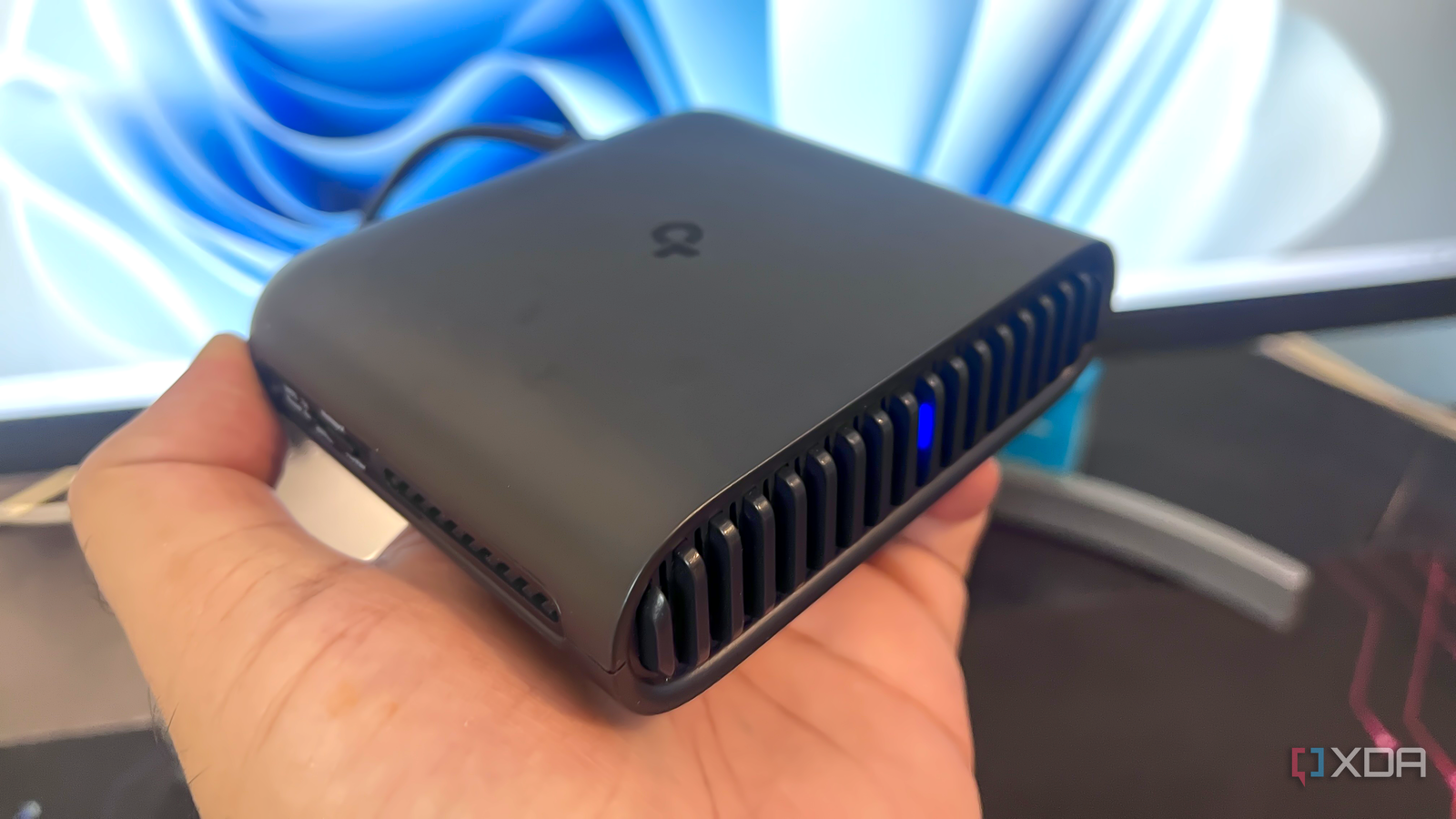
Published Aug 10, 2026, 8:00 AM EDT With over five years of experience in the tech industry, Kazim excels at simplifying complex topics, making them accessible to tech enthusiasts and general readers alike. He has extensively covered the Windows ecosystem, from Windows 7 to Windows 11. When he’s not writing, you’ll find Kazim planning weekend getaways or diving into tech verticals beyond his expertise. Around a month ago, I purchased a travel router for a two-week vacation, the TP-Link AX1500 to be precise. Honestly, it served me well on the vacation, streamlining connectivity and boosting speeds. When I returned, the travel router remained in a drawer for a whole week before I decided I wasn't letting a perfectly good device sit idle. Since then, I have been using it for multiple things at home. I even tried replacing my decent primary router with the travel router for a day, and the experience was surprisingly good. There were no slowdowns or connectivity issues, as I had initially anticipated. And that made me realize that travel routers are essentially a compact, more portable version of regular routers, doing all the same things, or perhaps more. A travel router works just as well as a regular router If yours has LAN ports, that's even better My biggest surprise was how capable a travel router is. For the longest time, I thought that these devices were relatively underpowered and designed for use in smaller spaces. Because if you call it a "travel router," people are bound to assume it's better suited for travel and can't compete with a home router. I got over this misconception within hours of using the travel router as the primary home router. To be honest, during the 14–16 hours it served as the primary router, there were relatively fewer devices connected. But those were the less network-intensive ones, like my smart plugs. During testing, I had three laptops, two smartphones, one smart TV, two smart plugs, one security camera, and a Fire TV Stick connected to it, and there were no signs that the travel router was struggling. Since the router had one free LAN port, I could even run an Ethernet cable from it to one of my laptops. I agree, the period is too short to draw conclusions, but if you have a reasonably sized home with 7–10 devices, I don't see the harm in using the travel router as the main router. The router model you are using will undoubtedly be a major factor, but as long as it's decent, the setup should work. That said, I am not encouraging you to ditch your primary router. But if you are still using a router shipped by your ISP, giving the travel router a try won't do much harm. My travel router allowed more control over the network Most ISP-provided routers lack these controls Another reason I love travel routers is that they offer granular controls over most network-related settings and advanced features, much like a regular router. And while this is not precisely something to boast about, since any modern router lets you do that, the problem particularly pertains to users who are still using ISP-shipped routers. For them, these settings often remain out of reach. You can turn Quality of Service (QoS) on, configure parental controls, set up a router-level VPN, manage firewall settings, create guest networks, and more. This helps if you plan to reserve the travel router for a couple of devices. For instance, if you don't want to (or can't) manage these settings on your main router, simply connect the devices you want to benefit from these customizations to the travel router. It's that simple. Of course, you can get another router for this, but let's not forget that it will be pretty useless while you are traveling. A travel router has several exciting use cases It can really streamline things at home If we look beyond the obvious, there are a handful of smart ways you can use a travel router at home. I have tried a few, especially ones that cater to average, everyday users, but there's a lot more you can do. Your travel router is typically capable of pretty much everything a regular router can do. For instance, you can connect a flash drive to your router and set up a simple NAS. This will streamline file sharing between your devices. I, for one, regularly share photos between my phone and laptop, and the setup has served me well. There are a few limitations, but I still find the setup relatively convenient. Setups like these also make me realize that flash drives are incredibly useful, even today. Apart from this, I use my travel router as a Wi-Fi extender. And had I not already owned a Wi-Fi range extender, the travel router would have found a full-time application in my home. Wi-Fi coverage was a concern But only when I tried replacing the existing setup After using a travel router for over a month, and specifically at home for about two weeks, there are a few things you need to be mindful of. The first and most important is coverage. In my experience, it isn't as good as a dedicated home router. It's not bad either, and if you consider the fact that mine has no antennas and can be powered by a portable battery pack, things don't sound too bad. More importantly, this shouldn't be a problem if you are not replacing your primary home router, and that's not something most users are looking for. It's best to use your travel router in a way that complements the setup and to consider it a replacement only when necessary. And then, too, it should preferably be temporary. Don't save your travel router just for vacations When I was planning to get a travel router, I assumed it would spend most of its time in a drawer. But, as it turns out, I was wrong. It has, instead, become one of the best upgrades I have made in a long time, and rarely does it sit idle. For the most part, I use it to improve Wi-Fi coverage in a room where I previously had trouble with the signal, but its uses extend beyond that, as I have learned over the past month. In a small home, a travel router can pretty much handle everything, while in larger spaces, it can make an excellent companion to your existing router. So, if you already have one or are planning to get a travel router, don't save it for vacations, because it can make a valuable addition to your home.
I used a travel router at home for the first time recently, and now I understand why people love them
Full Article
Original Source
Read the full article at Xda-developers →KhanList aggregates and links to publicly available news content. We do not host full articles from third-party sources. Always verify important information with original sources.