
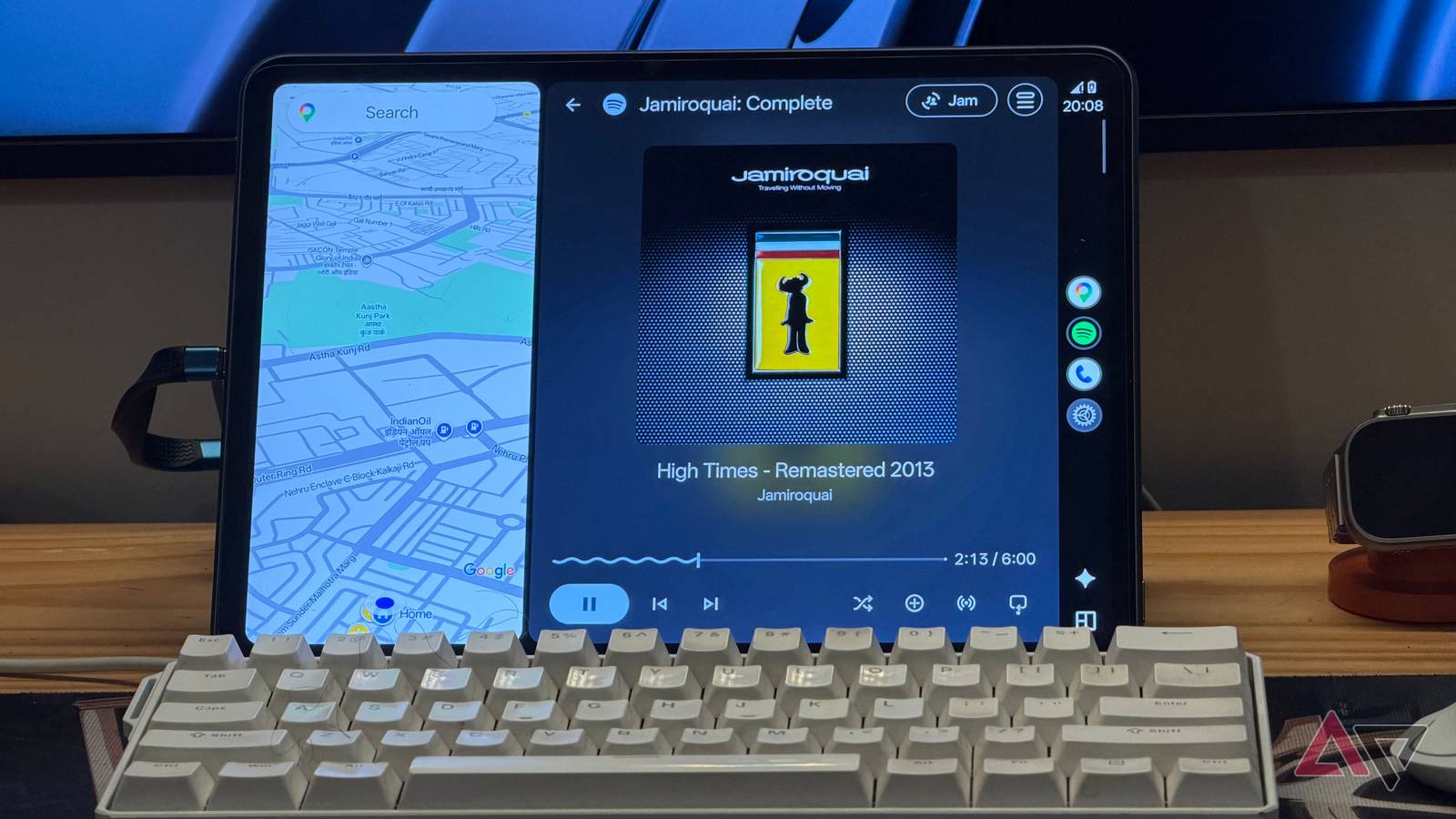
Published Aug 4, 2026, 8:00 AM EDT Dhruv Bhutani has covered the Android ecosystem since 2010, with a focus on smartphones, connected devices, and home networking. His reporting is informed by hands-on experience reviewing hundreds of smartphones and testing a wide range of smart home and audio products over more than a decade. He has attended Mobile World Congress eight times since 2011 and IFA Berlin five times, alongside regular coverage of launch events and industry briefings from companies including Google, Xiaomi, Oppo, and Qualcomm. This on-ground access and long-term exposure to product cycles inform how he evaluates hardware, software direction, and ecosystem shifts. First-Hand Experience Reviewed and tested hundreds of smartphones since 2009 Tested smart home, audio, and connected devices across multiple categories Attended Mobile World Congress (8 times, first in 2011) Attended IFA Berlin (5 times) Covered industry events including Qualcomm Summit and launch events from Google, Xiaomi, Oppo, and Vivo Career History CNET — Freelance Editor May 2024 – Present Android Police — Freelance Editor July 2023 – Present Android Authority — Contributor November 2022 – Present Android Authority — Editor January 2019 – October 2022 FoneArena — Editor February 2010 – January 2018 PhoneReport.info — International Correspondent February 2010 – May 2011 Nokia Mobile Talk — Writer June 2009 – October 2009 I spend most of my day at my desk, so I like the idea of having a dedicated dashboard near my monitor. Be it to control music playback, control the lights in my study, or show upcoming calendar appointments. While I have a tablet sitting near my keyboard, I wanted something geared towards quick access instead of a full-fledged app drawer. Something that takes the Android Auto-style approach. That thought got me thinking. Why not use Android Auto as a dashboard? Using an open source app called Open HeadUnit, I've been running Android Auto on spare phones and tablets mounted to a fixed charger or a MagSafe dock. It's become the perfect desk companion for everyday interactions without the distractions that come with a full-fledged tablet. Android Auto turned out to be the dashboard I was looking for The distraction-free design works great on a desk I had a few simple requirements when I started looking at dashboard options. I wanted essential information such as incoming emails, messages, and calendar appointments to show up. Weather would be a nice-to-have. If the dashboard can handle smart home controls, it's borderline perfect. What I didn't want was an extension of my computer with system stats and news feeds. I have enough ways to get that information. Android Auto handles all of my requirements with minimal caveats. Turns out, the philosophy behind building an interface that's intentionally simple because it's built to minimize distractions while driving translates beautifully to a desk. All I did was install an app called Open HeadUnit. You might remember it as Headunit Revived. The app offers a few modes. You can pair it with another phone using USB or Wi-Fi to act as a remote front end for Android Auto, or you can use it in self mode to trigger Android Auto on the device. I use it over USB for a reliable connection between my phone and the tablet on my desk. One tap of a button and I have the full-fledged Android Auto setup running on my desk. Coming to the experience of using Android Auto on a desk, here's where it gets interesting. The map that occupies most of the display isn't all that useful. However, everything else around it is exactly what I need. For example, media controls that are always available let me control the music playing back over my streamer. I can pause, skip, or play a track again without reaching for my oh-too-distracting phone. The notification system is equally useful. Instead of mirroring every notification, I only get the critical ones. Moreover, unlike my phone, if I get an Instagram message, I'm not tempted to reply because I can't. There's no Instagram app on Android Auto. Meanwhile, essential information like calendar reminders, messages, and important alerts show up when needed. It's neat and non-intrusive. The feature that ties this together is the voice controls. I can ask it to start playing a track, reply to a message, or make a call without breaking my flow. Since Gemini taps into Google Home, I use it to control my smart home. It's very convenient. If you like using Focus modes and the Do Not Disturb feature, you'll love using Android Auto as a dashboard. If you're trying to cut down on the noise around you, be it through incessant notifications or distractions, Android Auto is a shoo-in. The dashboard isn't designed to launch everyday distractions like Reddit and Instagram. It's not perfect, but it gets close enough A persistent map makes no sense on a desktop dashboard Earlier in this article, I mentioned that there's one caveat to using Android Auto as a dashboard. That's Google Maps. There's no escaping the persistent map widget on the dashboard. It makes sense since Android Auto is designed for in-car use. On my desk, I'd happily replace it with a clock or weather information. But that's something you can't change. Thankfully, you can tuck it away partially. Despite that, this is a setup I've grown rather fond of. I'm not looking for a productivity dashboard. I need a way to control media playback and keep tabs on my calendar. If I can sneak a peek at incoming messages and control my smart lights, that's even better. The hardware helps too. When I'm on my treadmill, I usually mount a phone to a MagSafe mount. Plus, I have a large Android tablet in front of me with a screen size that rivals most in-car units. It's a great user experience. The best dashboard that was never meant to be a dashboard This isn't the only dashboard solution. It's a common problem for enthusiasts, and they've made multiple attempts to solve it. Some target stats, while others toss in a full Kanban board. Most tend to be an extension of the desktop. Rarely do dashboards target simplicity. I know Android Auto isn't designed for the desk, and it's not someplace where Google expected it to be used. But combined with Open HeadUnit, it's solved my dashboard problem, and better than most other solutions.
I turned Android Auto into a desktop dashboard, and now I can't go back
Full Article
Original Source
Read the full article at Androidpolice →KhanList aggregates and links to publicly available news content. We do not host full articles from third-party sources. Always verify important information with original sources.