
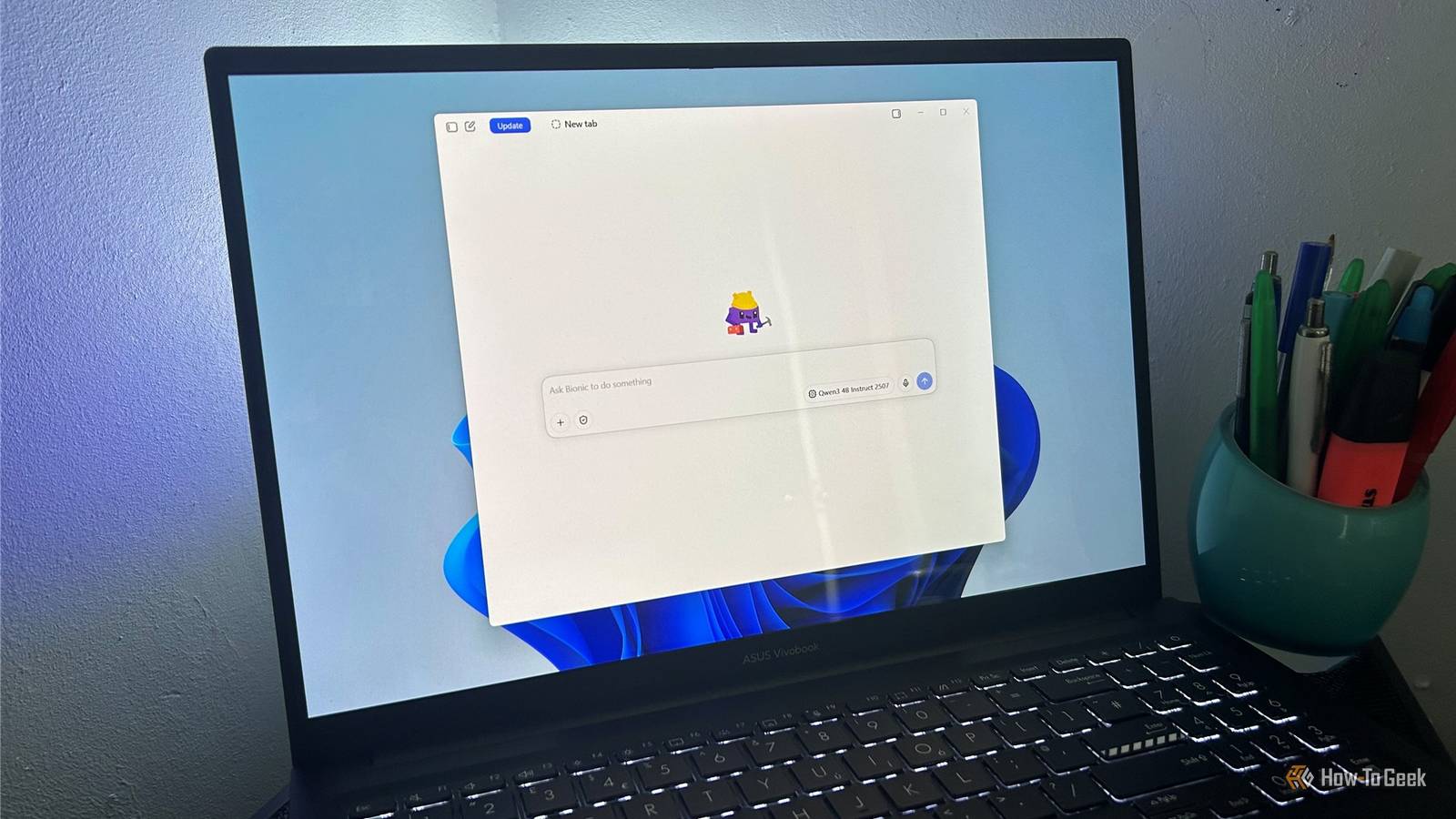
Published Nov 20, 2026, 1:31 PM EST Tony Phillips is a senior author at How-To Geek with over a decade of experience working with documents, data, and digital productivity tools. Holding a dual-honors degree in Linguistics and Hispanic Studies, he combines technical expertise with a passion for making complex topics easy to understand. Before joining How-To Geek in 2024, Tony worked as a document producer, data manager, legal document specialist, and content creator. He has also proofread and edited more than 3 million words of academic and professional writing. While Tony specializes in Microsoft 365, particularly Excel, his interests extend far beyond Office. He enjoys testing software, exploring open-source projects, discovering useful companion apps, and finding ways to customize and optimize Windows. Whether he's building spreadsheets, evaluating new tools, or uncovering hidden features, Tony enjoys helping readers get more from their technology. Outside of tech, he enjoys spending time with his dog, watching football, astrophotography, gardening, and golf. When people compare AI models, the discussion usually revolves around response quality. Which model is smarter? Which one hallucinates less? Which one gives the best answers? After spending a week evaluating whether it would be feasible to replace Claude Sonnet 5.5 Free with a local AI model running entirely on my laptop, I came away thinking those questions only tell part of the story. For my tests, I used a mix of real-world tasks and deliberate prompts. Some responses genuinely impressed me. Others exposed limitations that only became obvious over time. By the end of the week, I was heading back to Claude. I expected worse responses The local model cleared the competence bar I ran Qwen3-4B-Instruct-2507 (Q4_K_M, 2.5GB) locally through LM Studio Bionic on my Intel Core i9-13900H laptop with 16GB of RAM, and compared it with Claude Sonnet 5.5 Free, using its default Medium effort setting. Rather than running benchmarks, I evaluated a small, free model that could run on my hardware using the kinds of questions and scenarios I might reasonably put to an AI assistant. The first thing I noticed was how often it delivered usable answers. One of my earliest tests was an Excel question about the LET function to see how it handled technical topics. The explanation was accurate, the syntax was correct, and the example made sense. It felt more like documentation than expert advice, but if I'd asked that question while working in Excel, I probably would've been happy with the answer. The same thing happened when I pasted a fairly lengthy Microsoft Windows announcement into the model and asked for a summary. Qwen identified the major changes, pulled out the key updates, and gave me a useful overview. The summary itself was solid, although getting it required a small favor from my laptop's cooling system that I'll come back to later. If I'd stopped the experiment after a couple of days, I might have concluded that local AI was ready to replace Claude in my workflow. Competence wasn't the problem It needed more guidance Next, I stopped asking the model for information and started asking it for judgment. That's where the cracks started to show. To test this, I asked it to generate headlines, suggest article ideas, and discuss possible story angles. The model knew how to create hooks, introduce discoveries, and suggest payoffs. The catch was that some of those discoveries seemed to exist before any testing had happened. In one example, it suggested an article angle built around USB ports damaging phone batteries over time. It then invented the testing methodology, discovery, and payoff, as though the conclusion had already been established rather than something that still needed investigation. Many of the ideas seemed plausible, but that was the problem. They felt convincing even when the underlying reasoning wasn't properly grounded. I ran into something similar when discussing this experiment itself. When I asked whether there was an article in a week of testing a local AI model, instead of focusing on the evidence I'd provided, it quickly introduced speculative themes like digital sovereignty, cloud independence, and digital freedom. None of those topics had appeared in my prompt. To the model's credit, the discussion improved once I challenged those assumptions. It acknowledged the issue and produced a more grounded answer. But this process repeated throughout the week—I often found myself spending as much time evaluating the model's reasoning as I did using its ideas. Incidentally, when I gave Claude the same prompt, it immediately challenged my framing and suggested that the more interesting story was which tasks actually require a cloud AI model. Even when I disagreed with parts of its reasoning, it stayed much closer to the evidence in front of it. Claude felt like a conversation; the local model often felt like a batch process. It often got me most of the way there, but covering the remaining distance usually required more work than I'd hoped. My laptop became part of the conversation The hidden cost of local AI What surprised me most during the experiment was how much attention I started paying to my laptop. When I asked Claude a question, I thought only about the conversation. When I asked the local model a question, I thought more about the hardware. That difference became impossible to ignore as the week went on. The Windows summary test was a perfect example. After pasting the long announcement into the model, I waited roughly five minutes for the response to complete. During that time, Task Manager reported overall system memory usage of around 97%, the cooling fans sounded like a 747 preparing for takeoff, and I found myself watching the performance graphs almost as closely as the response window. Claude completed the same task quickly enough that by the time I looked at the clock, it had already finished. None of this made the model unusable, but it did change how I worked. I became more conscious of lengthy prompts, more aware of RAM usage, and more likely to think about whether a question was worth waiting for. Running AI locally made the infrastructure visible. There are good reasons to run AI locally What local AI does better There were also several things I genuinely liked about local AI. The biggest was freedom from usage limits. As a Claude Free user, I'm always slightly aware that I don't know exactly how much usage I have left. Longer conversations carry a little uncertainty. The local model never once made me wonder whether I could ask another question. I also appreciated having complete control over the software and model I was running. Being able to choose the model, select the quantization, and decide when to update everything is appealing in a way that cloud services simply aren't. The ability to work offline is a legitimate advantage, and local processing brings privacy benefits as well. The model was effectively free after setup. Hardware and electricity still cost money, but subscriptions and cloud usage limits disappear. Spending seven days with it made it easy to see why so many people are excited about local AI. Why I'm going back to Claude The experiment didn't fail. If anything, it made me respect local AI far more than I did before I started. I can even see myself keeping a local model around for experimentation, quick questions, and situations where privacy or offline access matter more than speed. For the way I work, though, the extra waiting, steering, verification, and hardware overhead gradually added up. By the end of the week, I found myself missing the conversational flow and editorial judgment that I get from Claude. But I also realized the responses weren't what kept me with Claude. It was everything that happened before, after, and around them.
I tried replacing Claude with a free local AI model for a week. The responses weren't the problem
Full Article
Original Source
Read the full article at Howtogeek →KhanList aggregates and links to publicly available news content. We do not host full articles from third-party sources. Always verify important information with original sources.