
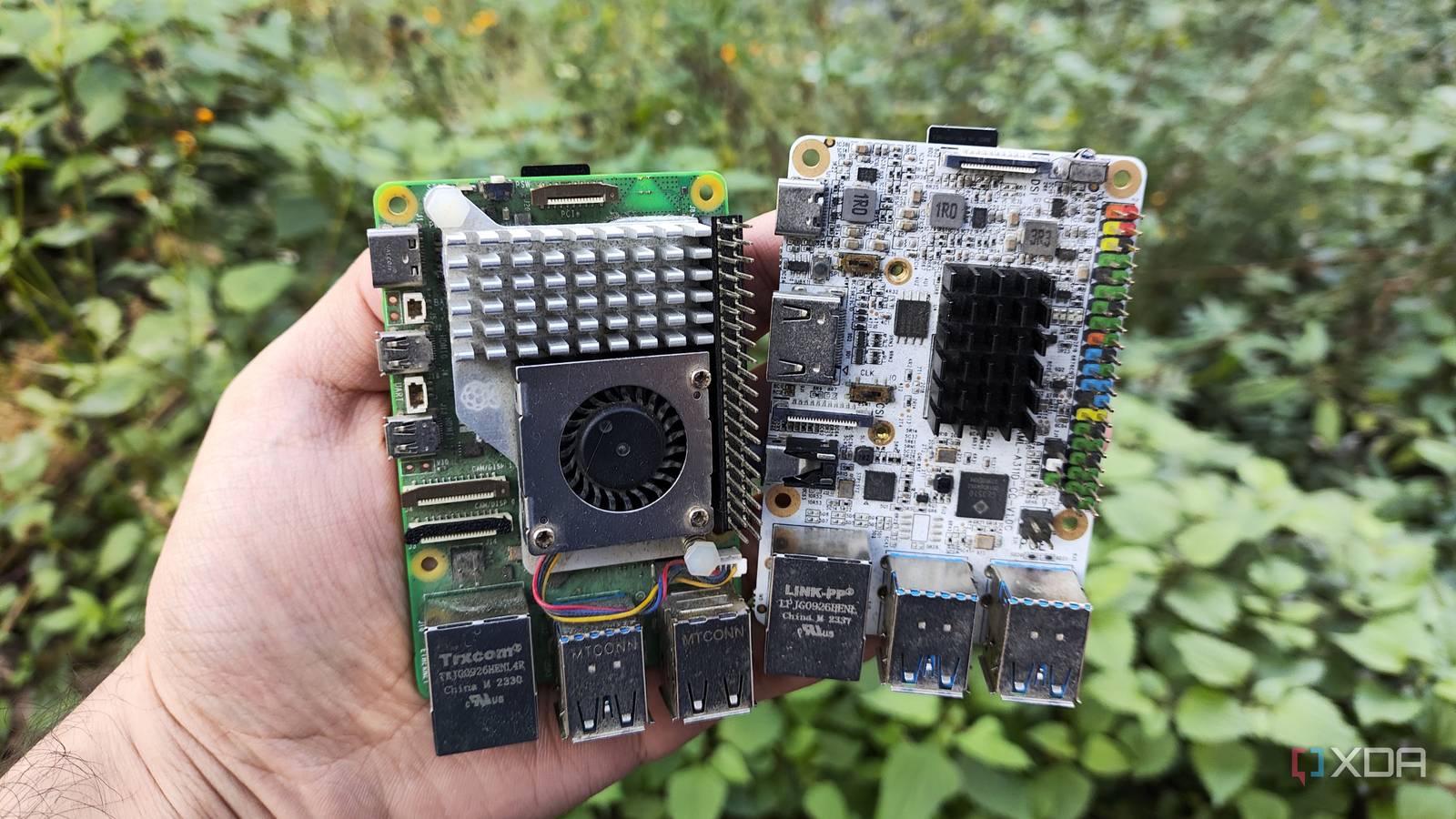
Published Nov 8, 2026, 3:30 PM EST Ayush Pande is a PC hardware and gaming writer. When he's not working on a new article, you can find him with his head stuck inside a PC or tinkering with a server operating system. Besides computing, his interests include spending hours in long RPGs, yelling at his friends in co-op games, and practicing guitar. I may have been a die-hard fan of Raspberry Pi single-board computers for years, but their sky-high price tags have forced me to look into other alternatives as of late. On the x86 front, I’ve got Radxa X4’s superior N100 processor providing all the horsepower I need for demanding projects, while thin clients and used mini-PCs provide a solid bang-for-the-buck for server experiments where I don’t particularly need the classic SBC form-factor. Unfortunately, things are a lot different for the ARM faction, as most Raspberry Pi alternatives have deal-breaking issues that prevent them from dethroning the uber-popular SBC family. Take the Libre Computer Alta I purchased ages ago, for example. On paper, it’s a decent board that should be a solid alternative to the Raspberry Pi. But after attempting to use it for different projects this month, I have to admit that it just can’t replace my Raspberry Pi, even with the latter retailing at an obscene price these days. The Libre Computer Alta supports a handful of distros Worst still, Armbian is the only OS with an up-to-date image for the SBC If there’s one area where Raspberry Pi has a decisive victory over its ARM rivals, it’s OS compatibility. After all, the SBC has plenty of first-party images, and you’ve even got unofficial ports of popular distributions created by the genius Raspberry Pi community. And that’s where I encountered my first problem with the Libre Computer Alta: its OS selection is rather limited. Although the official website mentions a bunch of "supported" distros, most of them are extremely outdated. Heck, certain distros like OpenSUSE and Android (AOSP) don’t even have the images for Alta, even though the documentation has backlinks for them. Fortunately, good ol’ Armbian not only has fully-functional images for the SBC, but they’re also up-to-date, so I won’t have to deal with dependency issues caused by outdated packages. But little did I know that the GUI version of Armbian would deliver a sluggish experience … Its performance isn’t all that impressive compared to a Raspberry Pi 5 But at least it can host a couple of Docker containers On a GUI-laden distribution such as Armbian, Debian, or Raspberry Pi OS, my RPi 5 tends to deliver a pretty responsive experience for simple tasks. Sure, it can’t play back videos at 1080p without a bit of buffering issues, but it can easily drive two screens. On a model with decent memory, the RPi 5 (or even 4, for that matter) can handle a couple of Chromium tabs without buckling under the extra processing load. And that’s on a mere microSD card, not a dedicated SSD-powered Raspberry Pi setup. Unfortunately, the Alta just doesn’t deliver the same level of polish, even with the likes of Armbian driving the SBC. Navigating through the GNOME interface on Armbian wasn’t too bad, but I’d have to contend with sluggish performance with a single Chromium tab open. GUI productivity apps performed just as badly, and the SBC couldn’t even handle 720p streaming without losing 10% of the frames. But as you’d expect, switching to a CLI-only Armbian image helped the Alta quite a bit. Docker worked decently well on the SBC, and I was able to get MeTube, PairDrop, Mosquitto, HomeBox, Grocy, and a couple of other self-hosted utilities up and running without major performance issues. Likewise, it’s good enough to run an ad-blocker, a Tailscale exit node, a PVE QDevice instance, and other lightweight packages. Its HAT support is somewhat limited, too Being able to interface sensors, mechanical relays, PoE provisions, servos, and other accessories in the form of HATs is another neat trick up the Raspberry Pi’s sleeve. The Raspberry Pi 5 even ships with a PCIe port, which you can use to connect full-fledged NVMe drives, NICs, SATA expansion slots, and other cool components to the SBC. But just like other ARM boards, the Libre Computer Alta also falls short in the HAT department. So far, a PoE HAT from LoveRPi is the only Hardware-Attached on Top kit I could find for the Alta, while its distinct pin layout means I can’t just slap any old Raspberry Pi HAT on it and call it a day. Credit where it’s due, the Alta has a detailed spreadsheet covering all aspects of the 40 GPIO pinout. But unlike the Raspberry Pi and its extensive collection of community projects, I’d have to write complex code manually to connect different sensors to the GPIO pins on this obscure board. The Raspberry Pi still trumps its ARM rivals in 2026 Although I despise the Raspberry Pi’s hefty price tag, there’s no denying that ARM boards can’t quite surpass the SBC on the compatibility front. As for the Alta, this cheap board can definitely pull its own weight for simple SBC projects. But toss a graphical interface into the mix, and it just can’t replace a mainline, non-Zero Raspberry Pi board. You might argue that my obscure Alta module is pretty mediocre (and even that’d be a compliment) compared to other RPi rivals, and I’d have to agree that other ARM companies tend to have more polished products in their lineups. But even then, typical ARM boards still can’t beat the uber-popular SBC family when it comes to OS support, HATs, and project collection. Raspberry Pi 5 CPU Arm Cortex-A76 (quad-core, 2.4GHz) Memory Up to 8GB LPDDR4X SDRAM Operating System Raspberry Pi OS (official) Ports 2× USB 3.0, 2× USB 2.0, Ethernet, 2x micro HDMI, 2× 4-lane MIPI transceivers, PCIe Gen 2.0 interface, USB-C, 40-pin GPIO header GPU VideoCore VII Starting Price $60
I tried a cheap Raspberry Pi rival for a month, and its hardware was only a small part of the problem
Full Article
Original Source
Read the full article at Xda-developers →KhanList aggregates and links to publicly available news content. We do not host full articles from third-party sources. Always verify important information with original sources.