
I’d been working with a psychotherapist for nearly a year before I realized I was attracted to her. The shift happened about 10 months after we began our weekly sessions. Prior to that, I only knew her for a face on Zoom, a couple inches wide in my iPhone—a pretty face, sure, but the experience was otherwise disembodied. Then she moved her practice closer to my neighborhood—an acceptable commuting distance in L.A.—and we started to hold our meetings in person. I remember the first day, looking around the waiting room, a pile of Psychology Today magazines on a table, feeling it was all so clinical, even banal.Sixty minutes later, it was not banal. Seeing her in person, feeling her energy in the room—she was exactly my type. I saw a friend that week and said something like, “I found out my therapist is hot.”“Oh shit,” he said. “You need to stop seeing her immediately.”I knew enough to sense I’d stepped into a trope; patients feeling attracted to their therapists are as old as the talking cure itself. In 1895, Sigmund Freud described the concept of “transference” in his book Studies on Hysteria. Simply put, the term refers to a patient transferring things onto a doctor-figure from other places: rage from family relationships, erotic attraction from past romances. Idealization, a desire for protection, even envy.Today, in the big tent that is psychotherapy, the concept remains a central idea in psychoanalysis, the practice of Freud and his descendants. Other schools of thought don’t consider it a core concept, if they recognize it at all. In popular culture, though, it’s alive and well in therapy-related subplots, often used as a device to reveal something about a character. Rose Byrne, playing a burned-out therapist in last year’s If I Had Legs I Would Kick You, is convinced her own therapist hates her. The Dr. Melfi-Tony dynamic in The Sopranos documented transference from both sides, exploring each person’s fascination with the other. There’s seemingly also public intrigue for real-life tales of therapy boundary-pushing: An article published in February in Granta, “Transference in the Afternoon,” regarding an alleged, particularly taboo affair between a therapist and her patient, reportedly landed the reporter a lucrative publishing deal.Until a couple of years ago, I saw those plots as amusing fictions. And before I found my current therapist, I didn’t buy into psychotherapy much at all. I saw someone in my twenties to address panic attacks, but stopped after a couple sessions, I felt I couldn’t trust her. Years later, struggling in my marriage, I tried Betterhelp, an app that pairs you with counselors online. That led to three sessions with a woman in the Mountain West whose style of therapy was recommending TED Talks, and a phone call with an elderly Southern gentleman, who spent half an hour complaining about his no-good wife and kids, and didn’t ask me a single question before I hung up.At the same time, I knew something was wrong, even if I didn’t know what it was. In the Spring of 2023, I asked around and got a recommendation. During our preliminary phone call, I told my therapist I felt our work should be limited, results-focused. She patiently explained that’s not exactly how she worked. Today, three-plus years later, it’s become one of the most profound, intimate relationships of my life.It took a while to get there, though, and I spent a while feeling confused and embarrassed, especially after the attraction bloomed. I worried she’d detect my feelings. I wondered if I should stop seeing her. If I confessed, would that ruin the whole thing? Also what do you call a crush when the person you’re pining after knows seemingly everything about you, and you, the crusher, knows nothing at all about them?Then one day it suddenly came out: I was sitting on her couch and heard myself confess I found her attractive. I told her I’d fantasized about her, searched for photographs of her online—my therapist doesn’t have a website or exist on social media—and I was nearly nauseous saying it all. To her credit, she seemed unfazed, noting it wasn’t unusual for the process, though perhaps a little early in the course of things, and why did I think that was?I went home feeling like a flasher on the subway. I’d later read something Freud writes about smut in his book Jokes and Their Relation to the Unconscious—about a wannabe seducer taking pleasure in saying something obscene—and I felt somewhat “seen,” in a gross way.But transference, as a notion, is about much more than amorous feelings. Based on my research and some interviews with experts, it takes all kinds of forms, and they happen all day long. Between you and the nosy cashier at the grocery store. You and the coworker who reminds you of your dad. In a clinical setting, it’s perhaps more complicated; lots of stuff bubbles up from the sludge. Inhibitions and prohibitions. Terrors and fantasies. In my case, naming the attraction led to discovering I’d been trying to impress her, trying to get her to like me back, simultaneously deeply scared she would drop me if I wasn’t sufficiently interesting—and figuring out the why of all of that, where it came from, where else it appeared in my daily life, became both gut-wrenching and fascinating to explore.And that was just the start. We’re now three-plus years in, the sessions remain revelatory, and though an erotic draw lingers—she’s still attractive—there’s so much more to work with now. Most weeks, there’s a tension in the air that feels collaborative, full of inside jokes, loaded words, motifs from dreams of mine we analyzed years ago: a playful back-and-forth (even if occasionally I wind up in tears) as we’ve slowly built a taxonomy for my psyche. Also, the transference seems to mutate, always changing. Simply discussing this article—I pitched it to my editor during a three-week break from therapy while my therapist was away—has led to a lot of discussion. Or the moment when, a couple months ago, I learned she had a young daughter. The news simultaneously humanized her, desexualized her, also re-sexualized her in a new manner. And I experienced an easy joy I hadn’t felt before in the room, noticing the happiness on her face while she described her kid.Should a person recruit a therapist based on physical attraction? It sounds idiotic, any more than it would be a smart way to pick a car mechanic. On the condition of anonymity, I posed the question to three acquaintances who are practicing psychotherapists. One shouted “Oh my god, no!” and started laughing—and that was the basic consensus. Still, each described experiencing patients’ attractions, among other things transferred, and they agreed it occasionally led to growth, or fostered a more trusting environment when carefully handled, presuming all the proper boundaries were maintained. One woman said a therapist’s office was a relationship laboratory anyway. Another described experiencing a version of transference with her own therapist, when she passed her car one day and noticed a child’s sports gear in the back seat. “I remember that really well,” she said. “It was painful. I was kind of jealous. It was weird. She has a life outside the room?”“Lots of things come up and affect therapy,” she added. “It’s a special relationship, it’s not just your bud you go to the mall with. And a good, experienced therapist knows how to work with that.”The author and psychoanalyst Jamieson Webster has written extensively about transference. She told me that, according to Freud, it’s both the engine of the treatment and an obstacle. “The onus is on the analyst,” she explained. “The patient comes and they feel what they feel, and hopefully you allow them to feel what they need to feel, and hopefully you allow them to explore what they're feeling. If you have a resistance to their transference, if their transference makes you uncomfortable, that's on you.”I’m a big admirer of Webster’s books, so I didn’t want to ask what she thought about recruiting a therapist based on looks, but I asked her anyway. She laughed. “I don’t know,” she said. “Find someone you want to talk to—and that might have a lot to do with excitement.”What have I learned from my therapy? Outside of the room, I’m more attuned to how I feel, even when the feelings are unclear, and I’m able to detach their hold faster. I’ve gotten better at poking holes in my facades. I’m less deluded about myself, less afraid. Basically, how I feel and act are more closely affiliated.Still, each week is largely the same. I show up for our appointment. The room is full of light and slightly cold. The couch is here, her chair is there. Occasionally, her hair is shorter, or she’s bought new shoes. We say hello before I sit down, then I close my eyes a moment, open them, and we start. I don’t pretend to be anybody else: I’m honest and embarrassed, I’m grandiose and depressed, I’m guilty, I’m silly, I’m confused. Then, 50 minutes later, she tells me time is up and we say “see you next week” before I go.There’s another reality where I kept my attraction secret, let it fester into a distraction. Instead, by acknowledging the transference and exploring its different forms, it’s become a means of communication, or part of a larger one—and in the ongoing engagement with what that means, including all the discomfort, I find peace.
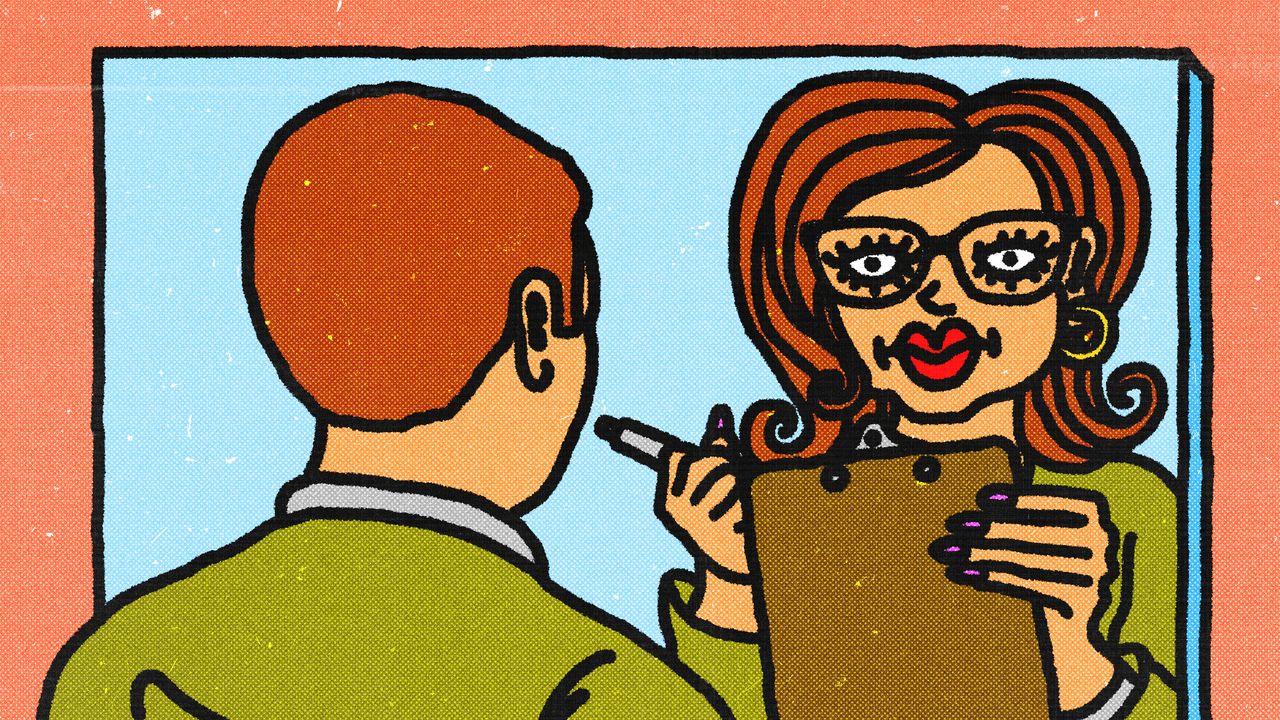
I Told My Therapist I Thought She Was Hot. It Brought Our Relationship to a New Level
Full Article
Original Source
Read the full article at Gq →KhanList aggregates and links to publicly available news content. We do not host full articles from third-party sources. Always verify important information with original sources.