
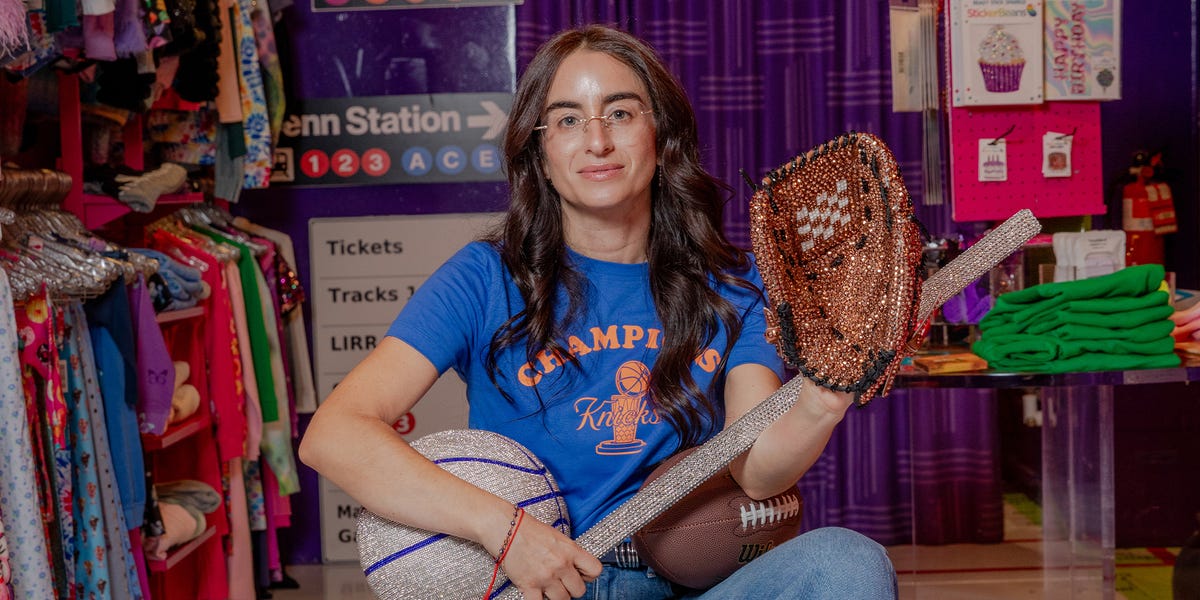
Natalie Keyssar for BI Zara Terez Tisch is the founder of Terez, a fashion sportswear company based in New York City. This as-told-to essay is based on a conversation with Zara Terez Tisch, the founder of Terez, a fashion sportswear company based in New York City. It has been edited for length and clarity.I started Terez as a handbag company, from my parents' home on Long Island when I was 22. After college, I was fortunate to live at home without paying rent, which allowed me to save money while my friends moved to Manhattan.I worked in marketing and branding and had always been a creative person, but I was going through a difficult period in my life. I had experienced a lot of loss and was trying to get on my feet. I knew I wanted to create something that made me feel good about myself, and Terez was born.The business has taken several turns over the years. After handbags, I moved into activewear and eventually found an opportunity to bring fashion to professional sports by partnering with major leagues.Today, Terez sits at the intersection of sports and fashion. Natalie Keyssar for BI The early days of building TerezIn 2008, when I was still working in marketing, which I quit later that year, I was walking through the West Village in Manhattan on an errand. I came across a leather shop with a sign that said, "Customize your own leather handbags."I walked in and asked, "Do I just draw a handbag and you make it?" I also asked whether they could make 500 bags, or even 1,000. They thought I was crazy, but said they could do it.I decided to work with them to start a business. I started with handbags with fun interiors, including comic-book strips and disco sequins. I wanted to get the happiness inside me out again while representing New York City. Image courtesy of Zara Terez Tisch I started gaining some tractionI was doing it all myself, carrying samples with me. I didn't sell them on a website. Instead, I did trunk shows at people's homes. The first one was at my sister's friend's house on Long Island.Not long after I started, I asked my father to come back with me to meet the manufacturers. I thought it would help them take me more seriously. Zara's father, Richard Zimmerman, and sister, Darlene Barzilay, at his Budget Dress showroom during Darlene's 21st birthday celebration in 1986. Image courtesy of Zara Terez Tisch My dad was a garment manufacturer — a 'garmento,' as people in the industry called it. He had worked in the industry in the 1970s, 1980s, and into the 1990s. As manufacturing moved to China and overseas, he had to close his company. I witnessed that, and bringing manufacturing back to New York became part of my story.In 2012, the business took another turnThe linings I used in my handbags were made of spandex. I was wearing leggings all the time, so I started making them out of the same spandex at a factory in Queens. Image courtesy of Zara Terez Tisch My parents had started a business manufacturing clothing for tweens. I brought the leggings to one of their children's trade shows to see if it would stick. A store called Lester's picked them up and put them in its store over Thanksgiving weekend.The buyer called me on Monday and said, "You really have something here." The leggings started taking off.We became a popular brand for tweens and teensWe created prints and styles that made them feel confident in who they were. We started with galaxy leggings and star-themed designs, then added emojis to them. We would drop new designs every month. Natalie Keyssar for BI The next decade was a period of significant growth for Terez. As demand for activewear grew, department-store buyers began creating dedicated categories for it, and Terez became a key brand in that expansion. We partnered with SoulCycle on limited-edition drops and with Bloomingdale's.We opened our first store in 2022In the fall of 2022, we opened our first physical store on the Upper East Side. It's the smallest part of the business in terms of revenue, but it's the heart and soul of the brand.Soon after the store opened, a woman came in, and I helped her shop. I showed her our whole collection and told her everything about the brand. When she was checking out, she asked, "Have you ever thought about working with Major League Baseball?" I hadn't.She pointed out that nobody was really focusing on women's clothing for the fans. The options were mostly bubblegum V-neck T-shirts with sequin script logos. Natalie Keyssar for BI The next day, I got a text from an exec at Major League Baseball. The woman who had come into the store was associated with the organization. He told me they wanted Terez to shape the look of the women's collection.I immediately called our head of design and said, " We have to stop everything that we're doing right now and focus on a women's collection for Major League Baseball."Working with professional sports opened up new ways to reach customersToday, we work with multiple professional sports teams and leagues. We sell through our own site, our Upper East Side store, licensed sports channels, and fashion retail partners like Revolve. Natalie Keyssar for BI Partnering with sports has opened up completely new channels for us. Since making our debut with Major League Baseball, our revenue has tripled.I've learned that hiring more people doesn't necessarily make a business more efficientWhen we were first doing activewear, we had a period of high growth, and the company grew to around 40-something people in 2018 and 2019. Up until that point, I hadn't felt confident enough in myself to run the business side and manage the company's numbers. I always thought I should surround myself with people who were smarter than me.What I realized was that people weren't always efficient in their roles, so we would hire more people to do the same job, sometimes two or three times. I called them Band-Aids.By the end of 2020, we narrowed down to a team of around 10 people. I picked up all the pieces after a rocky situation with one employee and told everyone, "We're either going to do this all together, and we're going to succeed together, or we're going to fail together." Natalie Keyssar for BI Since then, I haven't wanted to grow our team. The majority of the people on my team now were on my team 10 years ago. To have people on your team who care as much as you do is extremely rare.I want the business to reflect what we believe inWhen people ask me for advice about starting a business, I always come back to the product and deeply caring about your team. You can only tell a story for so long. You need to make sure your product is excellent, high-quality, and has a distinct point of view. What differentiates you from everything else that's out there? Create it and make it great. Natalie Keyssar for BI For me, success now means being able to do the things we want and love to do at Terez, rather than feeling obligated to keep churning out products just to keep the lights on. Alyshia Hull is a former business contributors fellow who now contributes as a freelancer. She primarily focuses on business, travel, van life, and workspace verticals. Alyshia is a graduate of SUNY Oswego with a degree in journalism. You can connect with her on Twitter and Instagram. as told to Entrepreneur Fashion More Style MLB
I started a handbag company at 22 and grew it into a fashion sportswear brand with partners like MLB. Here's what I've learned.
Full Article
Original Source
Read the full article at Businessinsider →KhanList aggregates and links to publicly available news content. We do not host full articles from third-party sources. Always verify important information with original sources.