
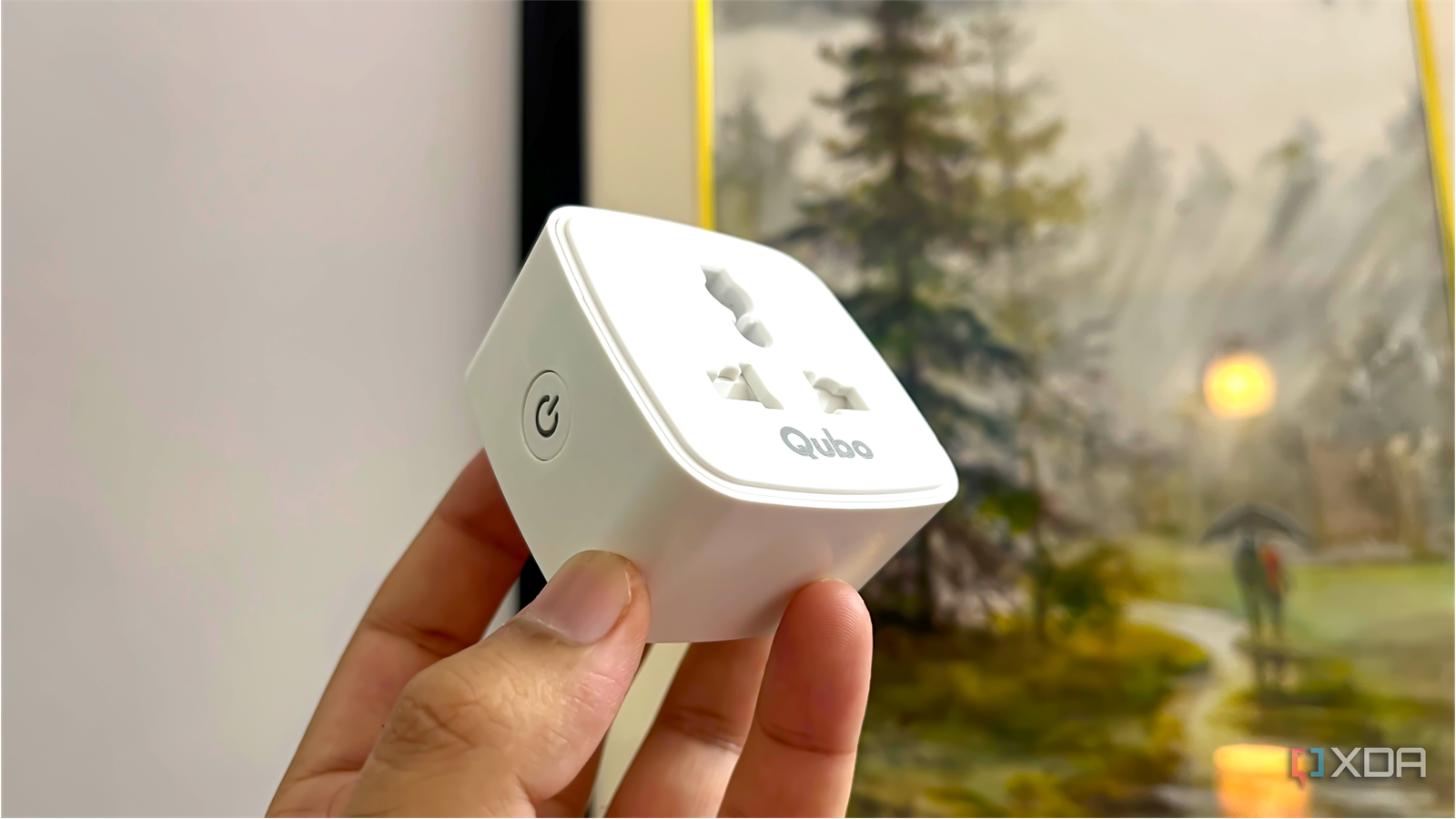
Published Oct 27, 2026, 5:30 PM EDT With over five years of experience in the tech industry, Kazim excels at simplifying complex topics, making them accessible to tech enthusiasts and general readers alike. He has extensively covered the Windows ecosystem, from Windows 7 to Windows 11. When he’s not writing, you’ll find Kazim planning weekend getaways or diving into tech verticals beyond his expertise. Smart plugs are great. They let you remotely power devices on and off when these controls are not available natively. For this reason, I have connected several devices to smart plugs over the last year. And for the most part, they proved to be a valuable addition to my home. But there were a couple of instances that made me realize that smart plugs are not the perfect choice for every device. They do work great with simple devices and appliances like lamps and coffee makers. I even use my smart plugs to charge a couple of old speakers I have lying around. I usually plug them in before I go to bed and set the smart plug to cut off power after a couple of hours. And it has worked well so far. On the other hand, there were times when I regretted connecting a device to a smart plug, mostly because of the associated risks. On a handful of occasions, though, the smart plugs simply proved counterproductive, creating the same problems they were intended to solve. Smart TVs Especially the OLED models Wemo smart plug has come to its end of life support with Belkin. TVs are among the first things I would take off smart plugs, particularly OLED models. Honestly, I had both my TVs connected to smart plugs, and I quickly realized they were not a great choice for several reasons. First, a smart plug can't really turn the TV back on. You will still need the remote for it. All it helps with is setting a time limit. More importantly, a smart plug can damage your TV, both on the hardware and software level. If you have an OLED TV, it's worth knowing that it runs a critical maintenance routine in standby mode. Called Pixel Refresh, it detects any wear individual pixels have undergone over time and applies the necessary corrections to maintain image quality. The same thing happens with your OLED monitor. And your smart plug can potentially harm it by powering off the TV while the routine is underway. Apart from that, if the smart plug accidentally shuts off and resumes power in quick succession, the sudden surge can damage your TV. Similarly, the smart plug can cut power during updates, which can also cause issues. This may not apply to every model, but the risks are worth considering. Personally, I no longer have the main TV connected to the smart plug. It's directly plugged into the wall socket. The older TV model still uses a smart plug. That's because it has survived years of rough handling, and whatnot, and I don't think a smart plug will do much harm at this point. Rooms heaters Anything dangerous should never be on smart plugs Another device you should never connect to smart plugs is a heater, even a compact one. Frankly, it's not just heaters, but anything that generates heat or is even remotely dangerous. I am not getting into the power surge or durability arguments here because those are secondary. The primary concern is safety. I agree. Smart plugs are generally reliable, but there are instances when they don't respond to remote controls. I have had my fair share of problems. It could be a temporary glitch or a connectivity issue to blame. When that happens, you can't power off the heater, which is a major safety risk. Devices like these should always be operated under supervision, and while I am not entirely against occasional automation, you are better off connecting them directly to the wall outlet or getting one that natively supports remote control. Refrigerators and washing machines Avoid high-power appliances These two do seem like an exciting application for smart plugs, especially if you have an older model that doesn't offer remote management or automation, but believe me, you couldn't be more wrong. In the past year, only one of my smart plugs failed entirely, and it was the one I connected to my washer. The problem with these appliances is that they don't always draw a constant current. Instead, the current fluctuates and can sometimes spike to 2-3x the rated amperage, which may exceed what your smart plug can handle. And this directly affects the smart plug's lifespan. At least, that's what I guess happened to mine. Again, using them occasionally may not pose as much harm, but prolonged exposure most certainly will. Home router Learned my lesson the hard way As surprising as it may sound, this was one of the smart plug uses I advocated for the longest. The idea is simple: you connect your router to a smart plug and configure it to automatically reboot the router once a month or so, at a time when no one is likely to be using the internet. Those periodic reboots helped improve overall network stability, but automating it with a smart plug wasn't the right choice, as I soon found out. Despite being generally reliable, smart plugs are prone to the occasional glitches. This means they can turn off your router at the worst possible times. Mine would automatically turn off during meetings and critical uploads, and it happened with every smart plug I tried—more often on some than others. I am not saying it will happen every day, but even once a month is enough to ditch the idea. And that's what I did. Those occasional reboots still happen, but instead of the smart plug, I walk up to the router, unplug it, wait for a minute, and then power it back on. Smart plugs aren't bad, but you need a smarter approach It's time to circle back to my initial argument: smart plugs are great. They are cheap, convenient, easy to use, and one of the best troubleshooting tools. But you can't connect them to every dumb device or appliance around the house. Sometimes, the downsides far outweigh the benefits. So, the next time you are about to use a smart plug, think about how it would behave if it malfunctions or cuts power unexpectedly, and whether it poses any safety concerns. A smart plug, believe it or not, is only as smart as the person using it.
I regret connecting these 4 devices to smart plugs, and I wish someone told me sooner
Full Article
Original Source
Read the full article at Xda-developers →KhanList aggregates and links to publicly available news content. We do not host full articles from third-party sources. Always verify important information with original sources.