
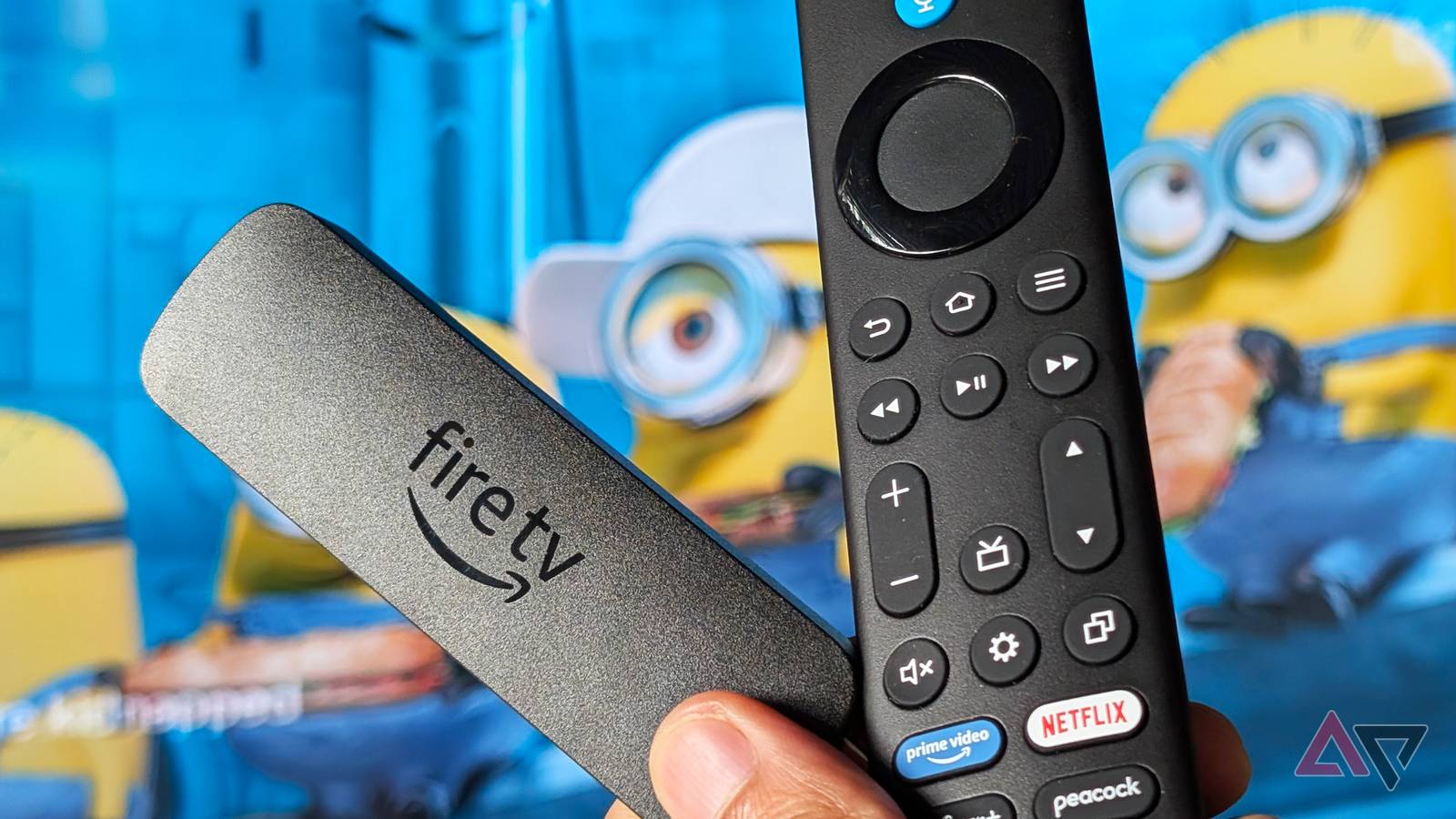
Published Sep 7, 2026, 9:30 AM EDT Jade Bryan is a Feature Author at Android Police with over a decade of tech reviews and news reporting experience, stretching back to the Symbian era and the early days of Android. He covers the breadth of the mobile industry, specializing in operating system deep-dives, app testing, and hardware analysis. In his spare time, you can find him tinkering with his Android devices and wearables, seeking ways tech can improve daily life. He also enjoys playing MMORPGs, traveling, or feeding stray cats and dogs. Compared to other Fire TV Stick models, my Fire TV Stick 4K Max has more onboard storage, giving me plenty of room to install apps and games. Still, like many streaming devices, my stick isn't immune to storage woes. Over time, those installations accumulate and eat through my internal storage faster than expected. App cache and app data are the two hidden culprits behind driving my memory to the brim. Fortunately, I stumbled across a built-in toggle in Fire OS that clears temporary clutter and reclaims valuable space, even in gigabyte-sized amounts, without requiring you to uninstall anything. Fire TV devices' memory has always been a challenge It's a persistent headache The main reasons your Fire TV drives fill up are fairly obvious when you look under the hood. Identifying them makes it manageable to win back gigabytes. Unlike modern smartphones with generous base storage tiers, streaming devices, including Amazon's Fire TV lineup, ship with modest storage (different from RAM). Individual apps may look lightweight at first glance, but the overhead adds up quickly. To make matters worse, there's no cloud or extra partition to hold stray files and personal media. While Fire OS technically supports expansion over USB OTG, it remains a clunky workaround that requires extra dongles and cables. Even with my Fire TV Stick 4K Max's 16GB allotment, which has about 12GB of usable space, I filled more than half the available memory within a couple of months without a single warning. App cache and app data to blame But they are straightforward to deal with Ever since I picked up a Fire TV device, I've kept a close eye on app cache and stored app data. These two system components quietly take over your local disk space. App cache stores interface assets like thumbnails, banner snippets, and preview clips. Keeping these elements helps apps launch faster because the page doesn't have to pull them from the web every time. While they consume little space, over time this footprint swells into a dozen megabytes, or even hundreds, especially with games or software heavy on media assets, like weather screensavers. The other culprit is app data, a different kind of memory hogger. Instead of temporary graphics, it holds crucial files like user preferences, configurations, and saved game progress. This ensures you pick up where you left off without reconfiguring everything from scratch. Because of that, I suggest you only touch app data on services you rarely launch. Wiping an app's data reverts it to its out-of-the-box state. You'll lose customized options and account logins, forcing you to log back in manually. On the bright side, you won't have to download the application from the Amazon Appstore, as the core files remain installed. How to clear app cache But without deleting a single app The good news is that these temporary files are painless to clean up. I recovered around 400MB of cache across a handful of streaming apps, and that figure could easily double or triple for anyone who has left their stick untouched for several months to a year. You can purge this junk without compromising your configurations or app setups. On Fire OS, there's a dedicated one-tap clearing button. Navigate to Settings > Applications > Clear all Applications cache. Confirm the prompt to clear the cache and immediately restore the highlighted internal space. If you are running low on capacity, especially on older generations, clearing this global cache once or twice a month is good preventative maintenance. Manually retrieve space using app data Resetting the apps to their original state The deeper fix is clearing out app data, particularly for resource-heavy services and games that generate bigger files. I noticed several of my installed apps allocate massive chunks of data over weeks of use, and the more time you spend in them, the larger that footprint becomes. I reclaimed roughly 300MB of space by targeting apps I don't use every week. Unlike the cache tool, Fire OS doesn't offer a universal toggle to wipe all app data at once. You have to handle this individually. The workflow is straightforward and doesn't require tinkering with developer options or ADB commands. Go to Settings > Applications > Manage Installed Applications. Sort the list by file size or last used date to see which apps are the biggest offenders. Select an app, open its submenu, and click Clear data. Enable Fire OS Offloading I let Fire OS handle the heavy lifting On newer versions of Fire TV OS, Amazon introduced automatic offloading for inactive software, which triggers when your storage dips below a specific threshold. This feature is a lifesaver for older sticks with smaller drives, but it's equally handy if you tend to hoard apps you abandon after a few weeks or longer. It goes beyond clearing data, as this removes the app's heavy binaries and executable files while keeping your account settings and credentials intact. When you want to use the app again, you will need to download many of the larger files. Delete files via file manager I cleared forgotten APKs and downloaded files Part of my storage bloat was self-inflicted. I've relied on the third-party Downloader app for quite a while to sideload apps and launchers after Amazon removed the downloading capabilities from its Silk browser. The catch is that downloaded APK installers stay inside my internal storage folders indefinitely unless I manually delete them. In my case, I neglected to clear out those old installation packages, which quietly accumulated about 1.4GB of space. To delete them, open the Downloader app and navigate to the Files section in the side menu. From there, select which files to delete, or purge the entire folder. Alternatively, you can utilize other file manager apps to manage local files on your Fire TV device. You need to be proactive in controlling bloat on your Fire TV Most Fire TV devices won't show a low-storage alert. So, by the time you are notified, the software usually stutters or slows down. With that, it's recommended to toggle a few settings and do a manual spring-cleaning before deleting apps or factory resetting your Fire TV device. These take a few minutes, but they've been effective for me, recovering about 2GB of precious space on my Fire TV Stick.
I recovered 2GB of Amazon Fire TV storage using one setting without deleting a single app
Full Article
Original Source
Read the full article at Androidpolice →KhanList aggregates and links to publicly available news content. We do not host full articles from third-party sources. Always verify important information with original sources.