
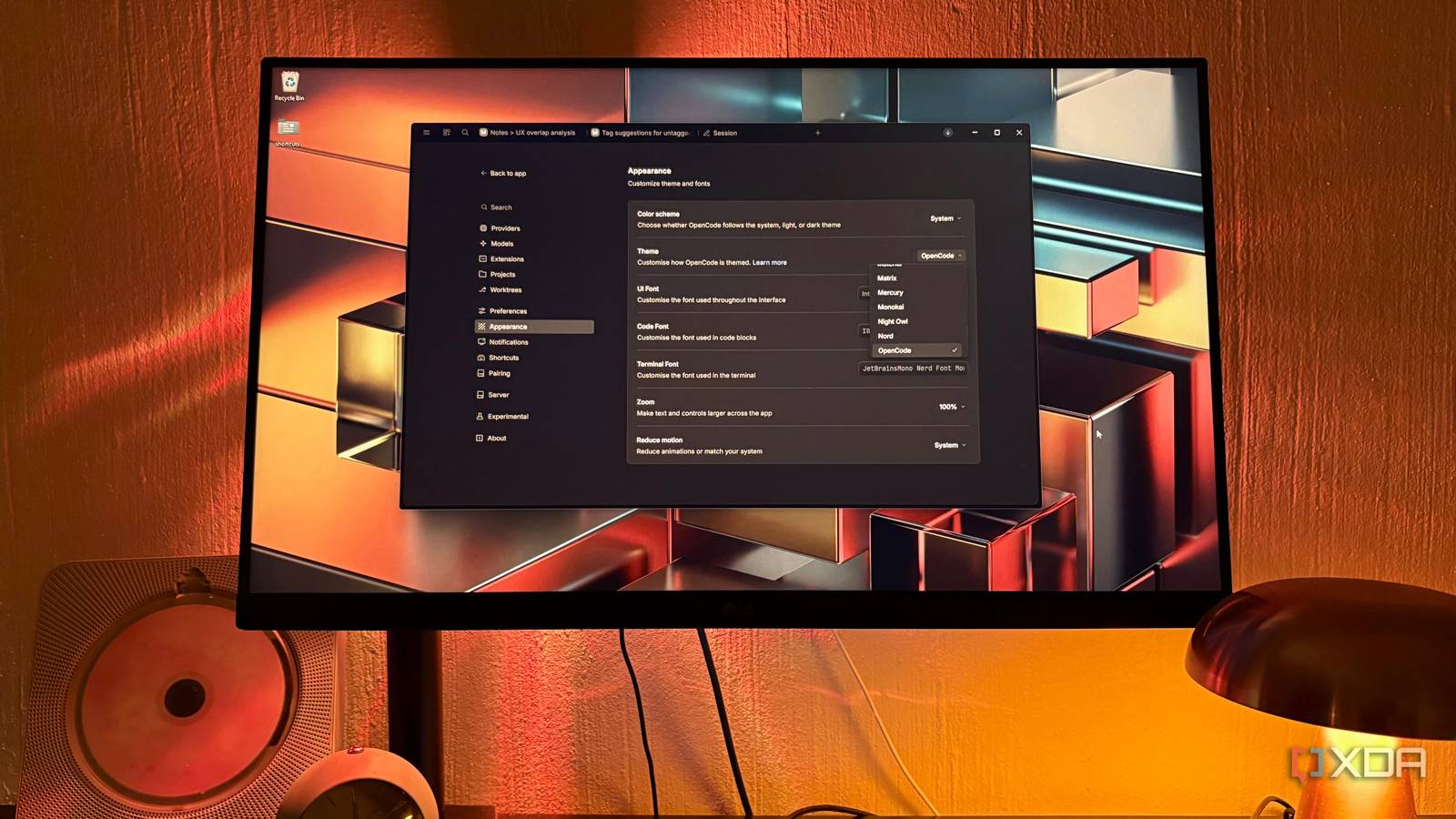
Published Nov 29, 2026, 7:30 AM EST Nolen began their writing career in 2019, with three years dedicated to editing the Creative section at MakeUseOf. Their expertise lies at the crossroads of technology and creativity, covering areas like photography, video editing, and graphic design. Outside of work, you'll often find Nolen diving into a good book, writing their own stories, or playing video games. Claude isn't just a chat window or coding agent anymore. Paid Claude plans now include Cowork, and Anthropic also offers Claude Design and Claude Docs in beta on eligible paid plans. It really has become an all-in-one AI tool that covers all the bases from coding, chatting, and admin to designing and note-taking. The full workflow pipeline. The only problem is that even the tools that are available to free users have heavy usage limits. But this is what open-source is for - it fills in the gaps, whether you're looking to avoid an entire Claude subscription, or simply want to save your rate limits for more important work. OpenCode covers Claude Code The one I already moved half my work to If you've been using agents for a while then OpenCode probably isn't anything new to you. But if you're just getting started with Claude Code, I recommend getting OpenCode while you're at it because it will really help supplement the Claude usage. It's an open-source coding agent from Anomaly that started in the terminal, which kept me away from it longer than it should have, because I don't particularly like typing commands. But there's a desktop app now for Windows, macOS, and Linux, plus a mobile app. And it's not just for development; for non-coders, it's basically just an agent with folder access, so it can handle all your computer admin. The model choice is the biggest reason I keep it installed. OpenCode ships with free models that don't need an account, and beyond those it connects to over 200 providers, local models included. So not only can I keep my work private and completely free with a local model, but I can still harness the power of Claude's models through API if the task calls for it. Splitting the work between them drops my daily Claude usage by half sometimes. Open Design and Open CoDesign Two Claude Design clones that do the same thing Claude Design got two open-source clones within weeks of launching, and while they might sound related, they're from completely different developers - OpenDesign and Open CoDesign. But both do the same thing, which is basically what Claude Design does. You describe what you want on one side of the window, and a live HTML mockup renders on the other. The AI is what sets them apart. Open Design doesn't come with a model at all and hands the work to a coding agent you already have installed, and OpenCode is one of the agents it supports, so two pieces of this stack actually ended up working together for me. But it also accepts API keys or a local model directly. Open CoDesign is more self-contained - you bring a key from Claude, GPT, or Gemini, or run something local through Ollama. Both read design systems from plain DESIGN.md files; I like having my colors and type rules in a file I can open myself. Speed is the catch. On my 8GB card a local model takes minutes per generation, so if you're on mid-tier hardware like mine, then API is the better route here. Eigent stands in for Cowork It's like Cowork if Cowork hired a team Cowork is basically Claude's hands-off mode. It runs on the same foundation as Claude Code, and Anthropic built it after noticing people using Claude Code for non-coding jobs. And so Cowork was born as a user-friendly option to let non-coders get the same admin file work done. The problem is that it's not available on the free tier, and on the subscription it eats into rate limits faster than chat. Enter Eigent. It bills itself as the free open-source Cowork desktop app, and it's built on CAMEL-AI's multi-agent framework. Cowork can already split a big task across sub-agents, but Claude decides on its own when that happens. Eigent hands that choice to you. In Workforce mode, it breaks a task into pieces and gives them to specialized agents that run in parallel. For example, a browser agent can be researching while a document agent builds the file. For smaller jobs there's a Single Agent mode that keeps one agent on the task with one continuous context. It runs on your own API keys or a local model, and it supports MCP. OpenKnowledge replaces Claude Docs A Google Docs feel, but locally Claude Docs arrived in September and it's Claude's take on a shared and editable document. You just ask for a doc in any chat, Claude drafts it on the screen, and you can ask it for changes or edits. OpenKnowledge is the open-source pick I'd choose for this. It's a free WYSIWYG markdown editor from Inkeep, which means you're working on plain markdown files, but it looks and behaves like Google Docs crossed with Notion. Claude Docs has Claude built into the doc, whereas OpenKnowledge offers an in-app Ask AI experience and is also set up for outside agents like Claude Code, Codex, and Cursor to work on your files through MCP. That same MCP connection is how a local model gets in, too. It'll open any folder of markdown files, so I've primarily been using it in my Obsidian vault. The part that can't get replaced Every app is a good replacement, but none of them know the others exist Every piece in this stack does its job well, but the thing about Claude that they can't replace is that they don't know the others exist. Sure I can point Eigent, OpenCode, and OpenKnowledge at the same folder, but they're still separate tools to hop between. Memory is the easiest place to see it. Claude chat and Cowork share memory when Cowork runs in the cloud; Claude saves that memory as individual topics, so correcting one detail can carry into later chats and cloud Cowork tasks. Connectors are the same story. A service connected to Claude through MCP once works across chat, Claude Code, and Cowork, while every open-source app here needs its own MCP setup. Local-first is what makes these apps appealing, but that will always mean extra, roundabout steps if I ever want them to "speak" to each other or share some type of memory of my past sessions. In Claude, it just happens automatically. Open-source has everything but the glue As I've mentioned, one folder that every app here can read is the most realistic workaround; all it takes is a couple of files that explain who I am, have some details about past projects, and some rules. But keeping them updated after every session in each tool would fall on me and it's a manual job. This is why I hand the smaller tasks to my local stack, not only are there privacy perks but it frees up the rest of my Claude usage for more important work, which can keep memory without my input.
I rebuilt Claude piece by piece with open-source tools, and only one feature had no replacement
Full Article
Original Source
Read the full article at Xda-developers →KhanList aggregates and links to publicly available news content. We do not host full articles from third-party sources. Always verify important information with original sources.