
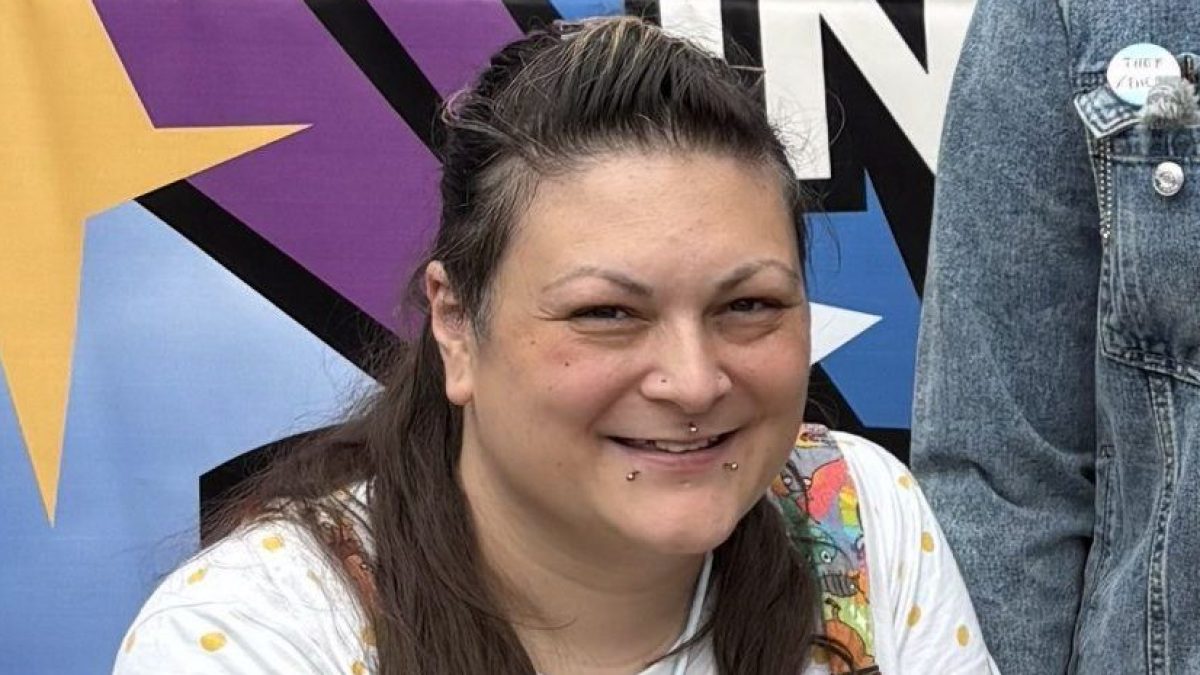
Recipients of the personal independence payment (PIP) are fearing for their future in the wake of Reform UK’s announcement that it would scrap the benefit for working-age adults in an attempt to save £50bn a year. Hannah Moreton, 42, from Hinckley, Leicestershire, works for disability charity Sense three days a week as a resident visual artist, but says she would have to give it up if she lost her PIP. Moreton has myalgic encephalomyelitis (ME) and is hearing-impaired and neurodivergent. She has two children aged seven and 12, and uses PIP to pay for a housekeeper to help with daily tasks of running a busy family home. She said: “If I ever lose my PIP, it would probably result in me having to give up my work. ME is a chronic, fatiguing illness and, without the support I buy with my PIP, I wouldn’t have the energy to keep working.” Shorts Performing household chores would require all of the energy Moreton currently puts into her job, she said. “I couldn’t do both of them,” she said. According to Sense, two in five disabled PIP recipients with complex needs are able to work because of the extra money. Reform has proposed that, if in power, it would abolish PIP and the health element of universal credit for working-age adults. Nigel Farage’s party said that both would be replaced with a new “health security allowance” – a single, regularly reviewed payment that provides support for the “gravely ill and severely challenged”. Under the proposal, only claimants with “severe, enduring and high-risk” conditions would qualify for cash benefits – while others receiving disability-related payments would lose their cash entitlement altogether. Reform also said it would bar foreign nationals from claiming benefits. ‘I may never vote for Reform again’ Robert, 40, has spina bifida and receives PIP. He previously voted for Reform, but says he may never vote for the party again over its proposal to scrap the benefit. Like another person interviewed for this story, Robert spoke on the condition that his surname not be used. Robert, who lives in Leeds, is unable to work because of his health issues. He leases a car specifically adapted to him through the Motability scheme, which lets disabled people exchange part of their allowance for a car. Robert, whose partner is his carer, said: “The plans worry me because I’m scared of losing the small amount I have and my car which is the only way I can leave the house.” “PIP literally lets me live,” he said. “It’s not a huge amount [but] I’m extremely grateful.” Disability equality charity Scope found that disabled households need an extra £1,095 a month on average to have the same standard of living as non-disabled households. Georgina Colman used some of her PIP money to buy a powered wheelchair (Photo: Purpl) ‘Don’t lump disability with unemployment benefits’ Georgina Colman, 49, who has multiple sclerosis and ADHD, uses PIP to cover her energy bills, a powered wheelchair and physiotherapy. She worries she wouldn’t be able to look after her health without the monthly payments. “The thing people don’t really understand is the use for essential daily living as opposed to just kind of those big expenses, like the mobility aids,” said Colman, who runs the disability discount scheme Purpl. “My body is so sensitive to any heat change. Being really cold or being really hot means my body just stops working,” she said. “We have a higher cost; I can’t just have the heating down… and wear an extra jumper.” Colman also thinks disabled people receiving support for their health should not be “grouped together with out-of-work benefits”, as their situations are “very different”. ‘Losing PIP could be make my health worse’ Sophia, 55, from Cheshire, has autism, borderline personality disorder, bipolar disorder, fibromyalgia and arthritis. She used to be a management consultant but is now unable to work. The mother of one is unable to walk any significant distance and needs assistance with everyday tasks like getting in and out of the shower. “What frightens me most is that losing PIP could actually make my health worse,” Sophia said.If the benefit is taken away from her, she said, it would leave her with “less independence, less security and potentially more dependence on other people and public services”. ‘Disability isn’t always straightforward’ Sophia said her “biggest concern” about Reform’s plans is the proposal that only those considered to have the most severe disabilities should receive cash support. “Disability isn’t always straightforward or visible,” she said. Moreton also worries about Reform’s plan to replace cash entitlements with “verifiable additional costs” linked to people’s disability, as these can vary and she wouldn’t always have the cash to pay upfront. Dr Shani Dhanda, disability activist and broadcaster, echoed this view. “Scrapping PIP and replacing it with support for ‘verifiable additional costs’ completely misunderstands the reality of disabled people’s lives,” she said. “Disability doesn’t come with neat, predictable costs that you can prove on demand. Needs fluctuate. Costs change. And the support you need to live an ordinary life isn’t always something you can put on a receipt.”
I need my PIP to work – without it I’d have to quit my job
Full Article
Original Source
Read the full article at Inews →KhanList aggregates and links to publicly available news content. We do not host full articles from third-party sources. Always verify important information with original sources.