
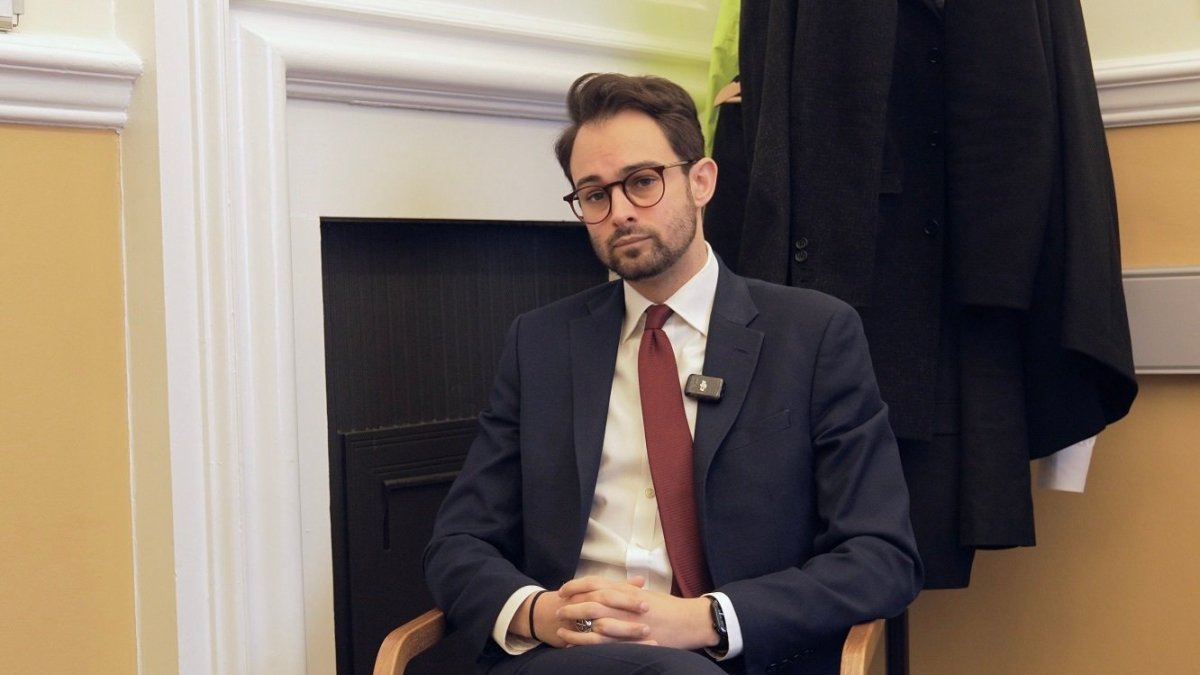
A decade ago, Josh Dean was a school dropout. He was struggling with undiagnosed ADHD and was on a path to becoming one of Britain’s “Neets” – young people not in education, employment or training. Now, the 27-year-old is a Labour MP for Hertford and Stortford. He “dwells” on where he would have “ended up” without support from Russell, a youth worker he met at the local skatepark, he says. “I wasn’t in work, I wasn’t in education,” he told The i Paper, following the publication of Labour grandee Alan Milburn’s landmark review into the crisis of youth joblessness. “I wouldn’t be an MP today without Russell. I don’t know what I would have been doing.” Now, Dean says that boosting support workers for young people must be part of the solution for supporting the country’s “hidden Neets” – when a young person is out of education or work, but not visible on standard Government tracking or support systems. This could be because they have dropped out of school or college, or are not claiming benefits. A ‘forgotten’ generation After dropping out of school, Dean worked several jobs – including his first at Hertford’s Starbucks – before doing a foundation year and going on to university. He has since “twigged” that the reason he left school was likely his undiagnosed ADHD. He was diagnosed at a private clinic last year and now takes medication. “When you look at the rates of young people, particularly boys who drop out of school early, that is linked,” he said. Dean – one of Parliament’s few Gen Z MPs – says his generation has been “forgotten” by Westminster. He welcomed Milburn’s report, published in full on Tuesday, with recommendations including creating a new Youth Opportunity Service in every area and giving every young person a legal guarantee of a job offer and employment support. Milburn also recommended an overhaul of the main health and disability benefits for under-25s – and suggested that this could be expanded to older age groups too. This would include sanctions for those who repeatedly refuse to take up reasonable job offers. Andy Burnham has backed the plans to spend billions on tailored support for under-25s, funded in part by cuts to some benefits. The Prime Minister’s spokesperson said immediate reforms are “focused on under 25s”, but there is potential to apply the same approach “more widely across the welfare system” over time. But Dean urged the Government to focus on younger generations. “We are at risk of a lost generation. I feel really strongly that we need to make sure we are focusing on those young people,” he said. “This is too big a moment for us to get wrong here, and I feel that very strongly because I grew up watching this get worse, watching this happen to my peers.” Regulation on private ADHD clinics The MP said he has been thinking “carefully” about the report’s recommendation around defunding private ADHD clinics that fail to provide adequate care. A major UK Government review on ADHD and autism found no evidence of overdiagnosis at scale, but warned of a growing risk in the future. It noted that a rise in mental distress is “very real”. The report also said that an official diagnosis should not be the portal to support, arguing that young people should be able to receive needs-based help without having to join a long NHS waiting list. For Dean, getting a diagnosis at a private clinic was “a gateway to support”. But he still called for further regulation. “It is important that the private sector is well regulated,” he said, adding that young people should be able to get access to support – and diagnoses – via the NHS. But the “wider challenge”, he said, is that people with a private diagnosis can find it “impossible” to get shared-care agreements between a private specialist and an NHS GP – allowing patients to get medication on the NHS rather than paying private rates. “You shouldn’t have to be an MP to be able to go and afford to get a diagnosis. You should be able to rely on NHS services,” Dean told The i Paper. Challenges of an MP with ADHD The MP said medication helps him deal with “barriers” for neurodivergent people in Westminster, including the cheering and jeering of MPs in the chamber and the hot temperatures. “I do sometimes find it quite overwhelming,” he said. “When we’re at the end of the day, particularly, my medication is wearing off, but I’m also more tired.” While he still feels some “shame” over the decision to drop out of sixth form, he wants to “speak up for young people who may go through similar experiences”. “Looking back, I wouldn’t change a second of it,” he said.
I have ADHD and dropped out of school at 17 – now I’m an MP
Full Article
Original Source
Read the full article at Inews →KhanList aggregates and links to publicly available news content. We do not host full articles from third-party sources. Always verify important information with original sources.