
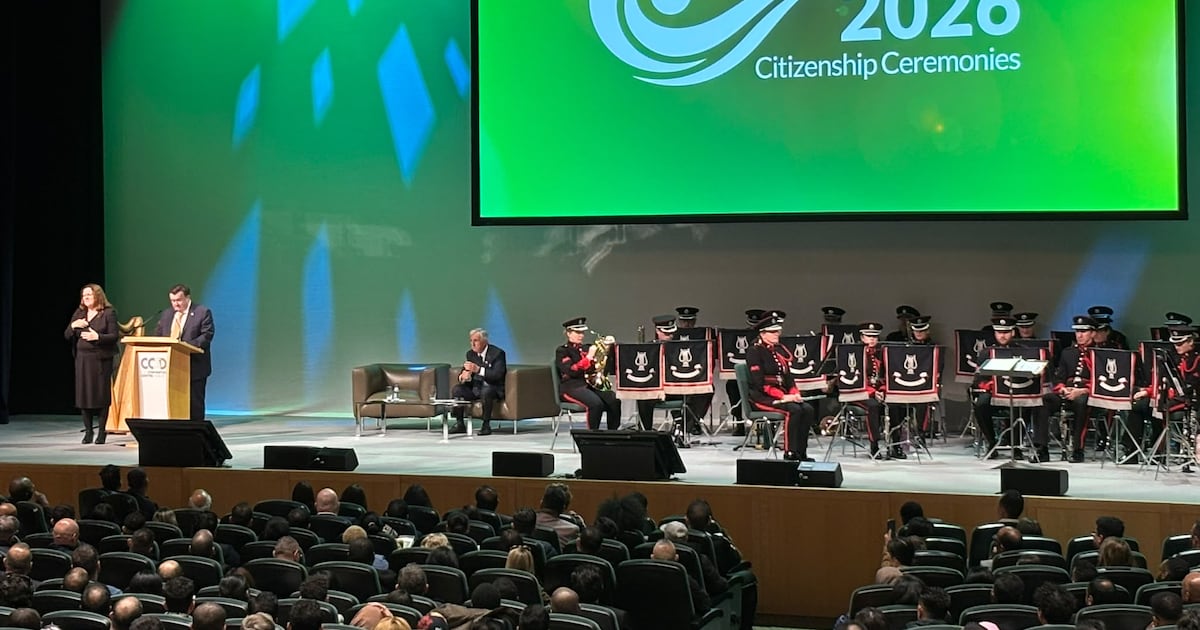
The proposed new citizenship rules may have loomed large over ceremonies in Dublin, but Ireland’s newest citizens were in a celebratory mood. Applicants from more than 138 countries, making up 5,600 people, will be granted Irish citizenship at the Convention Centre in Dublin during six ceremonies. For these new citizens, the minimum time living in the State was five years, but this is set to increase to eight years along with the addition of an Irish civics test and new financial requirements. Speaking before the ceremony, Minister of State at the Department of Justice, Home Affairs and Migration Colm Brophy told reporters: “The legislation is moving along and I would expect that towards the end of this year we will see the new legislation being enacted.”READ MOREWhen asked about criticism from opposition TDs and migrant rights advocates, Brophy replied: “We always keep things under review and we always look at what is best practice. We think it reflects citizenship in the environment in which we live today. It’s very much mirroring what’s happening in other EU member states.”In his speech to the new citizens assembled in the Convention Centre, he again touched on the proposed changes.“Those changes are not in any way restrictive. We want to enhance and deepen and strengthen the bonds between people becoming a citizen of our country because it’s such an important privilege. It reflects the commitment and dedication that people like yourselves have shown in building your lives here. It represents so much more than just a passage of time.”The joy of Ireland’s newest citizens was evident after the ceremony as they shared the moment with friends and family. For those who couldn’t be there, the ceremony was livestreamed. Vandair De Luca (36) from Brazil said: “It’s an amazing privilege to be an Irish citizen.”He explained he initially came to Ireland to study, “and then I fell in love with it and decided to make my life here”. Vandair, a tech worker, said he didn’t mind the new citizenship rules, as he felt “it’s not a big deal if you are planning to stay in Ireland anyway”. Vandair De Luca, 36, a tech worker from Brazil. Photograph: James Cox Ahmed Imbabi (36) is originally from Sudan and came to Ireland nine years ago, making his life in Co Donegal. He met his wife there and they have been married seven years. Ahmed, who is a doctor, said: “It means a lot being Irish. At the start I thought of it as a second home but over the years it’s become a new home. “I love the people, I love the culture, I’m obviously with my wife, and she said you need to get yourself in.”He said he felt for people who will have to contend with the new citizenship rules, adding that some may not have a “straightforward path” like he did. “It’s made things a lot harder for people. I’m thinking of the people who are here four years and now have to wait another four years to apply. “Mine was as smooth as it can be, I came with a work permit, an address, all those things. “But it’s not like that for everyone, and now people have to wait another two, three years or whatever. “I think it’s just a very long and demanding process. I have conflicting emotions about it. I’m on the other side now but I worry about people that are in this position, if I was here four years and had to wait longer ... how would I feel?”[ Citizenship by descent is not racist, and language tests make perfect senseOpens in new window ]Ahmed Imbabi, 36, a doctor from Sudan. Photograph: James Cox Denise Lacey is originally from Brazil, and she met her husband Gavin Lacey while she was on holiday in Ireland. She has been living in Dublin for 10 years and she said getting her citizenship “means everything”. Denise, who works as an executive assistant, added: “It’s been such a journey and I’m so happy because now Ireland is my home.”Denise and Gavin Lacey. Photograph: James Cox Jacqui Wegewarth is British but originally from South Africa. She said she made the decision to move to Ireland with her husband and two small children after the Brexit referendum in 2016. “Just to open up doors and opportunities for my kids that I was never able to have due to the limited opportunities in South Africa. That’s what it means for me and my family.”Jacqui, who works as an auditor, said she does not mind the new regulations, but is glad she now has her citizenship. Jacqui Wegewarth, an auditor from South Africa. Photograph: James Cox Ali, a doctor from Sudan, has been working in Ireland for 10 years. Beaming with pride after becoming an Irish citizen, he said he goes by the surname ‘McHappy’ because he’s always smiling. “It’s even on my official identification at work,” he said. “I’ve been living in Ireland for the last 10 years, it was a long journey, it’s a privilege and I am very proud.”Dr Ali from Sudan. Photograph: James Cox Ali said he works in different hospitals in Dublin, the southeast and northwest. He was critical of the new citizenship rules.“It’s not fair, to be honest with you ... I understand why people like a path [to citizenship] but I feel like it is hard enough. “I hope if it is approved by the Dáil there will be an exception for people who come here to work and enrich the economy ... to enrich the value of being Irish.”[ Is it easier to become a naturalised citizen in Ireland than elsewhere?Opens in new window ]
‘I fell in love with Ireland’: Joy at citizenship ceremony despite looming new rules
Full Article
Original Source
Read the full article at Irishtimes →KhanList aggregates and links to publicly available news content. We do not host full articles from third-party sources. Always verify important information with original sources.