
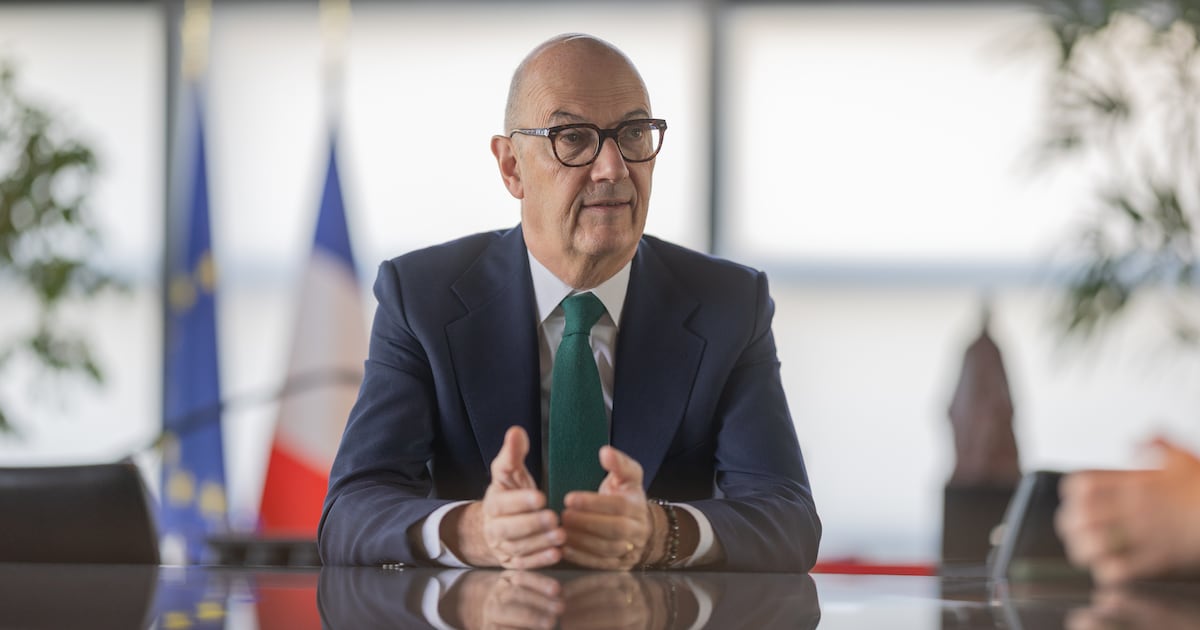
One topic looms large over French politics in the febrile build-up to a presidential election with populist forces on the rise both left and right: the price of fuel per litre.The issue dominates press questions to the government, fishermen have blockaded ports in protest, and hanging over the country is the prospect of the return of the “gilets jaunes”.The grassroots “yellow vests” movement paralysed France with protests between 2018 and 2020, beginning with a call for lower fuel taxes before spiralling into a broader expression of discontent. As diesel prices neared a record high over the last two weeks, calls for protests in cities across France on October 17th went viral online. READ MOREBy Wednesday, president Emmanuel Macron was telling government ministers he wanted “total mobilisation” to drive down prices and ensure supply.Amid it all, international bond markets are watching closely: this time last year, opposition to a budget that aimed to address France’s large debt pile brought down the government, and the political turmoil rattled bond markets. [ ‘That’s a European cake, not an Irish cake’: Ireland’s tax haul from tech giants challengedOpens in new window ]French minister have to square the public demands for fuel price subsidies, pressure from the international markets to cut debt, and fierce opposition in parliament to cuts – with the government desperate to avoid collapsing once again before the election in April.Yet all is calm for now in the office of the man in the hot seat, finance and economy minister Roland Lescure, who looks out over a panoramic view of the Seine from the imposing office blocks of his ministry, known for short as “Bercy”.Policemen during clashes with French fishermen at a blockade of the oil depot in Frontignan, southern France, on Wednesday. Photograph: EPA The first details of the proposed budget are set to be announced in the event.“I think we’ve balanced it rightly,” Lescure tells The Irish Times. He insists that the subsidies are “targeted” and “transitory”. “We have been helping the people at the front of the crisis: fishermen, farmers, lorry drivers and people who use their car to work ... without doing blanket-wide measures that would help everyone, including people who don’t necessarily need it.”“They’re very costly. They’re not efficient. To be fair, we did that during the Ukraine crisis. It cost us an arm and a leg then, and I’m not sure it was very helpful, including politically.”That suddenly familiar turn of phrase – “to be fair” – speaks to Lescure’s backstory. His wife is Dublin native Susie O’Reilly. The two met in Brussels, when Lescure was a trainee at the European Commission working on the creation of the EU single market.They went through three years of a long-distance relationship before marrying in O’Reilly’s ancestral Donegal in the summer heatwave of 1995.“The French loved it, and they all enjoyed the beautiful view on Horn Head. We had a great wedding,” Lescure remembers. On the honeymoon, he followed in the steps of Charles de Gaulle to Connemara’s Cashel House Hotel.Roland Lescure speaking during a press conference in Paris last week. Photograph: Carine Schmitt/Hans Lucas/AFP via Getty Images After a career as a civil servant and in the finance industry in France and Canada, politics in Paris beckoned.“I decided to jump in the pool of political life when Emmanuel Macron called for people from the civil society to join him,” Lescure recalls. O’Reilly works as a yoga teacher in the city, and the family returns to Ireland often.“Susie comes from a family of nine, so the family gatherings at Christmas you can imagine imply a lot of people,” Lescure says. Their son, a teacher in London, has Irish citizenship.Irish people don’t give themselves enough credit, he believes.“I think Irish people should be aware ... of what has been achieved in the last 35 years. I’ve seen it first hand,” Lescure says.“I’ve seen a quiet revolution occur in Ireland. Obviously economically, from one of the poorest countries in Europe to one of the richest now, but also socially.”[ Starting gun fires on Europe’s make-or-break election in FranceOpens in new window ]“I saw the referendum on divorce, I saw the citizen convention on abortion, I’ve seen same-sex marriage being adopted by referendum as well. I have been impressed by the ability of the Irish people to address complex issues, to debate them without too much drama,” he says.France, in contrast, “sometimes loves the drama, and doesn’t like compromise”.Is there a risk of a return to the jittery autumn of 2025, when bond markets focused on France and there began to be whispers of a return of the euro zone debt crisis?“Obviously, we’re faced with a difficult international environment. The Strait of Hormuz, the war in Ukraine, global interest rates on the rise because of global indebtedness, public and private,” Lescure says.Roland Lescure: ‘I have been impressed by the ability of the Irish people to address complex issues, to debate them without too much drama.’ Photograph: Carine Schmitt/Hans Lucas/AFP via Getty Images He hopes that the budget will show that “despite the political uncertainties of France eight months before an election” the government is “consolidating public finance, reducing public deficit, but also favouring growth”.“We’re going to be very adamant about keeping the fiscal environment for companies stable, and to make sure that France keeps on growing while stabilising and reducing the public deficit next year,” he adds.People in Ireland sometimes admire France for the high standards that the public demand from their government, and their willingness to protest when they are unhappy, I tell the minister.“Well, I’ll tell you one thing,” he replies, letting slip another Hibernicism. “The grass is not always greener on the other side ... the grass is very green in Ireland. Keep it that way.”
French minister with a soft spot for Donegal faces his toughest test yet
Full Article
Original Source
Read the full article at Irishtimes →KhanList aggregates and links to publicly available news content. We do not host full articles from third-party sources. Always verify important information with original sources.