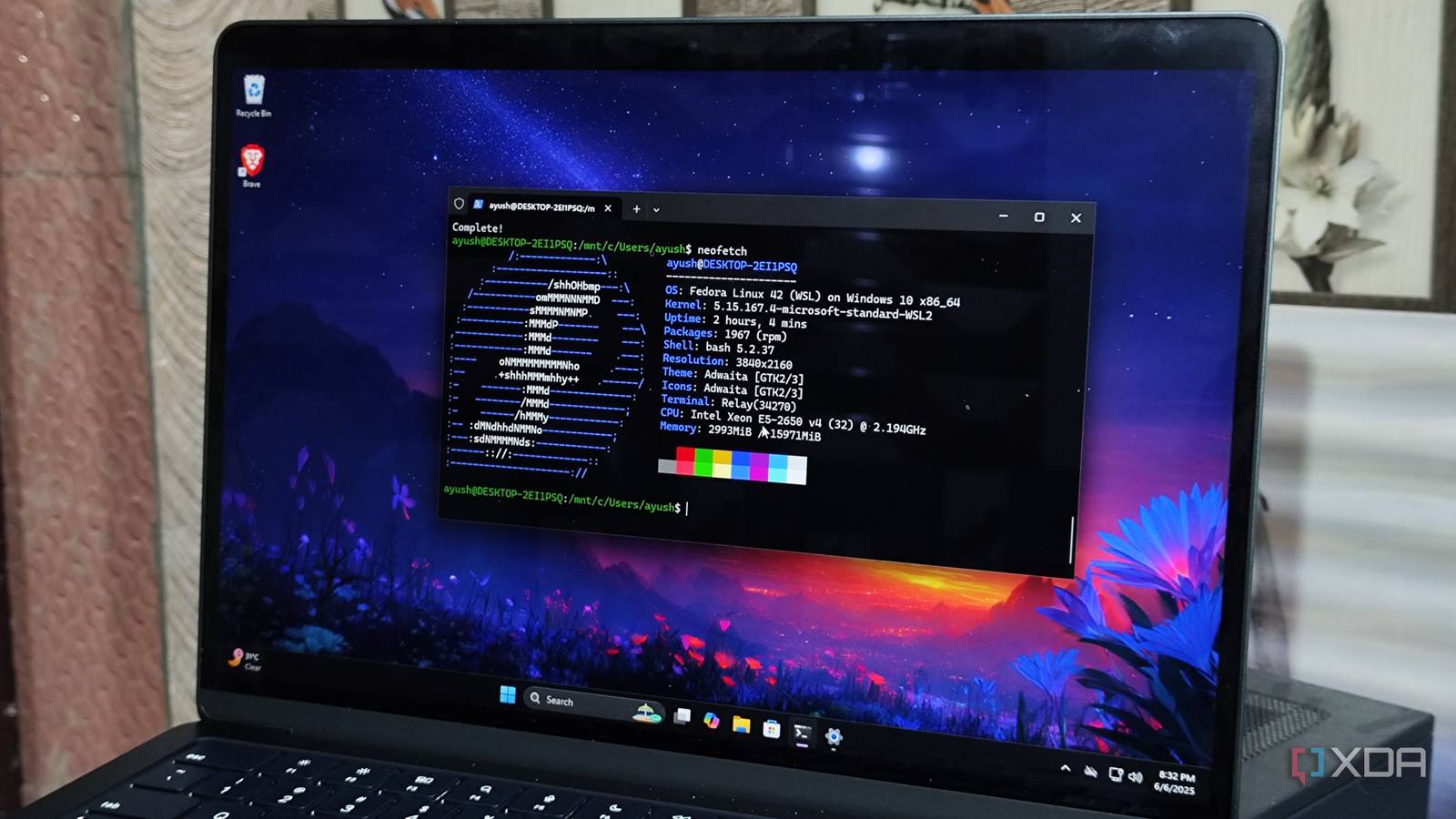
Published Aug 6, 2026, 11:00 AM EDT Korbin is a Linux system administrator who spends most of his time in a terminal figuring out how things actually work. Over the last decade he's written hundreds of articles about Linux configuration, troubleshooting weird problems, and using open-source tools in the real world. He also works a lot with Windows systems and networking, especially in mixed environments where things don't always behave the way the documentation says they should. Writing things down is how he makes sense of it all and hopefully saves someone else a few hours. I used to need two partitions, one for Windows activities and another for Linux work. My Windows partition handled browsing, games, and all of the software that didn't have a port for running anywhere else, and my Linux partition was the go-to for terminal work. Some people still set up their environments that way, and for a long time it was about the only option available if you wanted a real Bash terminal and the ability to open a Word document on the same machine. These days, the dual-boot partition setup is gone from my desktop, and the old Linux box I kept around got repurposed as a Proxmox node. What didn't change at all are my Linux-related tasks: I'm still writing Bash scripts, SSHing into remote hosts all day, using tools like grep and awk, and maintaining containers that only a Linux host can run. And yet all of it's now happening on Windows 11. Getting both environments on the same system used to involve a compromise, but that stopped being the case a while ago. Every Linux habit I developed hasn't changed for Windows, which sounds like Linux winning, except the operating system underneath is still Windows. I've gone back and forth on which side actually came out ahead here, and I'm not sure that question has a clear answer anymore. Every Linux task I have can run on Windows now None of it requires leaving one OS for another WSL does most of the work for my setup, especially since the arrival of WSL 2. Running a real Linux kernel inside a lightweight VM means my Ubuntu instance behaves the same way it would anywhere else, systemd and all, so services don't need any kind of kludge to work the way they were meant to. Dropping into a Linux terminal only takes as much effort as opening a new tab, since one keystroke opens it in Windows Terminal. For any task I do, the performance is close enough to bare metal that I don't care anymore about the negligible difference. For smaller stuff, I don't even need a separate WSL tab anymore. Microsoft recently released Coreutils for Windows, which is more than 75 Unix-like commands compiled as native Windows binaries. When I need to use common staples like find, grep, sort, and uniq, the commands are now accessible right from PowerShell, and I can run them against the native filesystem without a subsystem in the middle. Bash one-liners used to justify alt tabbing into a WSL session, but that's no longer the case. The actual work I do utilizes both layers. VS Code connects to WSL and my remote hosts through the same extension, and my backups go to my NAS over rsync, since I've never trusted Windows to recover gracefully from an interrupted file transfer. The scripts I write in WSL get copied to my VPS and can run without any special modifications, because I can write and test Linux scripts entirely from a Windows desktop. And it's all because regular Linux can reside on a machine that happens to boot something else. Windows turned into a delivery mechanism for Linux The OS I boot and the OS I work in aren't always the same The fact Microsoft maintains a Linux kernel and pushes updates for it through the Microsoft Store would've sounded like a joke years ago. I would've laughed at it, too, only to have my entire workflow revolve around it now. The company also recently released an open-source Rust reimplementation of the GNU tools, and it has built VS Code with remote Linux development in mind. To me, that doesn't make Microsoft sound like a company that's trying to defend its platform against Linux. It sounds more like Microsoft realized what kind of tools developers were actually using, then made sure they wouldn't need to leave Windows for them anymore. Developer tooling revolves around GNU conventions, and a lot of build pipelines and container images assume GNU compatibility. Microsoft could either keep insisting that Windows do things its own way and watch people migrate away to Linux and macOS, or absorb the conventions and keep their foothold in the desktop market. It picked the second option, and people like me have stayed on Windows because of it. Is Microsoft just playing the long game? Does anyone remember Embrace, Extend, Extinguish? The scary thing about Microsoft's approach is that the company's infamous EEE strategy seems to be playing out exactly as advertised. Every reason I used to have for booting into Linux got absorbed into Windows, and it happened gradually over numerous releases. The outcome is that Microsoft keeps a bunch of customers who were previously flight risks. The Linux desktop gains nothing from people who can meet all their Linux needs from Windows. What keeps me from buying into that fearmongering is that the "extinguish" part of EEE hasn't arrived yet, and doesn't seem to be in the cards for later. Coreutils for Windows is built on uutils, which is open source and community-driven. Anything that Microsoft has touched related to Linux is open source, including WSL. Even the habits I've developed on Windows are portable to any Linux system: all the scripts, my muscle memory, and the workflow I've grown accustomed to. I could migrate to Fedora tomorrow without needing to change any of that. That doesn't sound like an impending extinguishment to me. Whoever won, I quit rebooting Linux won the argument about how development tooling should work, thoroughly enough that Microsoft quit resisting and rebuilt around it. Microsoft won the desktop it was on the verge of losing to people like me, and it did so by giving into what people actually wanted instead of pushing their own alternatives. The only clear winners from all this are the end users that no longer need to reboot to access another system.
I do all my Linux work inside Windows now, and I genuinely can't tell if Microsoft won or lost
Full Article
Original Source
Read the full article at Xda-developers →KhanList aggregates and links to publicly available news content. We do not host full articles from third-party sources. Always verify important information with original sources.