
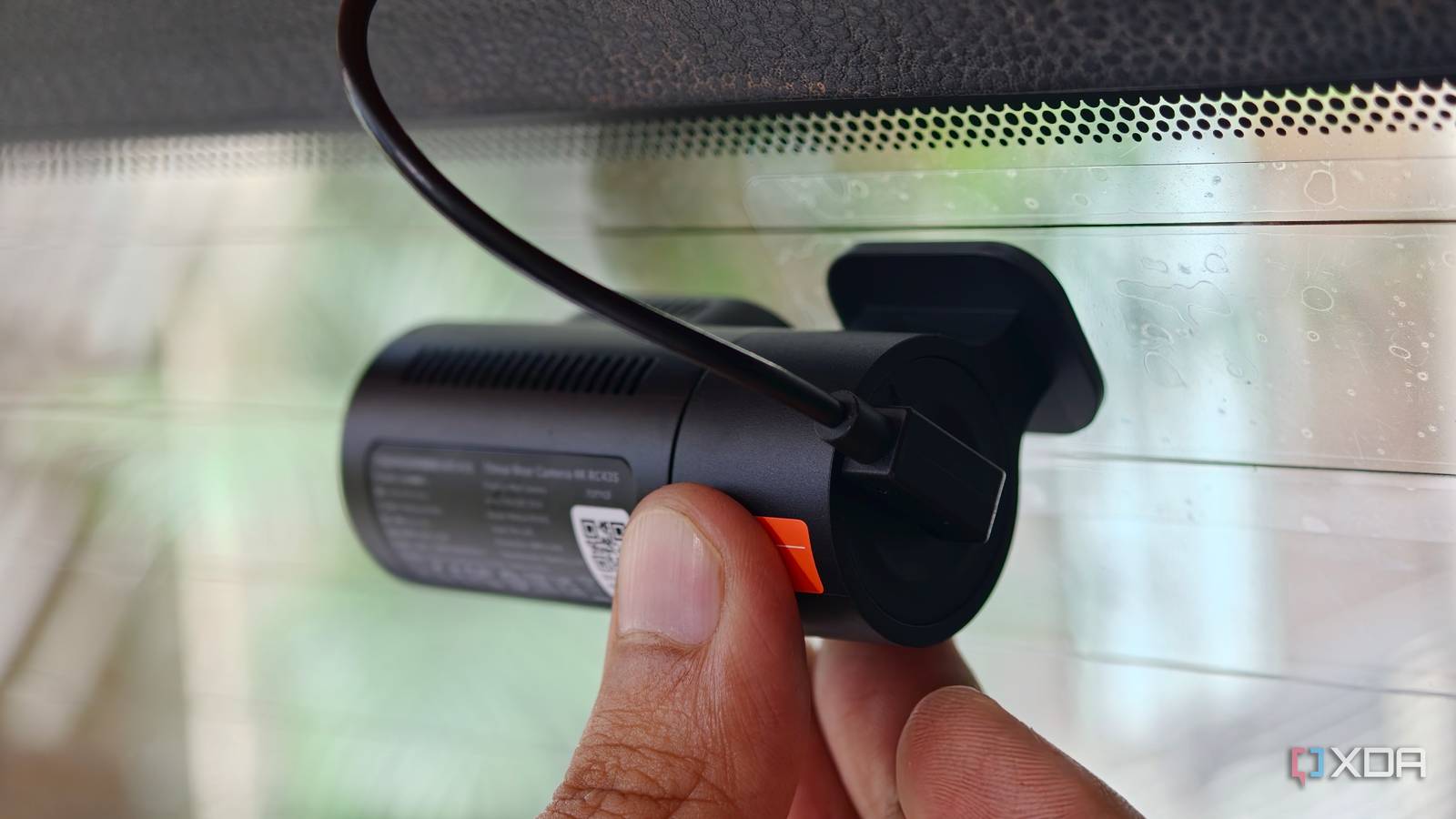
Published Sep 24, 2026, 11:30 AM EDT Dhruv Bhutani has been writing about consumer technology since 2008, offering deep insights into the personal technology landscape through features and opinion pieces. He writes for XDA-Developers, where he focuses on topics like productivity, networking, self-hosting, and more. Over the years, his work has also appeared in leading publications such as Android Police, Android Authority, CNET, PCMag, and more. Outside of his professional work, Dhruv is an avid fan of horror media spanning films and literature, enjoys fitness activities, collects vinyl records, and plays the guitar. Dashcams can be annoying to install, even on a good day. While installing the camera itself barely takes a few minutes, if you like clean cables, running thick USB cables through cladding, especially in older cars, is never fun. That's why the new 70mai A900 Ultra immediately caught my attention. Instead of a conventional USB-style or even coaxial connection between the front and rear cameras, 70mai's latest opts for an LVDS digital transmission cable. A much thinner cable, 70mai further claims that this LVDS cable can transfer 4K footage with as low as 20ms of latency. Look, this is the first time I've used an LVDS cable, so I was understandably skeptical of 70mai's claims. A week of use later, though, I can attest that the upgrade is no joke. Not only does the 70mai A900 Ultra's cable effectively disappear into the car's trim, but I'm also observing a clearer image with much lower lag when swapping between front and rear cameras. The ultra-thin cable is a bigger upgrade than you'd think Clean installation without compromising image quality The biggest advantage of the 70mai A900 Ultra is also its most obvious one. And you don't need to install the camera to see it. Running a rear camera cable through a car is time-consuming, and every bend adds another spot where the cable can bunch up or not slot in easily. The A900 Ultra's LVDS connection easily routes along the roofline. In fact, the cable is so thin that I could easily roll up extra cable and slide it into the roofliner out of sight. This wouldn't be possible with a conventional cable. But a thinner cable doesn't mean that you're making compromises. This cable is central to the A900 Ultra's high-speed digital transmission between the front and rear cameras. It's also critical to enabling that low 20ms latency for seamless switching. The 70mai uses high-end Sony Starvis 2 IMX678 sensors for both the front and rear cameras, along with 4K HDR recording on both channels. So a fully digital interconnect becomes even more important to avoid quality loss. That makes sense since excessive low-light compression risks making the dashcam useless, as you wouldn't even be able to see license plates. The rear camera has become indispensable Low-latency footage makes it useful beyond simple recordings My previous dashcam didn't include a rear camera, so this is new territory for me, and it's already made me consider how I went without one. Where I live, I regularly deal with traffic that would make you want to give up driving, including motorcycles zigzagging through gaps and cars getting right up close and personal. A rear camera gives me another perspective when an incident happens. Obviously, a rear camera is useless in that scenario. The lack of latency has another benefit. I've taken to toggling on the rear camera anytime I'm backing up, even though my car has a built-in reverse camera. The 70mai A900 Ultra's rear camera sensor is a massive upgrade over the one in my car and gives me much better ambient awareness when navigating tricky situations. Add to that the lack of latency, and it's a very good experience. Of course, the dashcam does all standard dashcam things very well too. For example, with parking surveillance enabled, the system can monitor my car when I'm away. Elsewhere, the camera offers plenty of connectivity options. I particularly appreciate the 5GHz Wi-Fi 6 connection because it makes offloading footage extremely quick, instead of having to pull out the SD card every time. The cable got me interested, but the package is what made it stick Look, dashcams aren't something that you upgrade all that often. It's an appliance that sits around and passively records footage you'll hopefully never need. So, to convince me to upgrade my setup, it would need to be a significant upgrade. That's precisely what the 70mai A900 Ultra is. While I was initially intrigued by the ease of installation via the LVDS cable, that's just one part of the equation. The high-speed, low-latency slim cable helps the rear camera maintain a high-bandwidth 4K connection to the front camera. This helps with recording and with using the rear camera for assistance when backing out of tight, tricky spots. Couple that with a high-end Starvis sensor, and you've got all the makings of an excellent and, more importantly, responsive dashcam setup. These features are exactly what I've been looking for in a dashcam, and what makes the 70mai A900 Ultra such an excellent upgrade. All that said, I bought the dashcam for the ultra-slim cable, but the overall package is what makes it stick. 70mai A900 Ultra The 70mai A900 Ultra is a dual channel dashcam with Sony Starvis 2 sensors and an LVDS cable interconnection between the rear camera and front module.
I ditched my old dashcam for one with a cable so thin it actually disappears
Full Article
Original Source
Read the full article at Xda-developers →KhanList aggregates and links to publicly available news content. We do not host full articles from third-party sources. Always verify important information with original sources.