
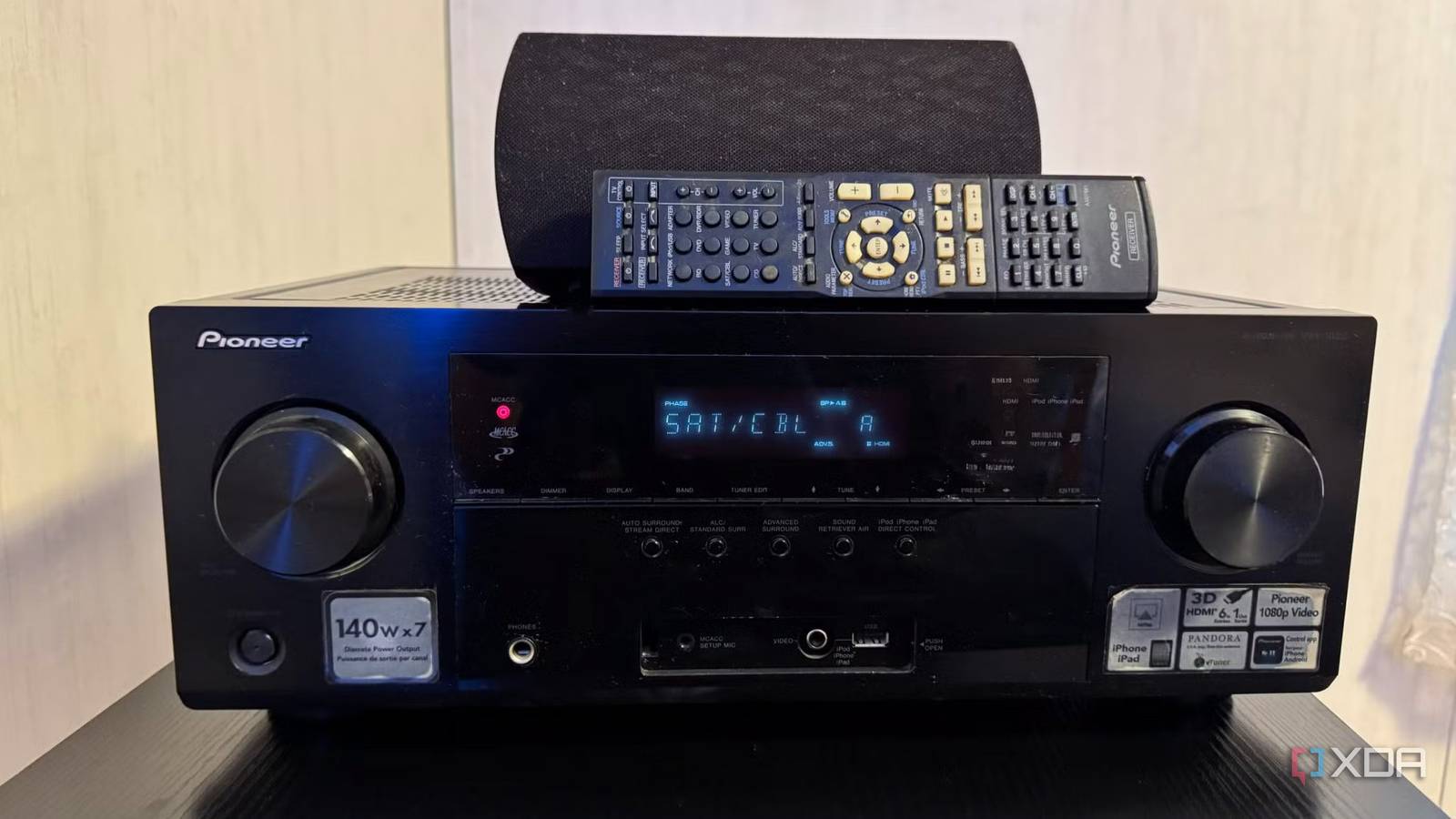
Published Sep 7, 2026, 8:30 AM EDT Based in rural Minnesota, Brian Burgess worked in IT for 10 years before finding his passion for writing about consumer technology. Brian earned his degree in computer and network technology in 2000. He held various IT positions, including help desk support, router installations for IBM, database administration, and other associate network administration roles. He's been a personal technology journalist for 18 years and has written thousands of articles about Microsoft products and services, Android, iOS, streaming, and more. He has written for notable tech sites including XDA, InformationWeek, How-To Geek, Byte, groovyPost, and others. When he is away from the keyboard, you will hear him playing guitar, working outdoors, and watching Star Trek. Soundbars can be awesome if you get the right one that gives you the options and sound you need. However, I'm more old-school in my home media thinking, and an AV receiver has usually been part of the home theater setup: a receiver, big speakers, and a large subwoofer for deep, house-shaking bass. That equipment is big, heavy, and difficult to move and maintain. I thought I would simplify my setup with a TV and soundbar, but I realized I still needed an array of speakers. So I bought a used Pioneer receiver that was less than the price of a cheap soundbar, and it completely paid off. A soundbar is good enough but not great Even top-of-the-line bars A quality soundbar can do a decent job of producing good sound from movies and TV shows. They are useful for a simplified media setup when space is at a premium and, with an extra HDMI port, for repurposing an old Chromecast. Soundbars are adequate for people who don't want to lug around and set up a big sound system or deal with hiding speaker wires. If sound isn't top of mind, a properly configured soundbar will suffice. A soundbar uses digital signal processing to reflect sound off the back wall and beneath the TV to simulate an immersive experience. They often sound muffled and hollow, lack bass, and distort at higher volumes. Even 2.1 soundbars with a dedicated subwoofer can't replicate the tight, punchy bass that receivers can. I'm not an audiophile, but I appreciate good sound and have seen sound systems of varying quality come and go through my life. I know what sounds good and how to achieve better audio. I had a soundbar connected to the TV in my extra room, and it was fine. But I want more control over the audio and a true 5.1 surround sound experience with an AV receiver. I also wanted to put some of my old speakers that were collecting dust to better use and create a half-decent sound experience that a soundbar can't provide. I ended up buying a used receiver, disconnecting the soundbar, and the audio experience is far better in that room. Get a deal on a good AV receiver For less than a cheap soundbar I ended up getting a great deal on a used Pioneer AV receiver I took a chance on at a garage sale. It is actually a Pioneer-1022k, released in 2012 during the 1080p Blu-ray cycle. It's a bit worn out, and the remote doesn't always work, but the owner had the original box and manual and showed me it could power on. I talked him down to $30 and drove away. I wasn't concerned about the 1080p limitation since it would be for the spare guest room anyway. Plus, I plug 4K sticks into the TV and send the audio through the receiver. Since I was going for audio over video, I knew the receiver didn't need to be anything fancy, just something good enough to at least do 5.1 surround sound. This particular receiver does 7.1, but 5.1 is good enough for a spare room. I'm putting together a ragtag sound system with speakers I have on hand. I also knew it would sound superior to the soundbar. I was lucky to find a decent working AV receiver at a garage sale for a fraction of the price of a cheap soundbar. But if I hadn't come across it, I would have checked out the usual suspects, like Craigslist or Facebook Marketplace for a local resale. I would avoid buying from online marketplaces like eBay since you can't touch what you're getting, and shipping a heavy AV receiver isn't inexpensive. Using a receiver instead of a soundbar Better sound, more settings Once I got the receiver home, I blew out the excess dust with canned air, hooked it up, and everything worked. Since I had some speakers (including a subwoofer), I wired up a makeshift 5.1 sound system. It's a combination of a Yamaha subwoofer, Pioneer bookshelf speakers, and Klipsch for the center channel and satellites. The difference in the sound experience compared to the soundbar was amazing. Dedicated audio channels and speakers elevate the surround experience. The center channel anchors the dialogue, the left and right speakers are tight and crisp, and the rear speakers deliver true surround sound effects. The deep bass lows I get from the subwoofer can be replicated by the soundbar I replaced. The receiver also offers an array of audio settings I can adjust. I can control how sound is routed and balanced for each speaker's channel so it sounds best while sitting in front of the TV. I can also choose which digital effects I want to add. I can adjust each speaker's channel level so a movie or show sounds perfect for the chair in front of the TV. The only annoyance is that not every button works on the receiver, so I have to switch between inputs and settings manually, but for $30, I am not complaining. Better audio is less expensive than you think You might think you have to spend a ton of money to get a home theater experience. However, setting up a used receiver with a few speakers is surprisingly inexpensive. A cheap soundbar can trick you into thinking you're getting quality audio by using room-reflection techniques. But if you have the space and time to set up a surround sound system, you'll be glad you did.
I bought a used AV receiver for the price of a cheap soundbar, and it wasn't close
Full Article
Original Source
Read the full article at Xda-developers →KhanList aggregates and links to publicly available news content. We do not host full articles from third-party sources. Always verify important information with original sources.