
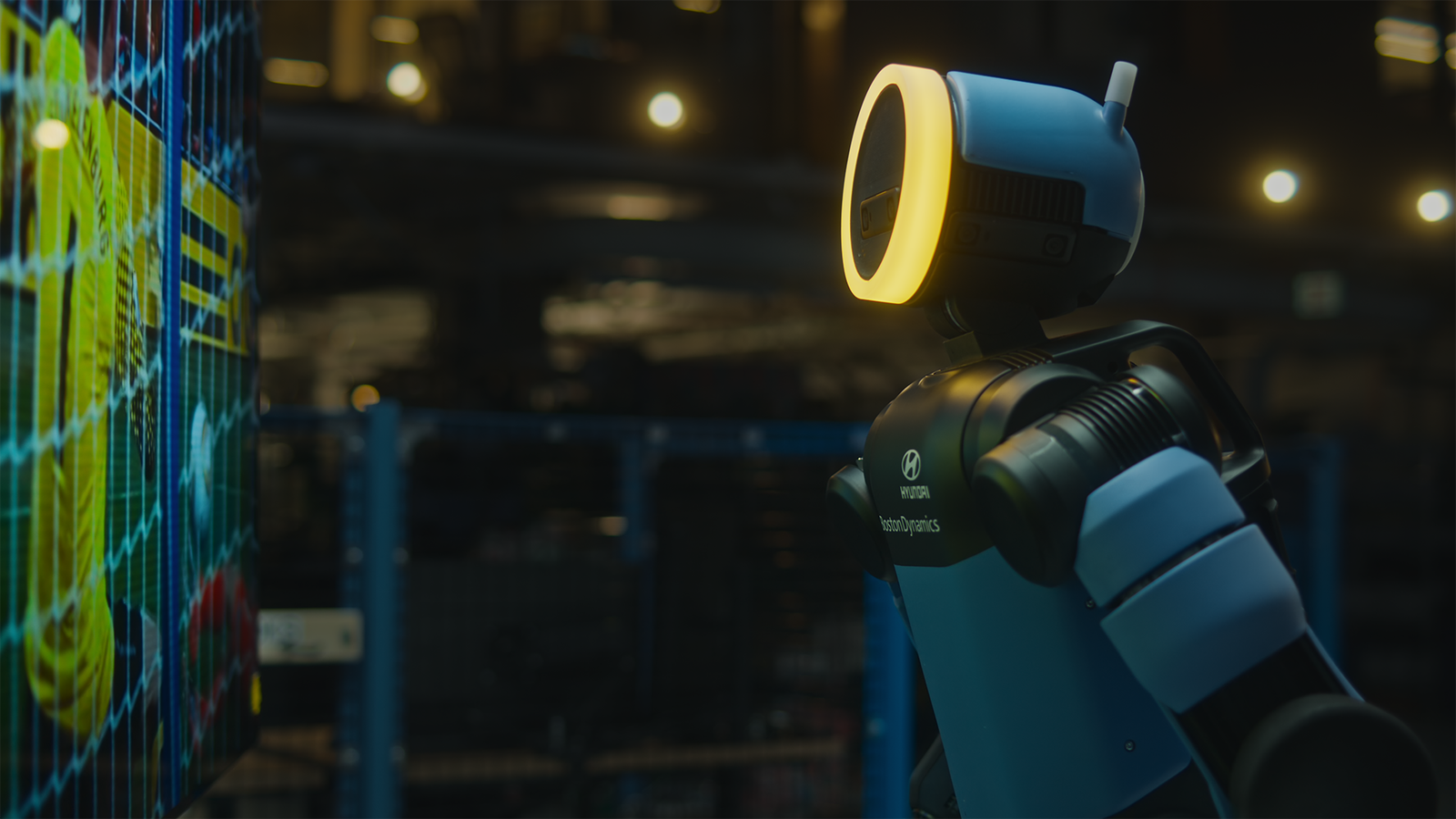
Published Jul 29, 2026, 7:30 AM EDT Based in the Motor City, Carl Anthony is the Automotive Lead at How-to-Geek and the host of AutoVision News Radio, a podcast that focuses on future vehicle technology, including next-generation ADAS innovations, electrification, and software-defined cars. A broadcaster by nature, he has appeared on popular podcasts and radio shows, including Wrench Nation, Cars Yeah, The Car Doctor, and Digital PR Explained. Carl’s frequent appearances on MotorMouth Radio (WHPC 90.3 FM) over the last decade have made him a trusted resource for car enthusiasts, while his hosting of the AutoSens Insights series continues to spotlight the latest automotive technologies. Prior roles include serving as a new vehicle launch and dealer trainer for Ford, Honda, Mercedes-Benz, and Volvo. Carl was a senior product specialist on Chevy's National Truck Team, an experiential marketing program that travels the United States, and a respected member of the FCA (now Stellantis) national auto show team, where he served as the resident expert for consumers on the Dodge Charger and Challenger. Before the automotive industry, Carl was a disc jockey, producer, and programmer at several popular Midwest radio stations, including KIWR, KEZO, KJAN, and KELO-FM. He is a graduate of Iowa Western Community College in Council Bluffs, where he dual-majored in the Electronic Media studies program, earning an Associate of Applied Sciences degree in both radio and television broadcasting. Boston Dynamics has passed among three owners in the last decade, from Google in 2013 to SoftBank in 2017 to Hyundai in 2021, when the automaker paid about $880 million for a company known at the time more for viral videos of dancing robots than for turning a profit. Hyundai closed that ownership chain earlier this month, moving to buy out SoftBank's remaining stake in the company, then used the San Francisco AI Summit to lay out what all of that investment was building toward. According to Hyundai's official announcement, the company plans to build a U.S. factory capable of producing up to 30,000 humanoid robots a year by 2028. A factory built for tens of thousands of robots a year Where Atlas will go to work The centerpiece of Chung's announcement is a new U.S. robot production facility, though Hyundai has not yet named a location or disclosed how much it plans to spend building it. The company said the plant will reach a capacity of up to 30,000 units a year by 2028, a figure that would put Hyundai among the largest committed producers of humanoid robots worldwide. Chung framed the effort as part of a fundamental shift for Hyundai, saying the company is "evolving beyond the traditional boundaries of automotive manufacturing" and into robotics and AI-defined factories. Hyundai first floated the 30,000-unit-per-year target in January, when Boston Dynamics unveiled the production version of Atlas on stage at CES in Las Vegas. The San Francisco AI Summit added the financial and partnership detail behind it, including the SoftBank buyout and the NVIDIA collaboration, rather than reintroducing the factory target itself. Atlas is the Boston Dynamics bipedal humanoid, which the company released in an all-electric form in April 2024 before starting tests with Hyundai and other select partners in 2025. The rollout lined up with an order Hyundai placed with Boston Dynamics to purchase tens of thousands of robots across the robot maker's lineup in the coming years, while helping Boston Dynamics scale up its manufacturing in return. The forthcoming factory also fits into a broader $21 billion commitment Hyundai made toward U.S. operations, including $6 billion earmarked to expand partnerships with American companies. As noted a moment ago, Hyundai hasn't said where the robot factory will go, but its existing footprint in Bryan County, Georgia offers a reasonable guess, especially since Atlas will first operate inside Hyundai's own plants, including its Metaplant America in Georgia about 25 miles west of Savannah, which makes building nearby a logical next step. Hyundai won't expand deployment to other sites until Atlas proves itself on those assembly lines, a process the company calls phased validation. The goal is to confirm Atlas can keep pace with something as demanding as automobile production before Hyundai sells or deploys the robot anywhere else. Boston Dynamics already sells two other robots. Spot, a four-legged robot that debuted in 2020, has gone to work at power plants, construction sites, manufacturing facilities, oil and gas operations, and mines, taking on inspection jobs that would otherwise send a person into a dangerous spot. Stretch, a wheeled robot introduced a year later, moves boxes inside warehouses and distribution centers. Atlas walks on two legs and has two arms, letting it handle tasks in human-sized spaces with human-shaped tools, things a wheeled robot or a robotic arm bolted to the floor isn't built to do. Part of a bigger robotics push More partnerships announced at the summit Chung used the AI summit appearance to detail additional partnerships beyond the factory itself, each aimed at advancing Hyundai's robotics ambitions. Hyundai and NVIDIA are building a joint Robot Reference Platform, designed to provide universities, research institutes, and startups with a standard hardware and software setup for building their own robots rather than starting from scratch. The collaboration builds on a supply deal for 50,000 NVIDIA Blackwell GPUs, valued at about $3 billion, as well as plans for a Hyundai Motor Group Robot Application Center and an NVIDIA AI Technology Center in Korea. Hyundai also plans to use NVIDIA's platform to build digital twins of its factories, virtual copies of a production line that engineers can test changes on before touching any equipment. Reconfiguring an actual assembly line to add a new robot or workflow can halt production for days, so running that change through a digital twin first can catch problems, like a robot's reach colliding with an existing station, before the factory floor changes at all. Boston Dynamics also has a partnership with Google DeepMind focused on improving how its robots handle unpredictable, real-world environments. Meanwhile, Hyundai's Waymo partnership, which puts self-driving IONIQ 5 electric vehicles into Waymo's robotaxi fleet, also got a mention at the summit, though that deal dates back to 2024 rather than being new news. Hyundai is also investing at home in Korea Alongside its U.S. investments, Hyundai outlined two major investments in Korea to strengthen its robotics and AI manufacturing capacity. The company plans to spend about 9 trillion won, or about $6 billion, to build what it calls the Saemangeum AI Valley in North Jeolla Province. That project includes an AI data center, a robotics manufacturing cluster, water electrolysis facilities, and infrastructure for an AI-powered hydrogen city. The robotics cluster isn't limited to Hyundai's robots either. It's also meant to serve as a robotics foundry, taking on manufacturing jobs for smaller companies that lack the scale to build factories themselves. Hyundai plans to invest an additional 42 trillion won, or about $28 billion, over the next decade to build advanced industrial hubs in South Korea's Yeongnam region, aimed at AI-driven manufacturing, aerospace, and clean energy infrastructure. Taken together, Chung's appearance at the San Francisco AI Summit makes clear that Hyundai sees its robotics arm as more than a side project.
Hyundai’s $880 million humanoid robot bet is about to get real—30,000 units a year by 2028
Full Article
Original Source
Read the full article at Howtogeek →KhanList aggregates and links to publicly available news content. We do not host full articles from third-party sources. Always verify important information with original sources.